

Seachem Reef Buffer 250 Gms
In stock
Frequently Bought Together
All Shipments insured against damage and loss.

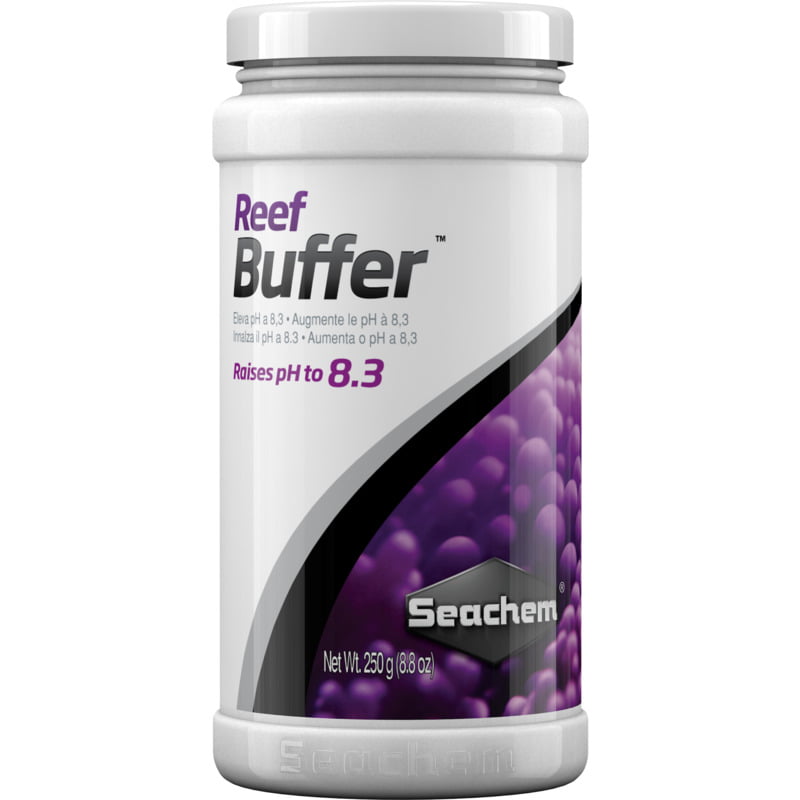
Seachem Reef Buffer safely raises reef system pH to 8.3 without risk of overshooting to dangerous levels, unlike sodium-based competitors.
Description
When used as directed Reef Buffer™ will raise the pH of your reef system to 8.3 without fear of accidentally overshooting the pH to a dangerous level. Whereas competing products simply use sodium bicarbonate, Reef Buffer™ is made with a blend of carbonate and bicarbonate salts. This blend of salts results in Reef Buffer™ yielding a pK of roughly 8.6 in saltwater. The pK of a buffering agent is equivalent to the pH around which that buffer most strongly buffers. One would presume, then, that the pK of a saltwater buffer should be 8.3; however, the multitude of organic acids produced by the inhabitants of a reef system forces pH downward to a much greater degree than in a non-reef, marine system. A buffer with a pK of 8.3 would end up yielding a pH more in the range of 8.0-8.2. Reef Buffer’s™ higher pK (8.6) allows for greater pH stability in a reef system where the bioload is significantly more than in a fish only system. Competing products are not designed specifically for the reef environment, so their pK is too low (in most cases, pK 8.3). At this pK, the proper pH can never be reached in saltwater. Reef Buffer™ will also raise carbonate alkalinity; however, when pH is not an issue, Reef Builder™ or Reef Carbonate™ should be your first choice for a carbonate alkalinity supplement.
Compatibility
What it is. A carbonate/bicarbonate pH buffering system for marine aquariums that raises pH to 8.3 and raises carbonate alkalinity at the same time. Its pK of 8.6 is built for reef systems specifically, where coral and invertebrate activity produces more acid than a fish-only marine tank does.
Where this sits in the Seachem range. Seachem draws a clear line between this and Reef Builder: Reef Buffer leads with pH correction and lifts alkalinity as part of that; Reef Builder leads with alkalinity and is built to move KH without pushing pH around. Use Reef Buffer where the pH reading itself needs correcting.
Pack size. Same formula and directions at 250 g and 500 g: only the container size differs.
Dosage & Directions
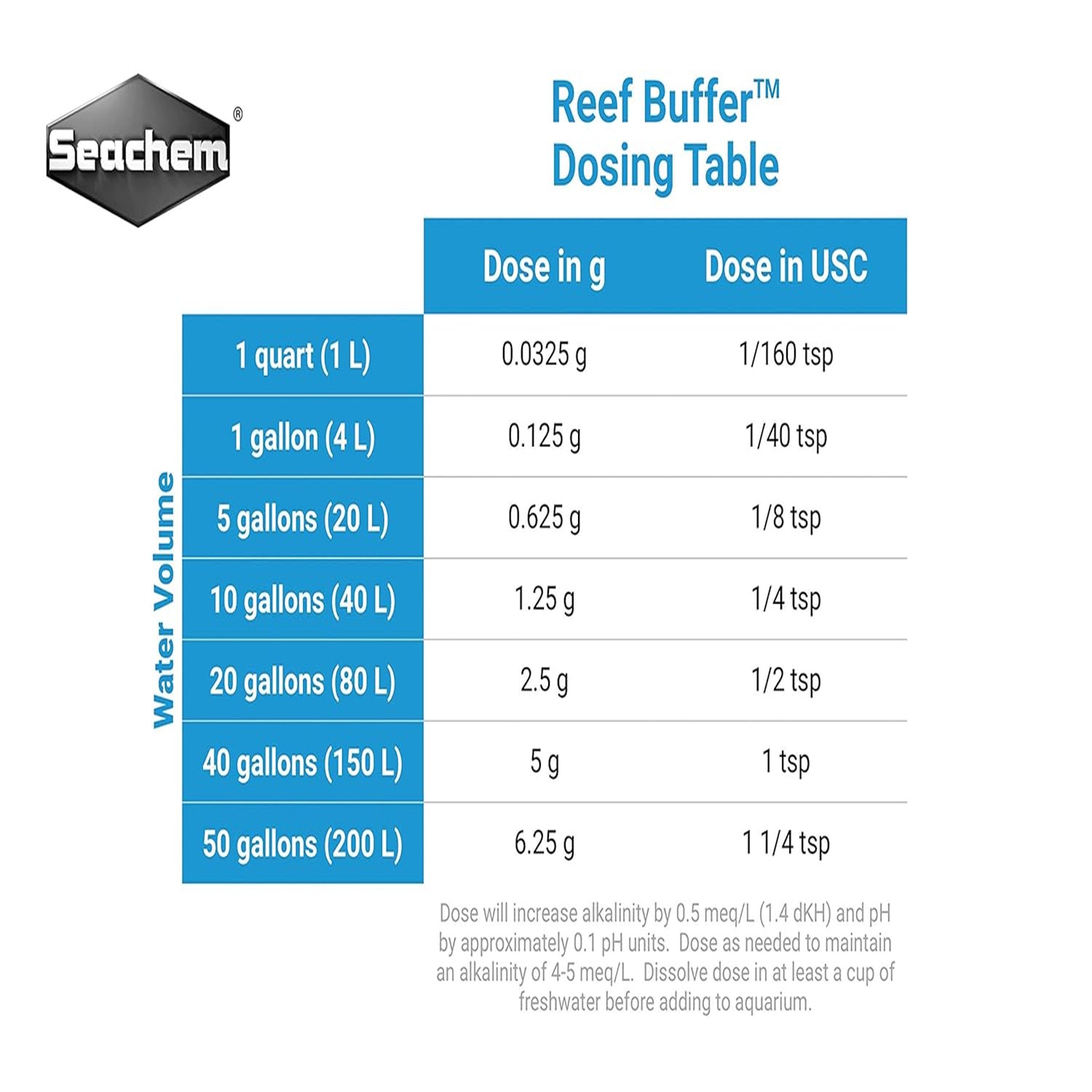
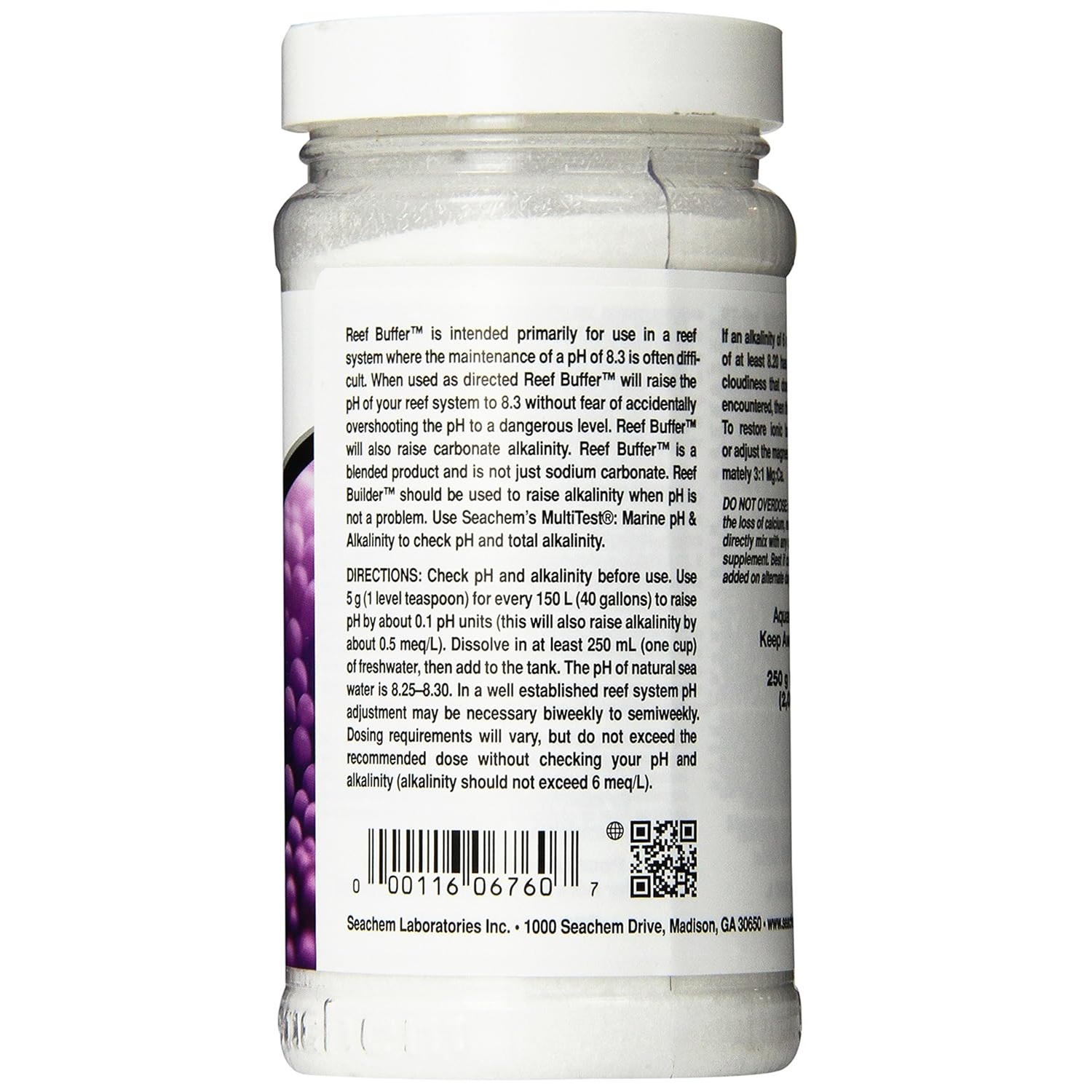
Seachem’s own dose. 5 g (1 level teaspoon) per 150 L (40 US gallons) raises pH by about 0.1 units and alkalinity by about 0.5 meq/L. Dissolve in at least 250 ml of fresh water before adding to the tank.
How often. Established reef systems typically need this every one to two weeks; test first and dose to the reading rather than the calendar. Target alkalinity is 3 to 6 meq/L (8 to 17 dKH); don’t push past 6 meq/L.
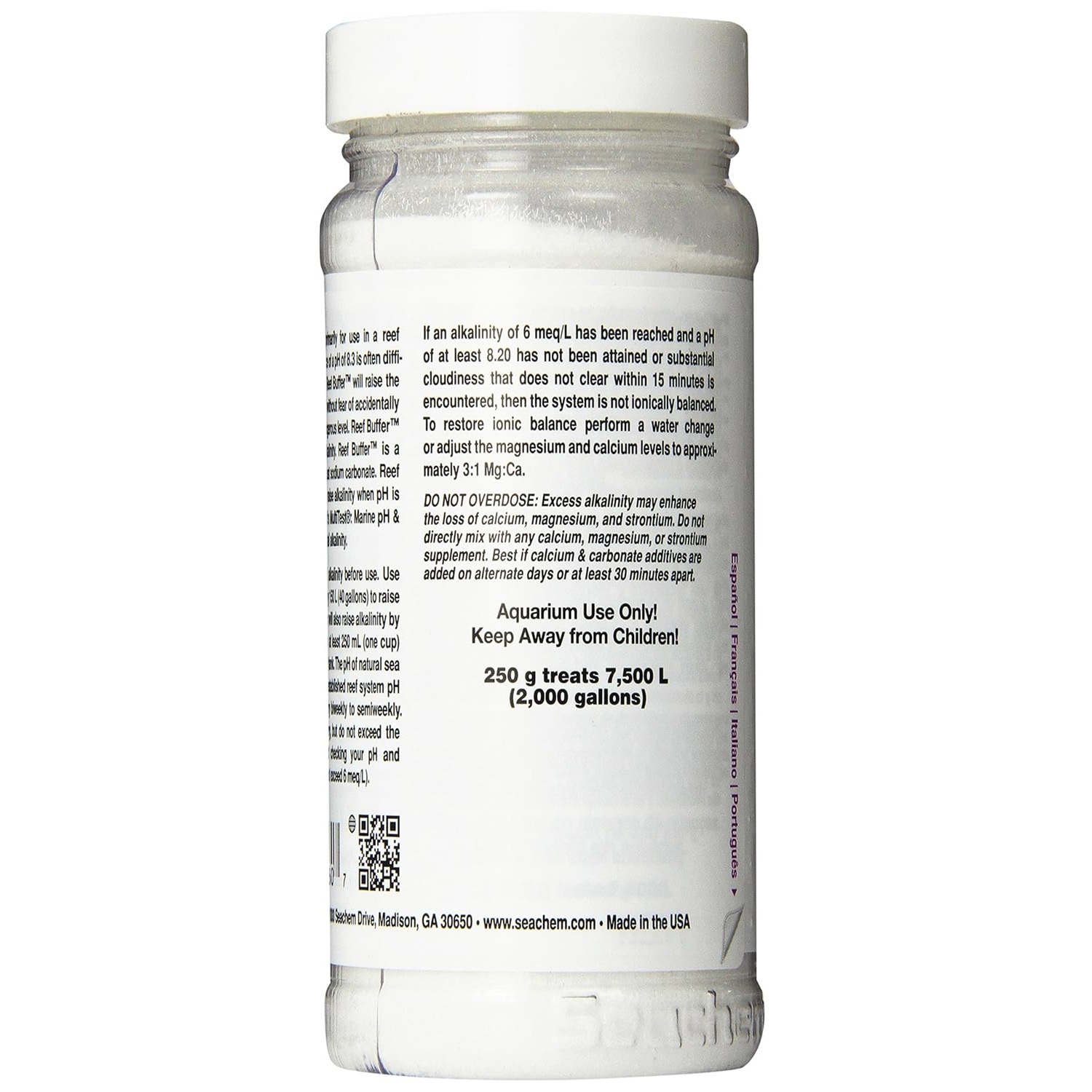
Keep it away from calcium/magnesium/strontium supplements. Don’t mix directly with any calcium, magnesium or strontium additive: dose at least 30 minutes apart, or on alternate days. Excess alkalinity can itself drive down calcium, magnesium and strontium levels, so don’t chase a low reading by overdosing.
Freshness & Storage
Every batch we dispatch carries a minimum of 6 months’ remaining shelf life. Store this product in a cool, dry place away from direct sunlight, with the cap or inner foil closed tightly after each use.
Filter media and substrates carry no manufacturing or expiry date. Their working life begins on first contact with water, not on the shelf.
Returns & Replacement
Returns are accepted within 7 days of delivery, provided the item is unused and in its original packaging. Manufacturer-sealed items cannot be returned once the seal is broken, and sale-priced items are not refundable.
If your item arrives defective or damaged, message us on WhatsApp with your order number, or email us if you would rather, and we will replace it. Approved replacements are delivered within 3 to 5 business days. Transit damage is covered by insurance on every shipment. If tracking shows delivered but nothing reached you, tell us within 48 hours, which is the reporting window Indian couriers allow. Damage caused during installation or use is not covered; replacement spares for such cases are chargeable.
Full terms are on our Cancellation & Returns page.
Related Products
-
Seachem Matrix 1000 ml
Original price was: ₹ 2,028.₹ 1,927Current price is: ₹ 1,927.


Reviews
Q & A
Ask a question
Verified Owner
Excellent and easy for use. Good result