



CaribSea Oolite Ocean Direct Live Reef Sand 20 lbs
Out of stock
All Shipments insured against damage and loss.

CaribSea’s Ocean Direct live sand ships with real ocean bacteria intact, giving reef tanks a natural biological head start from day one.
Description
Caribsea’s Ocean Direct Caribbean Live Sand is a great choice for aquarists who are wanting a reef tank set up in minutes. Oolite Ocean Direct Live Reef Sand uses “Sea Breathe” technology to preserve the live sand in its own original ocean bacteria.
Features
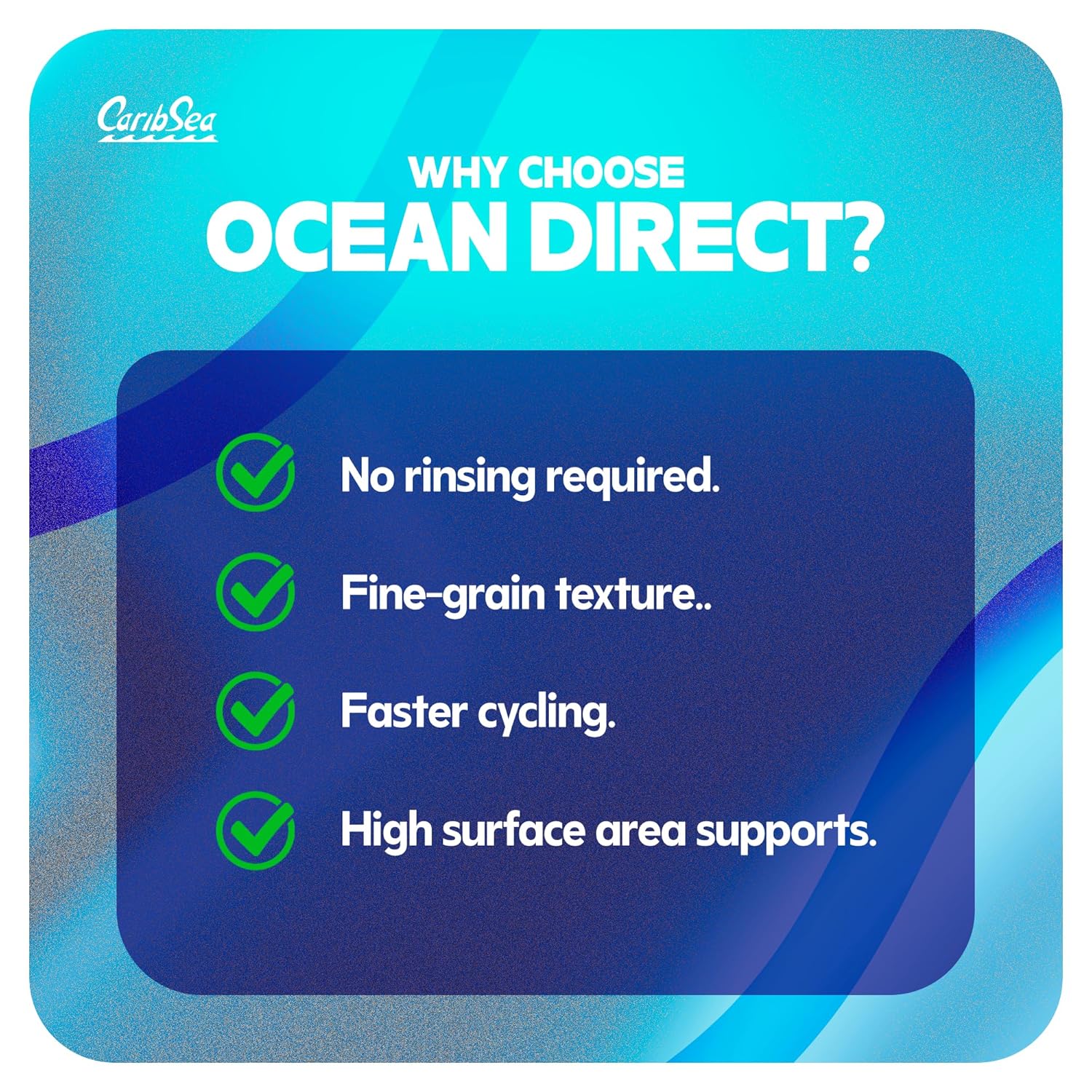
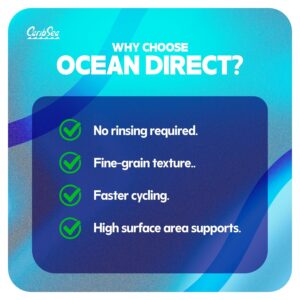
- Contains live ocean bacteria resulting in a fast cycle.
- Grain size: 0.25-1 mm.
- High Surface Area for Bacteria.
Setup & Use
The bag breathes, so treat it as a living thing. Ocean Direct is not dry sand and it is not sand in a sealed pouch of water. CaribSea’s Sea Breathe packaging holds every grain coated in bacteria and wrapped by capillary action in a thin film of real ocean water, and the bag is deliberately open to the atmosphere so that film can exchange gas. That is what stops metabolic by-products building up inside the bag. Two things follow: do not seal it inside another plastic bag or an airtight box, and do not leave it in a hot car or in direct sun. Use it reasonably soon after it arrives rather than storing it for a season.
Do not rinse it. The bacteria are in the water film on the outside of every grain, so rinsing is the one thing that undoes the product. CaribSea’s rinse instructions are written for their dry substrates. Open the bag and put the contents into the aquarium.
Sand first, then water. Same order as any CaribSea sand: substrate into the empty tank, then fill. Pouring sand through a full tank causes cloudiness for no reason. Fill gently onto a plate or a bowl so you do not dig a crater in the bed.
Marine, reef or African cichlid only. This is aragonite, and CaribSea state plainly that it will increase pH and alkalinity — it is not a general freshwater or planted-tank substrate. If you are using it in an African cichlid tank, pour the liquid off first; in a marine or reef tank the liquid goes in with the sand.
How much sand you need. CaribSea’s rule of thumb is 1 to 2 pounds per gallon — in metric, 0.12 to 0.24 kg of sand per litre of tank volume, so a 200 litre tank wants somewhere between 24 and 48 kg depending on how deep you want the bed. That is a broad rule, and CaribSea publish an exact one as well.
CaribSea’s equation, in inches: length × width × the bed depth you want, divided by 1,728, then multiplied by the substrate’s density in pounds per cubic foot. The answer is how many pounds you need.
Worked through for this sand. Ocean Direct Oolite has an average density of 96 lb per cubic foot — noticeably heavier per litre than a coarse grade, because the fine grains pack more tightly — which is about 1.54 kg per litre of finished bed. A 90 × 45 cm footprint with a 25 mm bed is 10.1 litres, so 10.1 × 1.54 = about 15.6 kg, which is two of these 20 lb (9.07 kg) bags. Take the same tank to a 50 mm bed and it is 31 kg, or four bags.
One caution on CaribSea’s own numbers. Their FAQ quotes a rounded 100 lb per cubic foot for Ocean Direct while their product table gives 96 for the Oolite grade. We have used 96. The difference is about 4%, and erring high simply means a little sand left over.
How deep to make the bed — our advice, not CaribSea’s. CaribSea leave the depth to you, and it is genuinely a choice rather than a specification. Reef keepers generally go one of two ways: a thin cosmetic bed of 20–25 mm that you can siphon clean like a carpet, or a deep sand bed of 100 mm or more that is meant to run anaerobic at the bottom and process nitrate. The awkward middle — 40 to 70 mm — is deep enough to trap detritus and go anoxic in patches but not deep enough to do the useful part of that. Decide which of the two you are building before you work out how many bags to order.
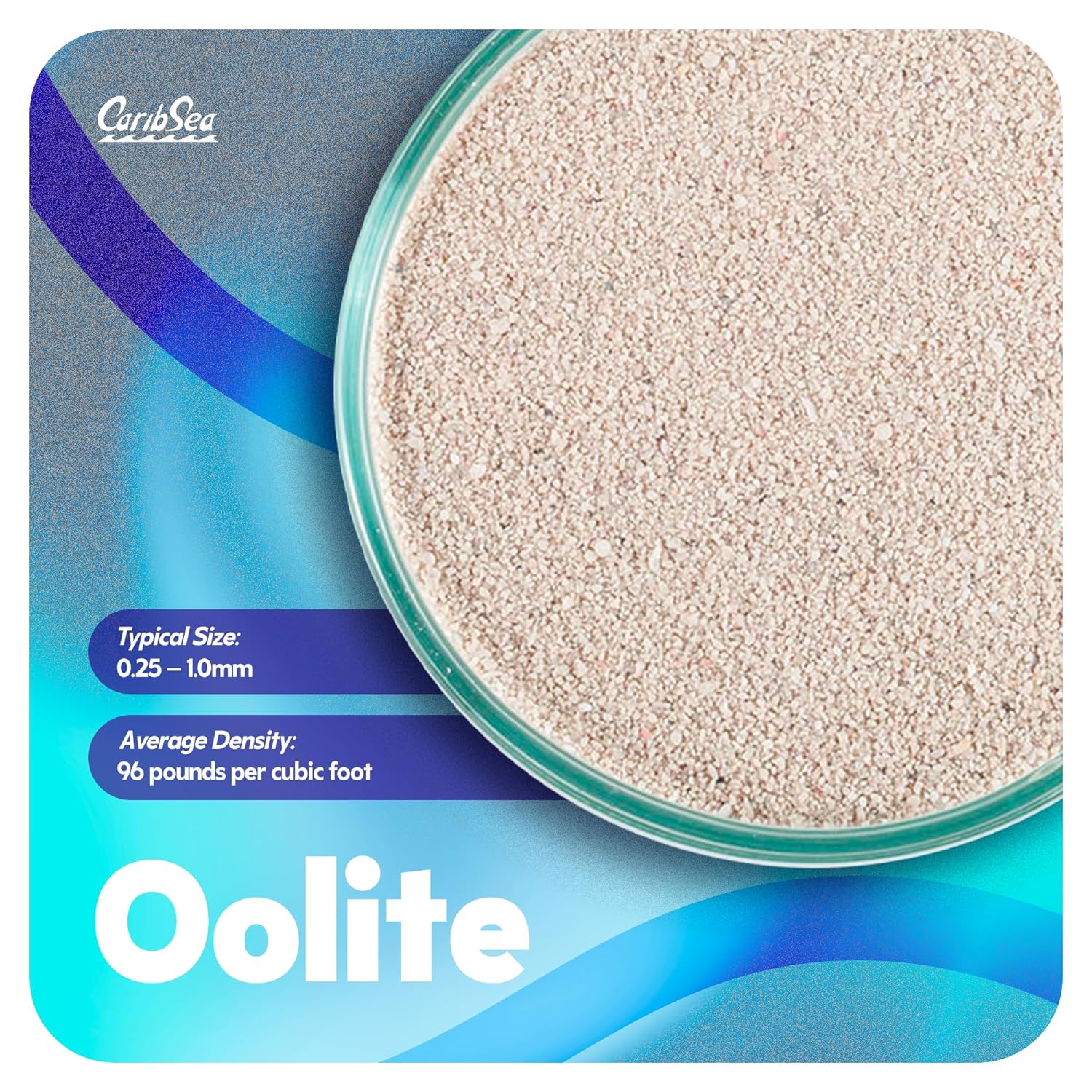
Grain size: 0.25 to 1.0 mm. This is oolite — the fine, bright, sugar-sand look of a Caribbean lagoon, and the finest grade CaribSea publish. Fine grain means far more surface area per kilo for bacteria to colonise, and it is the grade that sand-sifting gobies, jawfish and burrowing invertebrates actually want. The trade-off, and it is a real one: at this size the sand moves. A powerhead aimed anywhere near the bed will scour it into ripples and bare patches, and a return nozzle pointed down will dig a hole. Plan your flow to sweep across the bed rather than into it, and expect the first few days to be hazier than a coarse sand while the finest fraction settles.
What happens next. Once the sand, water, rock and decor are in, start all your pumps and filters. CaribSea say the tank should begin to clear within hours and be completely clear in 24 to 48 hours. Any haze left after the substrate is in and the pumps are running will be pulled out by your filtration.
Then wait, and stock slowly. This is CaribSea’s own stocking advice and it is stricter than most people expect: once the tank has cleared at 24 to 48 hours, add no more than 1 inch of fish per 20 gallons (roughly 25 mm of fish per 75 litres) for the first two weeks, and then no more than 1 inch of fish per 5 gallons (25 mm per 19 litres) in total. Invertebrates can go in as soon as you can see the back of the tank, with the same restraint. A fast cycle is not the same thing as a mature tank, and this is where live sand setups usually come unstuck.
Adding to a bed you already have. Mix in about a cup a day, gently, into the existing substrate. Do not cap an old bed with a layer of new sand — CaribSea warn it can set off another cycle.
Replacing a bed you already have. Start at one side and siphon out and replace only 5 to 10% of the substrate a week. Even at that rate CaribSea expect the biological filtration to be affected for the next four to six weeks, and suggest increasing water changes over that period to keep ammonia, nitrite and nitrate down.
Returns & Replacement
Returns are accepted within 7 days of delivery, provided the item is unused and in its original packaging. Manufacturer-sealed items cannot be returned once the seal is broken, and sale-priced items are not refundable.
If your item arrives defective or damaged, message us on WhatsApp with your order number — or email us, if you would rather — and we will replace it. Approved replacements are delivered within 3 to 5 business days. Transit damage is covered by insurance on every shipment. If tracking shows delivered but nothing reached you, tell us within 72 hours, which is the reporting window Indian couriers allow. Damage caused during installation or use is not covered; replacement spares for such cases are chargeable.
Full terms are on our Cancellation & Returns page.
Related Products


Reviews
Sorry, no reviews match your current selections
Q & A
Ask a question