

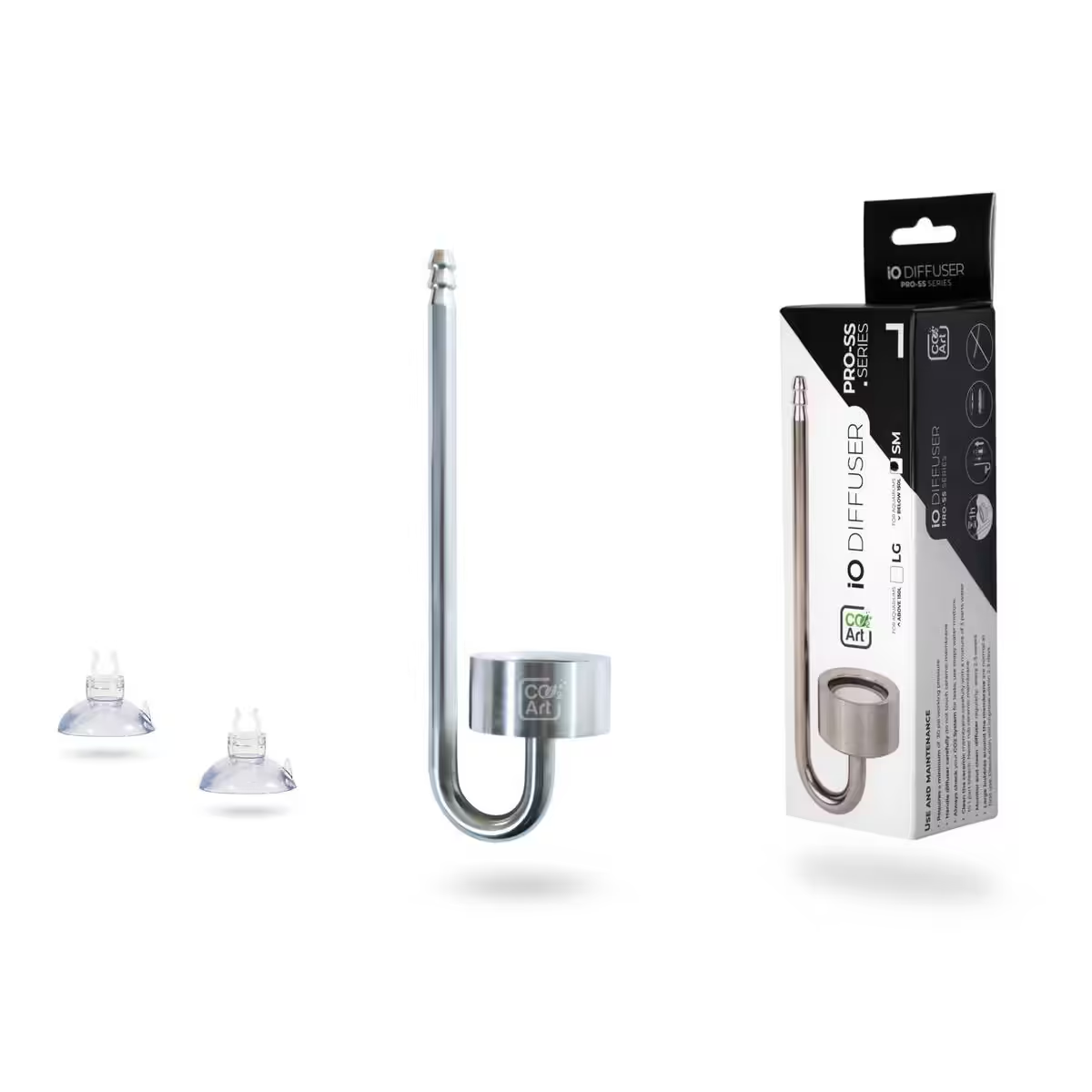
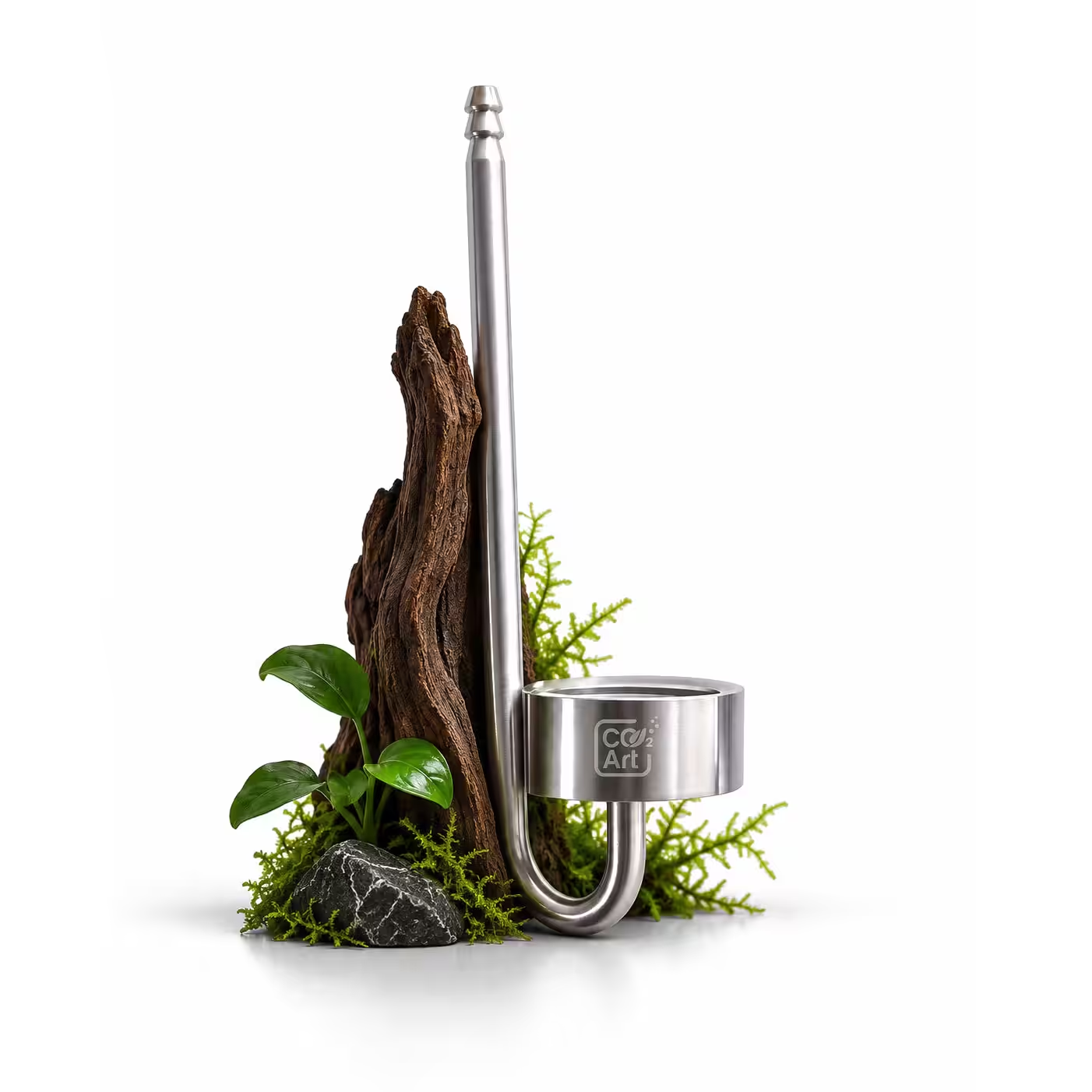
Co2Art IO Diffuser – Stainless Steel Series In Tank CO2 Diffuser Small
In stock
Frequently Bought Together
All Shipments insured against damage and loss.

The CO2Art IO Diffuser’s premium stainless steel construction delivers a stylish, high-performing in-tank CO2 diffusion solution.
Description
NEW IO Diffuser – Stainless Steel Series – In-Tank CO2 Diffuser.
High-Quality Stainless Steel materials for most demanding customers.
The stylish high-quality stainless steel body will give your setup not only the highest dissolution rate but also a touch of luxury.
The World’s finest dissolution rate with an easy interchangeable ceramic membrane.
In two different sizes;
- Small for aquariums below 150L.
- Large for aquariums above 150L.
Excellent CO2 dissolution rates thanks to new nano co2 mist technology membrane, easy maintenance and durable materials make IO Diffuser a perfect choice for novice and expert aqua-scapers alike. Designed to be used as a regular glass CO2 atomizer diffuser, but offering higher CO2 dissolution rates.
An IO Diffuser optimizes the CO2 entering the aquarium for efficient plant absorption and less waste. As CO2 bubbles pass through the porous diffuser, they are diffused into streams of tiny bubbles. With increased surface area, the tiny CO2 bubbles are readily dissolved into the water, increasing the saturation of CO2 in the aquarium ecosystem.
Diffuser Use
To use this CO2 atomizer diffuser, simply connect your CO2 tubing to the diffuser.
It is recommended that you set the pressure on your regulator to a minimum of 2 bar as a starting point. Please allow the diffuser to soak in the aquarium water for at least 2h before pressurizing the diffuser.
Please note! In the beginning, the diffuser will produce large bubbles around the ring. Over the first 24h of use, all the ceramic pores will fill with water and bubble size will decrease to the optimal size.
Please allow a few minutes for sufficient pressure to build up to allow the CO2 to begin passing through; it may not begin instantly.
Specifications
This is the Small. CO2Art rate it for aquariums below 150 litres; the Large, which we also stock, is for tanks above 150 litres.
Manufacturer’s item code: CA-IOD-SS-S.
Body: stainless steel.
Membrane: ceramic, interchangeable.
Series: Pro-SS.
Minimum working pressure: 30 psi (about 2 bar). That figure is printed on CO2Art’s carton and it is the single most important number on this product. A ceramic membrane fine enough to make CO2 mist needs real pressure behind it to push gas through, and below about 2 bar it will simply sit there.
Maintenance and cleaning, from CO2Art’s own carton:
Clean it every 2 to 3 weeks. A ceramic membrane blocks gradually with biofilm and mineral deposits, and the first sign is bubbles getting bigger.
Clean with three parts water to one part bleach. Soak the membrane in the dilution, then rinse it thoroughly.
Never rub the membrane, and handle the diffuser without touching it. The ceramic is fragile and the pore structure is the product. Once you have scored it, no amount of cleaning brings it back.
Check the whole CO2 system for leaks with a soapy water mixture. A slow leak upstream shows up as a diffuser that will not build pressure.
Large bubbles at first use are normal. CO2Art expect dissolution to improve within 2 to 3 days as the ceramic pores wet through.
The membrane is a consumable. CO2Art make it deliberately interchangeable and sell it as a spare (part CA-IOD-RR-S for the small body, CA-IOD-RR-L for the large). When cleaning no longer restores the fine mist, you replace the ceramic rather than the diffuser. We do not currently stock the spare membrane. Ask us before you need one.
Mounting: suction cups. CO2Art’s own product photograph shows two supplied with the diffuser, but they publish no packing list, so message us if that matters to your order.
CO2Art publish no dimensions or weight for this diffuser, so we are not going to quote any.
Compatibility
Tank size: below 150 litres. That is CO2Art’s own split between the two sizes, and it is about the membrane area. A larger membrane passes more gas at the same pressure. On a tank near or above 150 litres, take the Large instead: a small membrane on a big tank can run out of throughput before your plants have enough.
You need a pressurised CO2 system. CO2Art specify a minimum of 30 psi (about 2 bar) at the diffuser. That rules out DIY yeast bottles and any setup that cannot hold real pressure, not because CO2Art disapprove of them, but because a ceramic membrane this fine will not pass gas below its rated pressure. If you are running a regulated cylinder, you are fine.
Give it time before you judge it. CO2Art ask you to soak the diffuser in aquarium water for at least two hours before pressurising it, and to expect large bubbles around the ring for the first 24 hours while the ceramic pores fill with water. After that the bubble size drops to the fine mist you paid for. A great many diffusers get returned on day one for doing exactly what the manufacturer says they will do.
Also expect a delay each time it starts. Pressure has to build before gas crosses the membrane, so it may be a few minutes after your solenoid opens before anything appears. That is normal and it is worth knowing before you start adjusting your needle valve.
Tubing: CO2Art build the range around 4/6 mm tubing, and it must be CO2-resistant. Ordinary silicone airline is permeable to CO2. The gas escapes through the wall, which costs you a proportion of everything in the cylinder and makes your bubble count meaningless. We stock CO2Art’s polyurethane CO2 tubing in 4/6 mm.
Fit a check valve between the diffuser and the regulator. When the solenoid closes, water can siphon back up the line; a check valve is the cheap part that stops it reaching your regulator. We stock CO2Art’s Pro-Series precision check valve.
Getting the tubing over the rim tidily: CO2Art’s stainless U-Bend connector holds the line over the glass edge without kinking, sized by glass thickness. We stock the 1.5 cm version.
Where to put it in the tank: low, and in the flow: typically under or near the filter outlet, on the opposite side from where you sit. The mist should be carried around the tank rather than rising straight up in front of the glass. A diffuser in dead water dissolves far less of what you are paying for.
Check the result, do not assume it. Bubble counts tell you what is going in, not what dissolved. A drop checker with 4 dKH solution is the only cheap way to see the CO2 level your plants actually experience. We stock CO2Art’s drop checker kit and their replacement solution.
Planted freshwater aquariums. This is a plant-growing tool. It has no use in a marine tank and none in an unplanted one.
If you would rather have nothing in the tank at all, CO2Art’s inline atomizer does the same job plumbed into the outlet hose of an external filter. We stock it in 12/16 mm and 16/22 mm.
Returns & Replacement
Returns are accepted within 7 days of delivery, provided the item is unused and in its original packaging. Manufacturer-sealed items cannot be returned once the seal is broken, and sale-priced items are not refundable.
If your item arrives defective or damaged, message us on WhatsApp with your order number, or email us if you would rather, and we will replace it. Approved replacements are delivered within 3 to 5 business days. Transit damage is covered by insurance on every shipment. If tracking shows delivered but nothing reached you, tell us within 48 hours, which is the reporting window Indian couriers allow. Damage caused during installation or use is not covered; replacement spares for such cases are chargeable.
Full terms are on our Cancellation & Returns page.
Related Products
Reviews
Sorry, no reviews match your current selections
Q & A
Ask a question