What do fish eat? It depends on the species, but every aquarium fish needs a mix of protein, fat, vitamins, minerals, and fiber to grow, hold its color, and stay disease-resistant. Feed the wrong type of food, or feed too much of the right one, and the effects show up fast: dull color, slow growth, and water quality that crashes from uneaten waste.
What a fish needs also depends on where it lives in the tank and what it evolved to eat. A freshwater community tank, a shrimp-only setup, and a marine reef tank each call for different food, because the fish (and shrimp) in them eat differently in the wild.
IndieFur stocks food for freshwater fish, freshwater shrimp, and marine fish in flake, pellet, wafer, freeze-dried, and frozen forms. This guide covers what each type is for, how much protein and fat they typically contain, and how often to feed different species.
Why fish nutrition matters
Aquarium fish eat only what you give them. In the wild, most species graze on a mix of insects, algae, plankton, worms, small crustaceans, and plant matter throughout the day. A tank can’t reproduce that variety on its own, which is why the food you choose carries more weight than it would for an animal that can forage.
A diet matched to the species supports:
- Bone and muscle development
- Natural coloration
- Immune function
- Breeding success
- Digestion
Fish on the wrong diet tend to grow slowly, lose color, and become more susceptible to disease. None of that is usually visible right away, which is part of why feeding mistakes go uncorrected for months.
What kind of eater is your fish?
Before picking a food, it helps to know which category your fish falls into.
Herbivores
Herbivorous fish eat mostly algae, aquatic plants, and other vegetable matter, so they need food that’s higher in plant ingredients and fiber than a standard flake. Mollies, most Plecos, and Silver Dollars fall into this group.
Carnivores
Carnivorous fish need animal protein: insects, worms, shrimp, small fish, and crustaceans. Bettas, Arowanas, and Oscars are carnivores, and feeding them a plant-heavy diet leaves them underfed even if the bowl looks full.
Omnivores
Most community fish are omnivores and eat both plant and animal matter. Guppies, Tetras, Angelfish, Goldfish, Barbs, and Gouramis all do fine on a balanced diet that mixes the two.
Types of aquarium fish food
Fish food comes in several physical forms, and the form matters as much as the ingredient list, since it decides which fish can actually get to the food before it either sinks out of reach or fouls the water.
Flakes
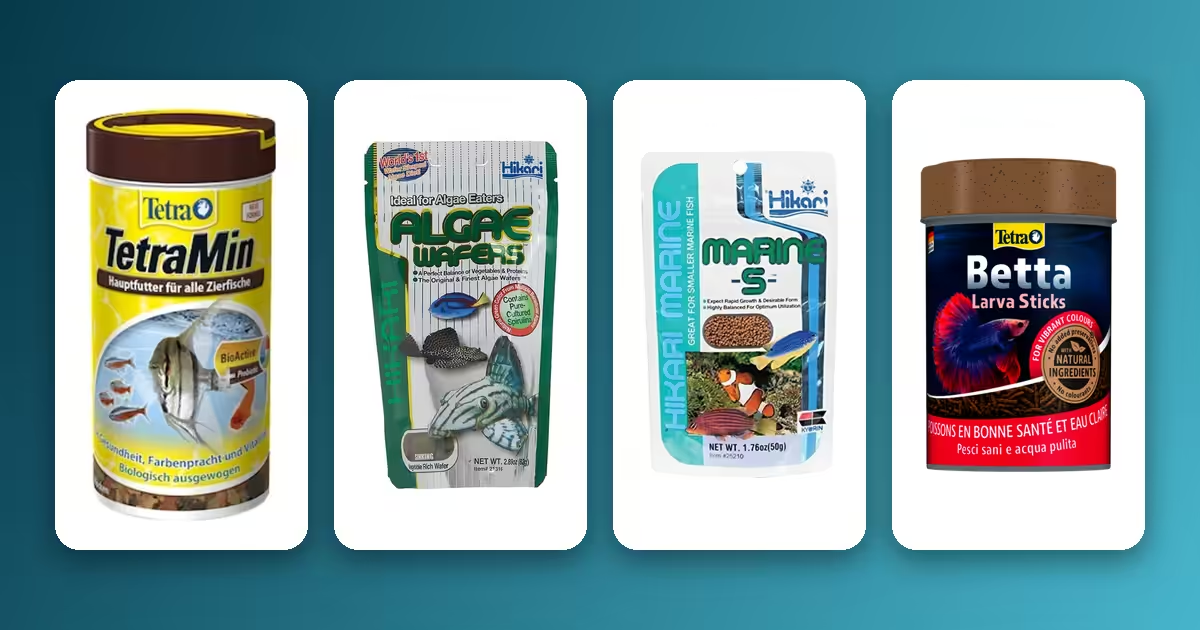
Flakes float briefly before sinking, so fish that feed at the surface, mid-water, and just above the substrate can all reach the same meal. A typical staple flake, such as Tetra Min Flakes, runs around 46% crude protein, 11% fat, and 3% fiber, built from fish meal, fish derivatives, and cereal. That protein level suits small to medium tropical fish like Tetras, Guppies, Mollies, Platies, and Rasboras, but it’s lower than what a dedicated carnivore needs.
Pellets
Pellets come in floating and sinking versions and pack more nutrition per bite than flakes, with less food breaking apart into waste. Goldfish, Cichlids, Angelfish, and larger community fish generally do better on pellets than flakes once they’re big enough to eat them whole.
Granules
Granules sink more slowly than pellets, which makes them a good match for fish that feed in the middle of the water column rather than at the surface or the substrate.
Wafers
Algae and vegetable wafers are built for bottom-dwelling species. Hikari Tropical Algae Wafers, for example, are a higher-vegetable-matter disc designed to sink fast and hold together so slower fish get a fair share before it dissolves. Plecos, Corydoras, and Loaches are the usual users.
Freeze-dried foods
Freeze-dried bloodworms, tubifex worms, krill, and brine shrimp are concentrated protein with a long shelf life, useful as a supplement rather than a daily staple.
Frozen foods
Frozen bloodworms, brine shrimp, mysis shrimp, and daphnia are closer to a fish’s natural diet than any dry food, and most aquarists use them a couple of times a week rather than daily, both for cost and because thawed food fouls water faster than dry food.
Live foods
Live insects or worms trigger natural hunting behavior in predatory species. The tradeoff is disease risk: live food sourced from an uncontrolled environment can introduce parasites, so it needs a reliable, quarantined source.
Choosing freshwater fish food
The right freshwater fish food depends on species, size, age, and what the fish would eat in the wild. Most community tanks mix plant- and meat-eaters, so a balanced food with both protein and plant ingredients, typically fish meal, shrimp meal, spirulina, vitamins, and minerals, covers the tank without needing a separate food per fish.
Young fish need more protein than adults to support growth; once they’re mature, a maintenance-level balanced diet is enough. Goldfish do better on food formulated for their digestive system than on a generic tropical flake, and Cichlids generally need more protein than community-tank staples provide. Hikari Goldfish Bio Gold Plus and Teraa Carna Cichlid Food are two examples built around those species’ actual needs rather than a generic formula.
When comparing products, check the ingredient and analysis panel rather than the front-of-pack claims, and confirm the food is sized and formulated for your fish’s species.
Essential nutrients every fish needs
Every fish food label breaks down into a few nutrient categories, and knowing what each one does makes the analysis panel readable instead of just numbers.
Protein
Protein drives muscle development, tissue repair, growth, and reproduction. Young fish need more of it than adults; a fry or juvenile diet typically runs higher in protein than an adult maintenance food.
Healthy fats
Fats supply energy and support organ function, but too much contributes to obesity and dirtier water, since uneaten fat and oil break down slowly.
Vitamins
The main ones to look for:
- Vitamin A for growth
- Vitamin C for immunity
- Vitamin D for bone health
- Vitamin E for cell protection
Minerals
Minerals support bone strength, metabolism, and normal body function generally.
Fiber
Fiber aids digestion and matters most for herbivorous species, which need it to break down plant material efficiently.
Feeding freshwater shrimp correctly
Shrimp graze on algae, biofilm, and leftover organic matter most of the day, but that alone isn’t enough nutrition in a home aquarium. A dedicated freshwater shrimp food adds the calcium, protein, and plant-based nutrients shrimp need for strong shells, clean molts, and successful breeding.
Popular freshwater shrimp species include:
- Cherry Shrimp
- Amano Shrimp
- Crystal Red Shrimp
- Blue Dream Shrimp
Shrimp food comes as sinking pellets, wafers, sticks, and powders. Baby shrimp need a finer, powdered food, since they can’t handle a standard pellet; Shirakura Chi Ebi is formulated specifically for that stage, and doubles as a way to encourage the biofilm baby shrimp also feed on.
Feed shrimp only small amounts. Since they graze on algae and biofilm continuously, they don’t need, or want, a large meal at once.
Feeding marine aquarium fish
Marine fish generally eat differently from freshwater species. In the wild, many feed on algae, plankton, small crustaceans, and other reef life, so marine fish food is formulated around marine proteins, seaweed, and omega fatty acids rather than the freshwater staples above. Food built for smaller marine fish, such as Hikari Marine S, differs in texture and pellet size from food made for larger reef fish, so check the fish size the product is meant for before buying.
Popular marine fish include:
- Clownfish
- Tangs
- Damselfish
- Wrasses
- Butterflyfish
- Gobies
Rotating in frozen mysis shrimp, marine plankton, or krill a few times a week adds variety a dry staple can’t fully replicate on its own.
How often should aquarium fish be fed?
Overfeeding is a far more common problem than underfeeding. Most adult aquarium fish need feeding once or twice a day, in an amount they can finish within two to three minutes; anything left after that is going to waste and fouling the water instead of feeding fish.
As a general guide:
- Fry: three to five small meals a day
- Juveniles: two to three meals a day
- Adult fish: one to two meals a day
- Shrimp: small portions every one to two days
- Bottom feeders: feed after the lights go off if other fish are outcompeting them for food
Skipping a single feeding is not a problem for a healthy adult fish, and a short trip away rarely needs an automatic feeder for that reason alone.
Feeding different species correctly
Goldfish
Goldfish do well on pellets, flakes, vegetables, peas, and occasional protein treats. Their digestive system handles plant-inclusive foods better than a straight high-protein diet.
Bettas
Bettas are carnivores and do best on protein-rich pellets or sticks, supplemented with bloodworms or brine shrimp. Tetra Betta Larva Sticks are one example built around that need, shaped like a worm so bettas take to them as readily as live food.
Guppies
Guppies eat flakes, micro pellets, algae, and the occasional frozen food, and rarely need anything more specialized than a standard community flake.
Cichlids
Diet varies a lot by species here. African cichlids generally need more plant matter than South American cichlids, which tend to need higher protein, so it’s worth checking which region a species comes from before assuming one cichlid food fits all of them.
Bottom feeders
Plecos, Corydoras, and Loaches do best on sinking wafers, vegetables, and food formulated to reach the substrate, since they rarely compete well for food that stays higher in the water.
Foods fish should never eat
A lot of ordinary household food is unsuitable for aquarium fish. Avoid:
- Bread
- Biscuits
- Chips
- Chocolate
- Processed meats
- Sugary foods
- Oily leftovers
- Highly salted foods
None of these give fish much nutrition, and most of them foul the water quickly once uneaten portions start breaking down.
Signs your fish are getting proper nutrition
A well-fed fish usually shows:
- Bright, even color
- Active swimming
- A strong appetite
- Steady growth
- Clear eyes
- Healthy, unfrayed fins
- Normal breeding behavior, for species that breed readily in a tank
A fish that turns lethargic, loses color, or stops eating for more than a day or two is usually signaling a nutrition or health problem worth investigating, not just a picky mood.
Common fish feeding mistakes
Overfeeding
Extra food settles at the bottom, decomposes, and drives ammonia levels up, which is the single most common cause of water-quality problems traced back to feeding.
Feeding only one food
Fish do better on some dietary variety than on the same product every single day, the same way a person eating one meal on repeat eventually misses nutrients that meal doesn’t cover.
Ignoring species requirements
Herbivores, carnivores, and omnivores need different nutritional balances, and a single all-purpose flake doesn’t cover all three well.
Choosing low-quality food
Cheap food is often bulked out with fillers and lower in the protein and nutrients that actually matter, which shows up as slower growth and duller color even when feeding amounts are otherwise correct.
Feeding at irregular times
A consistent feeding schedule reduces stress and keeps fish eating normally instead of becoming erratic feeders.
Tips for better aquarium feeding
- Feed at the same time every day.
- Rotate food types through the week instead of relying on one product.
- Remove uneaten food promptly.
- Store food in a cool, dry place.
- Replace food once it’s past its expiry date.
- Watch fish while feeding, since that’s often the easiest time to spot an early health issue.
- Adjust portion size as fish grow.
Finding aquarium food at IndieFur
IndieFur carries food for freshwater fish, marine fish, and freshwater shrimp, across flake, pellet, wafer, freeze-dried, and frozen forms, sized and formulated for different species and life stages.
Matching the food to the species, and the amount to what the fish will actually finish in a few minutes, does more for water quality and fish health than any single product choice.
Conclusion
What a fish eats comes down to three things: whether it’s a herbivore, carnivore, or omnivore; whether it feeds at the surface, mid-water, or the substrate; and its age. Match food form (flake, pellet, wafer, frozen) to where the fish feeds, match protein level to whether it’s a carnivore or herbivore, and feed only what clears in two to three minutes.
Check the analytical constituents on the label, not just the front-of-pack description, before assuming a food suits your fish. A 46%-protein flake is right for a community tank of Tetras and Guppies; it’s under-feeding a carnivorous cichlid and overkill for a herbivorous Pleco.
Frequently asked questions
1. What is the best food for aquarium fish?
It depends on the species. Omnivores do well on balanced diets, herbivores need plant-heavy foods, and carnivores need protein-rich formulas. Check the analytical constituents panel, not just the packaging, to confirm a food actually matches your fish.
2. How often should I feed my aquarium fish?
Most adult aquarium fish need feeding once or twice a day. Feed only what they finish within two to three minutes to avoid overfeeding.
3. Can fish survive without food for several days?
Healthy adult fish can usually go several days without food, which is fine for a short trip. Fry and delicate species need more regular feeding and shouldn’t be left on the same schedule.
4. How do I choose the right freshwater fish food?
Match the food to species, size, age, and natural feeding habits. Look at the protein, fat, and fiber breakdown on the label rather than assuming any “complete” food suits every fish equally.
5. What should I feed freshwater shrimp?
A food formulated for shrimp, which supplies the calcium, protein, and plant ingredients they need for molting, shell growth, and breeding. Baby shrimp need a finer, powdered version rather than a standard pellet.
6. Is marine fish food different from freshwater fish food?
Yes. Marine fish food is built around marine proteins, seaweed, and omega fatty acids rather than the freshwater ingredients used in flakes and pellets for tropical tanks.
7. Can I feed the same food every day?
A quality staple can be fed daily, but rotating in flakes, pellets, and occasional frozen food gives better variety and tends to keep fish more interested in feeding.
8. What happens if I overfeed my fish?
Uneaten food decays, which drops water quality and raises ammonia. It can also lead to obesity and digestive problems in the fish itself.
9. Do bottom-dwelling fish need special food?
Yes. Bottom feeders need sinking wafers, pellets, or algae-based food that actually reaches the substrate, since they compete poorly for food that stays higher in the water.
10. Where can I buy aquarium fish food online?
IndieFur stocks food for freshwater fish, shrimp, and marine aquariums across flake, pellet, wafer, and frozen forms for different species.