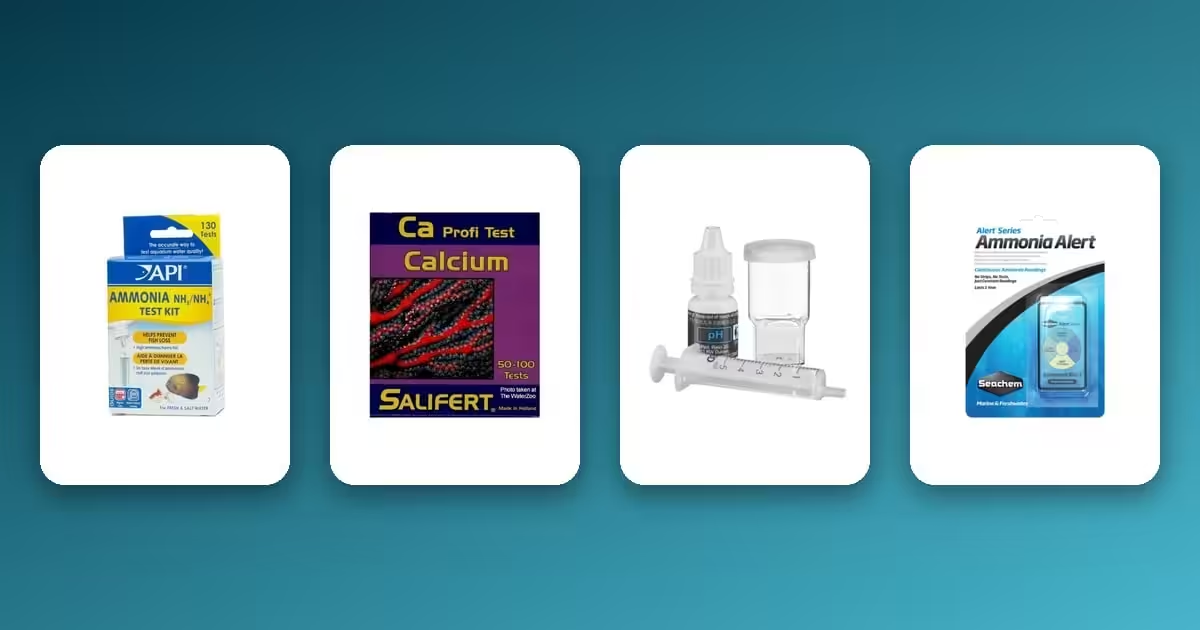
A test kit only tells you something useful if you’re testing the right parameter for your tank, at the right time. A freshwater community tank and a reef system test almost entirely different things, so this guide splits them cleanly. “Aquarium test kit” is two categories, and it helps to know which one you’re shopping in.
Freshwater: the four that matter
Ammonia and nitrite are the two that can kill fish outright, and they matter most in a new or recently-disturbed tank still cycling. Both should read zero in an established, cycled tank. Any detectable reading means something is wrong and needs investigating immediately. The Aquavascular Freshwater PAN Test Kit reads ammonia alongside nitrite, nitrate and phosphate in one pack, and the API Nitrite Test Kit is a standard standalone liquid drop-test for nitrite.
GH and KH (general hardness and carbonate hardness) matter less for immediate fish safety and more for whether your water chemistry suits the species you’re keeping. Soft-water fish like many tetras and discus struggle in hard water regardless of temperature and filtration being otherwise correct, and the reverse is true for hard-water species like most livebearers and African cichlids. The AquaVascular GH KH Test Kit covers both in one kit.
If you want fuller coverage in one purchase, the AquaVascular Ultimate Freshwater Test Kit bundles a wider parameter set, and the AquaVascular Freshwater PAN Test Kit covers pH, ammonia and nitrite together in one kit, for anyone who wants the three basics in one box.
Stock note: API’s own GH/KH, freshwater pH and Freshwater Master combination kits are all currently out of stock, which is why AquaVascular carries the freshwater recommendations above. Pointing you at what’s on the shelf beats listing a kit you can’t buy.
Reef and marine: what to test, and how often
Reef test kits split into two real categories that get confused constantly: drop tests that give you a precise number when you run them, and continuous alert badges that sit in the tank and give an ongoing visual warning without you having to run anything. Most experienced reef keepers run both.
Calcium, magnesium and KH/alkalinity are the three-legged stool of reef water chemistry. They interact with each other and with coral growth, and testing all three together is what tells you whether your dosing is balanced. Salifert’s Calcium and Magnesium kits are the ones most reef keepers start with. Both are currently on backorder (stocked to order, consolidated monthly per the supplier terms on the product page), which IndieFur treats as equivalent to in-stock rather than unavailable.
Ammonia, nitrite, nitrate and phosphate matter for the same reason they do in freshwater: nitrogen-cycle waste products that need to stay low. But the acceptable reef target for nitrate and phosphate is far lower than a freshwater fish-only tank, since even small excesses feed algae and stress coral. Salifert Ammonia, Nitrite, Nitrate and Phosphate cover the set. All four are currently on backorder, on the same monthly consolidation cycle as the calcium and magnesium kits.
pH and silicate round out the core reef panel. pH swings stress corals even within an otherwise-safe range, and silicate feeds diatom algae blooms. Salifert pH is the drop test for pH.
Continuous monitoring badges are a different product entirely from a drop test. They sit permanently in the tank and change colour as a warning, with no precise reading on demand. Seachem’s Ammonia Alert (1 year) and pH Alert (6 month) work this way, and the Alerts Combo Pack (also in a 6-month version) bundles both. Their job is to catch a problem developing between your scheduled drop tests, which matters most for ammonia specifically, since a spike can happen faster than a weekly testing routine catches it.
Stock note: Red Sea’s Pro line (Calcium, Magnesium, Nitrate, Phosphate, Alkalinity), Tropic Marin’s individual tests, Triton’s ICP testing service and Seachem’s MultiTest strip range are all currently out of stock. Salifert and the Seachem Alert badges are where the real depth is right now, and this guide reflects that instead of listing brands we can’t currently ship.
How often to test
Testing every parameter every day isn’t necessary and isn’t what experienced keepers do. A reasonable baseline: ammonia and nitrite weekly during cycling, then only after a disturbance (new fish, a filter clean, a dosing change) once established. Nitrate and phosphate weekly in a reef tank, since these drift steadily. Calcium, magnesium and KH every 1-2 weeks in a reef tank running active dosing, since these three need to stay balanced against each other. GH/KH in freshwater mainly at setup and after any water-source change, since they’re relatively stable day to day.
FAQ
Do I need a reef test kit for a fish-only marine tank with no coral? Less urgently. Ammonia, nitrite and nitrate still matter, but calcium/magnesium/alkalinity are specifically about coral growth and matter far less without coral to support. Skip that panel until you add coral.
Are drop tests more accurate than test strips? Generally yes for the parameters that matter most in this hobby. Strips are faster but read more subjectively (matching a colour by eye), while a titration-based drop test like Salifert’s gives a numeric result from counting drops, which is more repeatable between tests.
What does “on backorder” mean for delivery timing? IndieFur consolidates backorders with its overseas suppliers on a monthly cycle and ships within roughly two weeks of that consolidation. Check the specific product page for the current cycle dates before ordering if timing matters for you.