Aquascaping is the practice of arranging plants, rock, driftwood, and substrate inside an aquarium to create a deliberate visual composition, rather than just a functional home for fish. Four styles dominate the hobby worldwide: Nature Aquarium, Dutch, Iwagumi, and Jungle. Each demands a different mix of patience, hardscape, and plant knowledge.
What is aquascaping?
At its core, aquascaping treats the tank as a living landscape. Every style shares the same building blocks: substrate, hardscape (rock and wood), plants, lighting, and usually CO2 injection. Each style arranges these according to different design principles, borrowed variously from landscape art, garden design, and minimalism.
Comparing the four styles at a glance
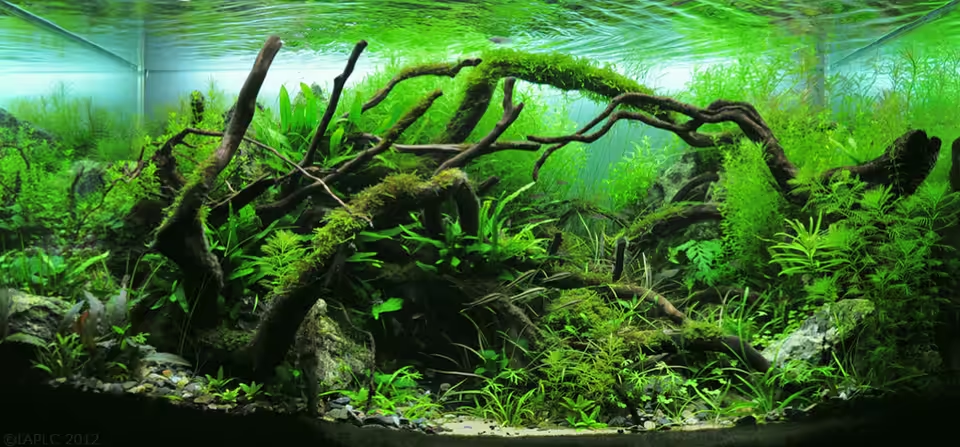
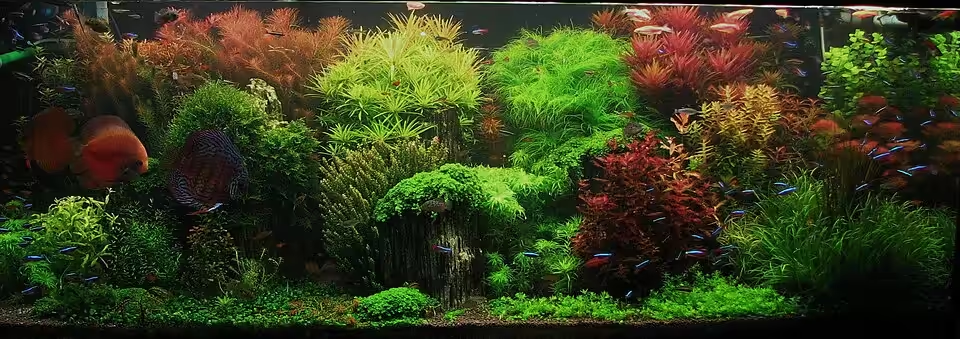
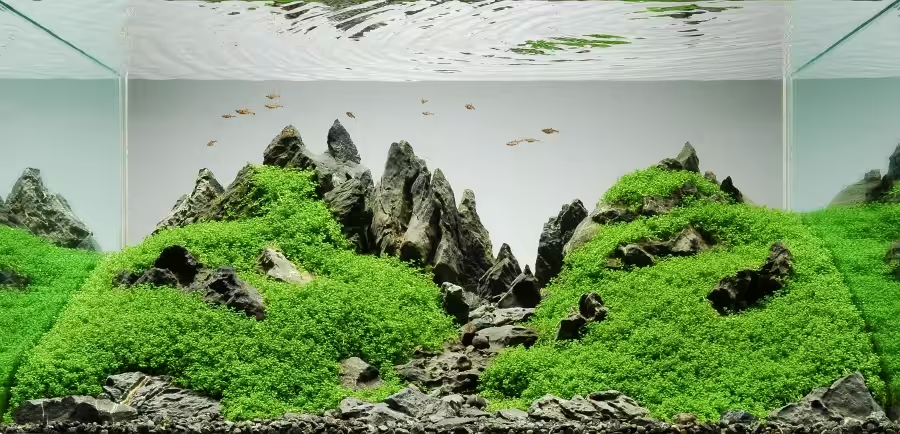
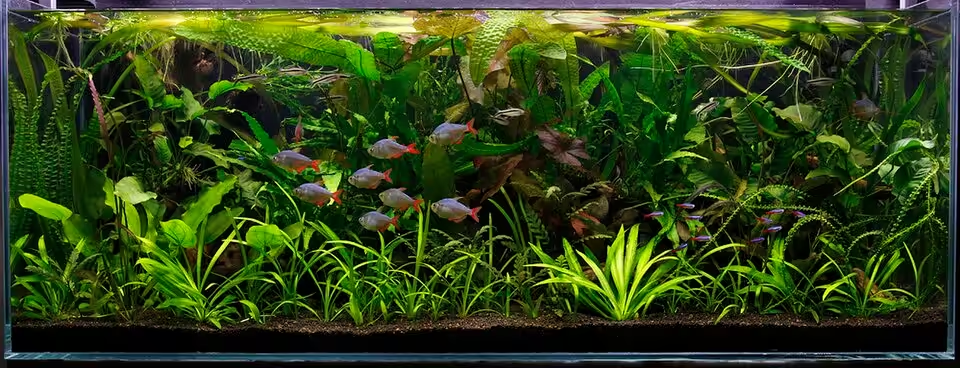
Nature Aquarium style
Pioneered by Takashi Amano in the 1990s, Nature Aquarium style mimics natural landscapes (mountain ridges, forest floors, riverbeds) using asymmetric hardscape as the skeleton of the layout. Driftwood and rock are arranged off-center following the rule of thirds, with plants layered by height to create depth: fine-leaved carpet and stem plants in the foreground, taller stems and epiphytes (plants like Anubias and Java Fern tied to wood or rock) further back. It’s the most visually dramatic style and also the most demanding: hardscape selection alone can take hours, and the planting needs ongoing trimming to hold its shape.
Dutch style
Dutch style predates Nature Aquarium and takes the opposite approach: little to no hardscape at all. Instead, dense rows and “streets” of different stem plants are arranged by leaf color, texture, and height, similar to a garden flower bed. A well-executed Dutch tank reads almost like a striped or terraced pattern when viewed from the front. It demands the deepest plant knowledge of the four styles (you’re managing growth rates, color contrast, and trimming schedules across many different species at once), but needs comparatively little hardscape budget.
Iwagumi style
Iwagumi is minimalism taken to its logical end: an odd number of rocks (traditionally three, five, or more, always odd) arranged with one dominant stone (Oyaishi) and smaller supporting stones (Fukuishi), set into a carpet of low-growing plants like Dwarf Hairgrass or Monte Carlo. There’s no dense planting to hide mistakes: every rock placement and every gap in the carpet is visible, which makes stone selection and initial layout the hardest part. Fish selection stays minimal too, usually a single small schooling species like Ember Tetras, to keep the focus on the hardscape and carpet.
Jungle style
Jungle style is deliberately dense and overgrown, aiming for the feel of an untamed, wild aquatic environment rather than a manicured landscape. It looks low-maintenance, but the wild look still needs planning: you’re choosing plants that grow well left alone (fast stem plants, floating plants, tall background growth) rather than plants that need precise trimming to look good. It’s often the most forgiving style for a first attempt, since imperfect trimming and irregular growth actually suit the aesthetic instead of ruining it.
Which style should you choose?
If you’re just starting out and want a forgiving first project, Jungle style or a simple Iwagumi with an easy carpet plant are the most beginner-friendly. If you enjoy precise, ongoing maintenance and want to learn plant care in depth, Dutch style will teach you the most. If you want the most dramatic, photogenic result and don’t mind spending real time on hardscape selection, Nature Aquarium style is the classic choice, just budget more patience for it than the others.
What you’ll need to get started
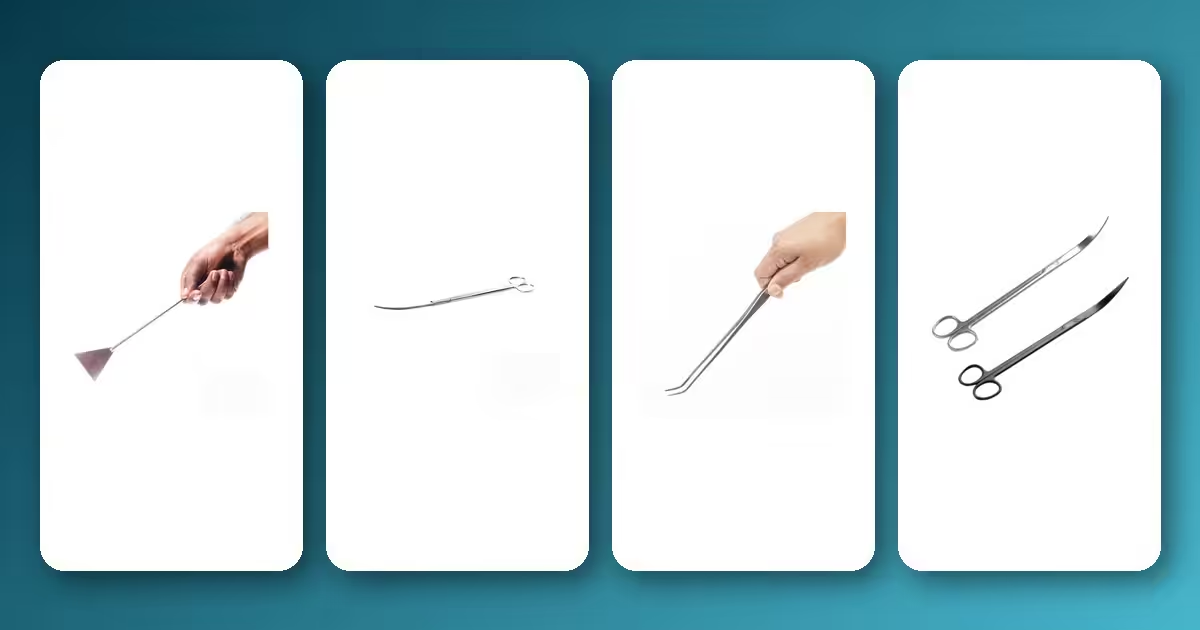
Every style listed above needs a nutrient-rich substrate, a planted-tank light with enough PAR for your chosen plants, and in most cases CO2 injection to support faster growth. For the actual layout and ongoing trimming, a proper set of aquascaping tools (curved scissors, tweezers, and aquascaping-safe glue for attaching moss to hardscape) makes a real difference over kitchen scissors and tongs.
Planted tank lighting FAQ
Lighting questions come up in every one of the four styles above, so here are the basics before you buy.
How much light does a planted tank actually need?
It depends on the plants, not just the tank size: low-light species like Anubias and Java Fern do fine under modest output, while carpeting plants (Dwarf Hairgrass, Monte Carlo, HC Cuba) used in Iwagumi and Nature Aquarium layouts need considerably more intensity to spread rather than stretch. Check a light’s PAR rating at your tank’s water depth rather than going by wattage alone. The same fixture throws very different PAR at 30cm of depth versus 60cm.
What’s a safe photoperiod to start with?
6-8 hours a day is a reasonable starting point for most planted tanks. Longer photoperiods don’t grow plants faster once they’ve hit their light saturation point; they mostly just give algae more hours to compete, so extending the photoperiod is rarely the fix for slow growth.
Do I need a full-spectrum light or a plant-specific one?
A dedicated planted-tank light is worth it over a generic aquarium light: it’s tuned to the red and blue wavelengths plants actually use for photosynthesis rather than just what looks good to the eye. Full-spectrum “daylight” fixtures can grow plants too, but usually need higher output to deliver the same usable PAR.
Why are my plants stretching toward the light instead of filling out?
That’s usually a sign of insufficient intensity for that species at your tank depth: the plant is growing toward the light source rather than building denser tissue. Raising the fixture rarely helps; check the PAR rating against your depth and consider a stronger fixture or moving light-hungry plants higher in the water column.
FAQ
Do I need CO2 for every aquascaping style?
Not strictly, but all four styles rely on healthy, fast-enough plant growth to hold their shape, and CO2 injection is the single biggest lever for that. Low-tech (no-CO2) versions of Jungle and Dutch style are possible with easier plant species, but Iwagumi carpets and dense Nature Aquarium layouts are much harder without it.
Which style is cheapest to start with?
Dutch style, since it needs little to no hardscape: most of the cost goes into plants and lighting rather than rock or driftwood.
How long does an aquascape take to mature?
Most layouts need 4-8 weeks to fill in and start looking intentional rather than sparse, and Nature Aquarium/Dutch layouts in particular keep evolving with regular trimming for months after that.