

Reef Water Chemistry Guide: Conditioners, Buffers & Trace Elements
Why Reef Chemistry Is Different From Freshwater
Freshwater fishkeeping revolves mainly around the nitrogen cycle and a handful of parameters. Reef keeping adds an entirely different layer of complexity: corals are actively pulling calcium, alkalinity, magnesium and a range of trace elements out of the water to build their skeletons and maintain healthy tissue, which means a reef tank’s water chemistry needs ongoing replenishment, not just periodic water changes. Before diving into supplementation, it’s worth confirming your baseline parameters are accurate — our guide on using the Salifert Calcium test for accurate results covers how to get a reliable calcium reading, which is the foundation everything else in this guide builds on.
The Big Three: Calcium, Alkalinity and Magnesium
These three parameters are collectively referred to as the “big three” in reef keeping because they’re interlinked — an imbalance in one affects how stable the others can be, and all three are consumed continuously by growing corals and coralline algae.
- Calcium is the primary building block of coral skeletons (calcium carbonate) and is depleted fastest in heavily stocked, fast-growing SPS-dominant reef tanks.
- Alkalinity (KH) measures the water’s buffering capacity and directly affects how efficiently corals can deposit calcium carbonate — low or unstable alkalinity is one of the most common causes of coral stress and bleaching in otherwise healthy-looking tanks.
- Magnesium works alongside calcium and alkalinity, keeping calcium and carbonate from precipitating out of the water when both are dosed at higher levels — without adequate magnesium, it becomes very difficult to raise and hold calcium and alkalinity where they need to be.
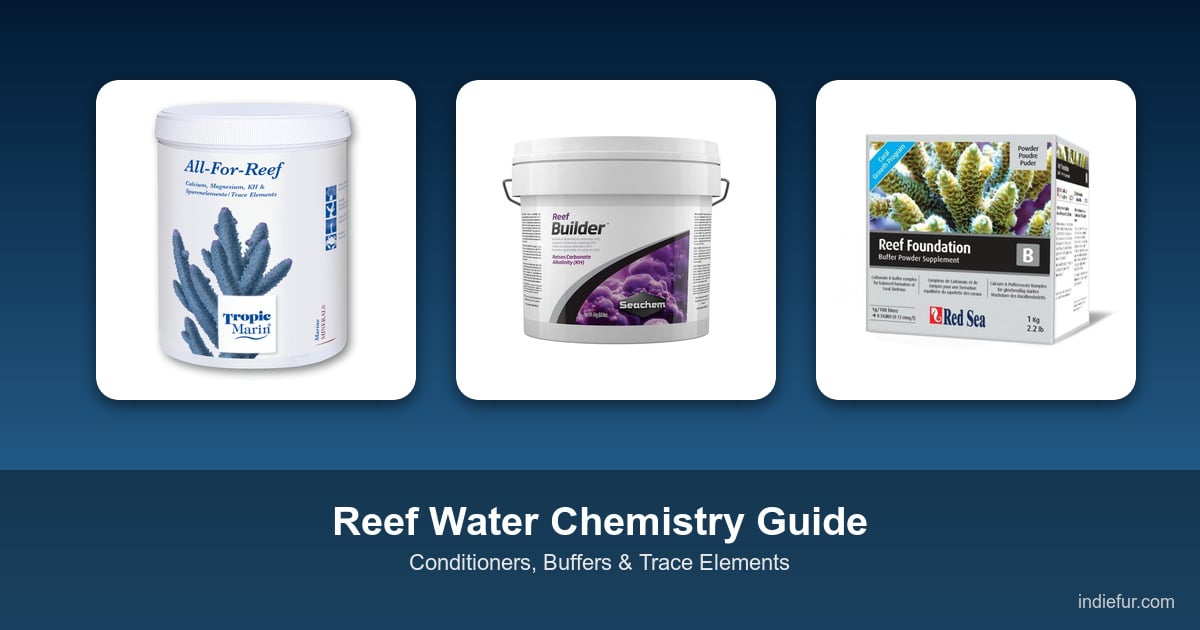
A balanced all-in-one supplement such as Tropic Marin All For Reef Powder 1.6 Kg is designed to replenish calcium, alkalinity, and trace elements together in the correct ratio, which simplifies dosing considerably compared with tracking and adjusting three separate supplements. For larger systems or multi-tank reef setups where consumption is higher, the Tropic Marin All For Reef Powder 15 Kg Commercial Pack offers the same balanced formula at a scale that avoids frequent reordering. If you’d rather dose alkalinity on its own — useful once calcium and magnesium are already stable and only KH needs topping up — Seachem Reef Builder is a dedicated carbonate/bicarbonate buffer that raises alkalinity without significantly shifting calcium or pH.
Trace Elements: The Overlooked Third Layer
Beyond the big three, corals also draw on a wide range of trace elements — iodine, strontium, iron, manganese and others — that support coloration, tissue health, and specific metabolic processes. These elements deplete more slowly than calcium or alkalinity but still need periodic replenishment, especially in tanks that rely heavily on protein skimming and carbon dosing, both of which can strip trace elements from the water alongside the organics they’re meant to remove.
A dedicated trace element supplement such as Korallen-Zucht Seawater Complex Concentrate 500 ml (also available as the larger 1000 ml concentrate for bigger systems) is formulated to restock this broader range of trace elements that calcium/alkalinity-focused supplements don’t fully address on their own. Red Sea Reef Foundation B is a widely stocked alternative covering a similar range of trace elements alongside alkalinity support, worth considering if you’re already running other Red Sea Foundation products.
Coral-Specific Boosters
Beyond general water chemistry maintenance, some products are formulated specifically to support coral growth and colour rather than just holding baseline parameters steady. Korallen-Zucht Coral Booster 1000 ml is designed to supply the amino acids and trace nutrients that support coral tissue growth and polyp extension, which can be a useful addition once your baseline calcium, alkalinity and magnesium are already stable — boosters like this work best as a refinement on top of solid fundamentals, not as a substitute for them.
Testing Before Dosing
The single biggest mistake in reef chemistry is dosing based on assumption rather than measurement. Calcium, alkalinity and magnesium should each be tested regularly — weekly is a reasonable starting cadence for most established tanks, more frequently in new or heavily stocked systems — and dosing should be adjusted based on actual test results rather than a fixed schedule. Consistent, accurate testing (as covered in our Salifert Calcium testing guide) is what turns supplementation from guesswork into a controlled, repeatable process.
A Simple Reef Maintenance Routine
- Test calcium, alkalinity and magnesium weekly, recording results so you can spot drift over time rather than reacting to a single reading.
- Dose an all-in-one supplement like Tropic Marin All For Reef to correct any measured shortfall, following label guidance based on tank volume and test results.
- Add trace elements on a slower cycle (weekly to bi-weekly) since they deplete more gradually than the big three.
- Introduce coral boosters only once baseline parameters are stable for several consecutive tests, to avoid masking an underlying imbalance with a growth-focused product.
- Reassess after any major tank change — new coral additions, increased lighting, or a bioload change can all shift consumption rates and require dosing adjustments.
Quick Reference: What Each Product Addresses
| Need | Product |
|---|---|
| Balanced calcium, alkalinity & trace elements (small-medium tank) | Tropic Marin All For Reef Powder 1.6 Kg |
| Balanced calcium, alkalinity & trace elements (large/multi-tank systems) | Tropic Marin All For Reef Powder 15 Kg Commercial Pack |
| Broader trace element replenishment | Korallen-Zucht Seawater Complex Concentrate (500 ml / 1000 ml) or Red Sea Reef Foundation B |
| Coral growth & colour support | Korallen-Zucht Coral Booster 1000 ml |
Stable, well-tested water chemistry is what separates a reef tank that merely survives from one where corals actively grow and colour up. Build the habit of testing before dosing, keep the big three in balance, and layer in trace elements and boosters once your fundamentals are solid — the results compound over months, not days.


