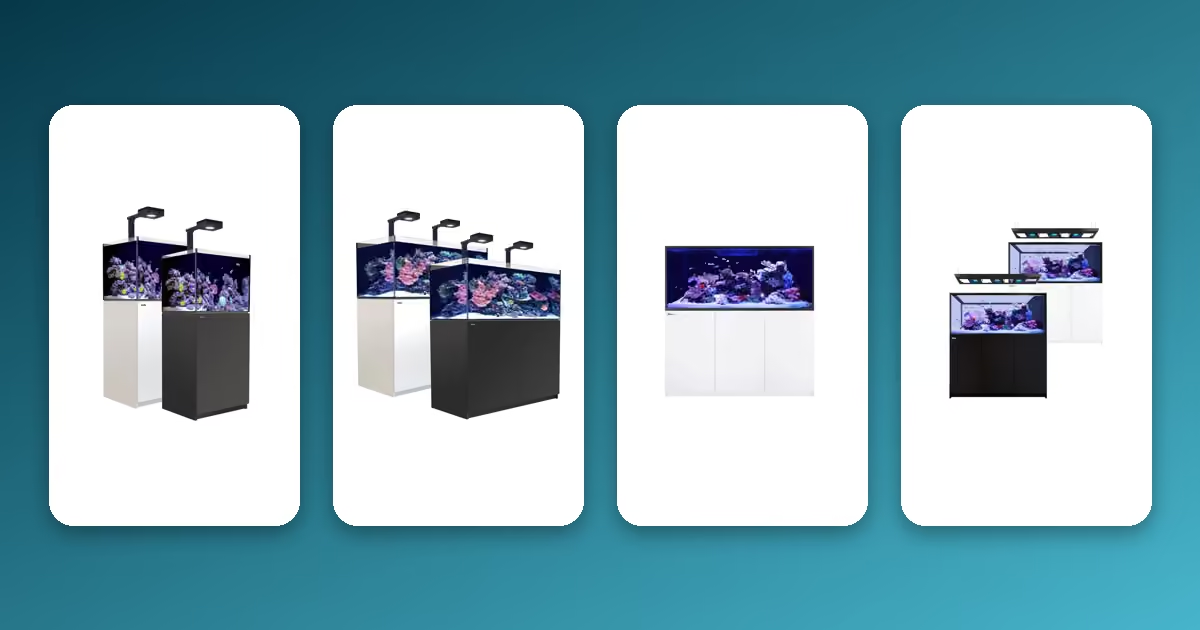
A Red Sea Reefer is a complete reef-ready tank: glass, cabinet, sump, auto top-off and plumbing in one package. The hard part is picking the size. Choose it by the fish and livestock you plan to keep, because moving up a size later means tearing down a tank that was working.
IndieFur is an authorized Red Sea dealer, and every model below is the G2+ generation.
Plan and shop
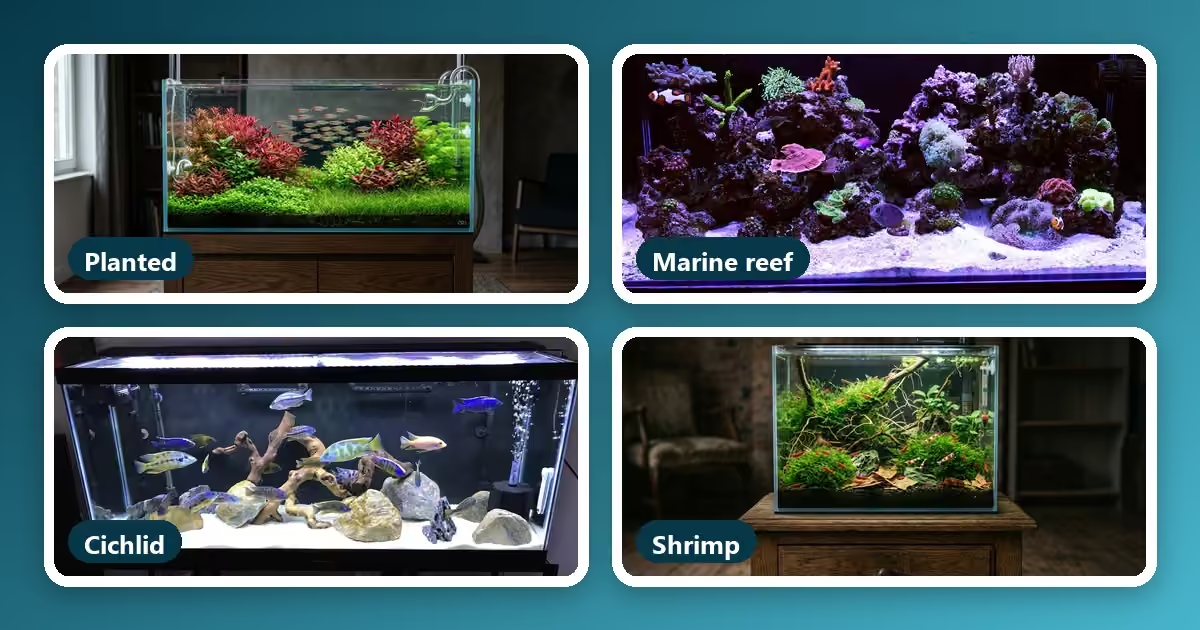
Setting up a marine tank? Choose fish only, soft coral and LPS, or SPS reef. The equipment list for your tank size follows.
Pick the size from your stock list
I run two Red Sea Reefer 525 XL systems myself. I choose a size by what fish and other stock I plan to keep in it. Upgrading later because the tank turned out too small is a lot of hassle, and it is not wise to tinker with a stable reef system.
So write the stock list first: the biggest fish, the coral groups, any anemone or large tang you want in two years. Then pick the smallest Reefer that holds all of it comfortably. If a fish on that list needs swimming room, leave the 170 and 250 out of the running.
Size also needs a delivery check, covered near the end.
All G2+ sizes side by side
Volumes are Red Sea's own figures from the product listings. Display volume is the tank itself; total system volume adds the sump. Litres are rounded conversions from US gallons.
| Model | Display volume | Total system | Trim | Shape |
|---|---|---|---|---|
| Reefer Deluxe 170 G2+ | 34 US gal (about 128 L) | 44 US gal (about 165 L) | Deluxe | Standard |
| Reefer Deluxe 250 G2+ | 54 US gal (about 204 L) | 65 US gal | Deluxe | Standard |
| Reefer 350 G2+ | 72 US gal (about 273 L) | 90 US gal | Standard | Standard |
| Reefer Deluxe 350 G2+ | 72 US gal (about 273 L) | 90 US gal | Deluxe | Standard |
| Reefer Deluxe 425 G2+ | 91 US gal (about 344 L) | 115 US gal | Deluxe | Standard |
| Reefer Deluxe 525 G2+ | 112 US gal (about 424 L) | 143 US gal | Deluxe | Standard |
| Reefer Deluxe S-550 G2+ | 118 US gal (about 448 L) | 145 US gal | Deluxe | S-series |
| Reefer Deluxe 625 G2+ | 132 US gal (about 500 L) | 164 US gal | Deluxe | Standard |
| Reefer Deluxe 750 G2+ | 160 US gal (about 606 L) | 200 US gal | Deluxe | Standard |
| Reefer S 700 G2+ Deluxe | 149 US gal (about 564 L) | 184 US gal | Deluxe | S-series, single large viewing panel |
| Reefer S-700 G2+ Peninsula Deluxe | 150 US gal (about 568 L) | 186 US gal | Deluxe | S-series Peninsula, two viewing panels |
The 350 is the only size we sell in both trims. Every other model listed here is Deluxe.
Footprint, stand height and room planning
The litre figure tells you what the tank holds. It does not tell you whether the cabinet fits the wall you have picked. Before you fall for a size, mark the footprint on the floor with masking tape and live with it for a day. Walk past it. Open the nearby door. Picture the sump doors open and a bucket sitting beside them.
Leave working room on at least one side and at the front. You will want to reach the sump for water changes, skimmer cleaning and swapping filter media, and a cabinet jammed against a wall turns every one of those jobs into a chore. Behind the tank, keep a gap for cables and tubing, and some air movement. A stuffy, closed room traps heat from the lights and pumps, so a ventilated space or a small fan helps keep the water temperature steady.
Check the floor too. A big reef tank is heavy once it is full of water, rock and sand, and all of that weight sits on a small patch of floor. A ground floor room with a solid slab is the easy case. On an upper floor, or over a wooden or hollow floor, ask someone who understands the building before you commit.
Last, think about power. A Reefer runs lights, pumps, a skimmer, a heater and the auto top-off, so plan enough sockets close to the tank, best on a surge-protected strip mounted above any possible water spill. Keep drip loops in every cable.
Deluxe or standard
A Deluxe Reefer adds Red Sea ReefLED G2 lighting and its mounting arms to the package. The standard 350 does not list lights among its contents, so you choose and buy your own. That makes the 350 pair the cleanest comparison: the tank, cabinet and sump are the same, and the difference is the lighting.
Pick standard if you already own lights you like or you want a different make, such as a Kessil or EcoTech fixture. Pick Deluxe if you want the lights, arms and tank from one maker in one box. If you go your own way on lighting, our aquarium lighting guide explains what to look for.
Standard, S-series or Peninsula
A standard Reefer has one big front viewing panel. The S-series models, such as the S-550 and S-700, are the large-format builds. The S 700 Deluxe ships with three ReefLED G2 170 fixtures, a slide-out control panel and a refugium-ready sump, per its product page.
A Peninsula turns the tank 90 degrees to give you two large viewing panels. Red Sea describes it as a centrepiece for a home or office. It needs open floor space on more than one side, so measure for it before you fall for it. The S-700 and the S-700 Peninsula are the same size class, which makes them a direct pair to compare.
What every G2+ Reefer includes
These come from the Red Sea listings and apply across the range, with a few size limits noted.
- A 3-in-1 ReefATO+ auto top-off with a temperature monitor and an external leak detector.
- Rimless, ultra-clear, bevelled-edge glass.
- A marine-spec laminated plywood cabinet. Models from the 625 up add aluminium floating tank supports.
- A central overflow box that hides the piping, with a large surface skimmer and a removable weir comb.
- Dual side-facing return outlets on the 350 and bigger.
- A REEF-SPEC sump with a mechanical filtration compartment, an adjustable-height skimmer chamber, a bubble trap and room for a ReefMat 500 or 1200 roller filter (sold separately).
Starting small or starting big
People ask whether a smaller Reefer is easier to look after. In day to day terms it is easier to clean, and the livestock bill is lower. In stability terms it is the opposite. A small volume of water swings faster when something goes wrong, whether that is a heater sticking on, a missed top-off or a dead fish nobody spotted. A larger system gives you more time to notice and fix a problem before the corals feel it.
That does not mean you should buy the biggest tank you can afford. A large reef you cannot keep up with is worse than a small one you enjoy. Be honest about your routine. If you can manage a weekly water test, regular filter cleaning and a few minutes of looking at the tank every day, a mid-sized system is a comfortable place to start. If you travel often, lean towards a size where the auto top-off and a steady setup do most of the work.
A bigger sump holds more water, which adds to stability, and gives you room for a refugium or extra gear later. Leaving yourself space for upgrades costs less than rebuilding.
Setting up and cycling a new Reefer
The box arriving is only the first step. A new reef tank needs weeks before any fish go in, and rushing this stage is the most common way beginners lose their first livestock.
- Level the cabinet before anything else, because an out of true cabinet puts uneven stress on the glass once it is full.
- Run a leak test with plain water first and watch every joint, the overflow and the plumbing for a day or two. It is a nuisance, but far less of one than finding a drip after the rock is in.
- Mix salt into RODI water in a separate container, stir until it has fully dissolved, and let it circulate and aerate before use. Check the salinity with a refractometer or similar tool before it goes near the display.
- Test ammonia, nitrite and nitrate through the cycle. How long that takes varies from tank to tank, and it can run to several weeks.
- Bring in hardy livestock first and add slowly, one group at a time, so the bacteria can catch up with the growing load.
A tank that looks empty for the first few weeks is normal, and filling it early only invites trouble.
Fitting out the rest of the system
The tank is the start, and the rest does not all have to come from Red Sea. The sump has an adjustable chamber for a skimmer. The Red Sea Reefer Skimmer 1500 is the Reefer-matched option and the Tunze DOC 9430 comes from another maker; our skimmer buying guide covers sizing.
For circulation inside the display, a Jecod DMP 20 wavemaker is one way to do it. A new reef also needs RODI water, and our RODI glossary page explains what to aim for. For what to measure once it is running, see the test kits buying guide.
Delivery and ordering
Reefer systems are heavy and bulky. Shipping is not included in the listed price and is charged at actuals, so call or WhatsApp our support on +91-9999099613 to confirm delivery to your address before you order. Also check the stairs, the door width and the floor: a full 150 US gallon tank is a serious weight.
Browse the full Red Sea range and the Marine Tanks category for every system.
Questions people ask
Which Reefer size is best for a beginner?
Pick from your stock list, as above. A few small fish and soft corals fit a smaller Reefer. A large tang or a big coral collection needs a larger one.
What is the difference between the Reefer 350 and the Deluxe 350?
Lighting. The Deluxe includes Red Sea ReefLED G2 lights and mounting arms, and the standard 350 does not. The tank volume and sump are the same.
Is the Peninsula bigger than the standard S-700?
Barely. Red Sea lists the S-700 Peninsula at about 150 US gallons of display volume against about 149 for the standard S 700. The shape is what differs, with two viewing panels instead of one.
More questions before you buy
Do I need to buy anything besides the Reefer system?
Yes, a few things. You will need salt, RODI water, a test kit, a heater if your room runs cold, and rock and sand for the display. The sump has a chamber for a skimmer, but a skimmer is bought separately, so budget for one. Many people also add a wavemaker for extra flow. Check the product listing for exactly what comes in the box.
Can I keep fish and corals in the same Reefer?
Yes, that is what the system is built around. Some fish nip at corals and some outgrow smaller tanks, so match the stock to the size you buy.
Is the Peninsula harder to set up than a standard model?
The harder part is the room. It needs open floor on more than one side, so measure the space and the walking route first. For anything about its internal layout, read the product page or ask us before ordering.