Say you feed 10 g a day. A 4 kg pack lasts 400 days, far past the few months you’d want to finish it in. A large pack cuts the cost per feeding only if you finish it while the food is still good.
When bulk buying saves money
A 4 kg pack costs less per feeding than the same weight in small pots. Buy big if you run more than one tank, keep large or fast-growing fish that eat a lot, or feed a big community. I’d buy a good product from a good brand instead of a big pack of cheap food with inconsistent quality or low nutritional value. One small tank with a handful of fish can leave food sitting for months past its useful window, however low the price per gram looks on the label. Choose a size you can finish in a few months. Feed 40 g a day across four tanks, and a 4 kg pack lasts 100 days.
Storage: what degrades, and why it matters more with big packs
A bag left open, or loosely resealed, loses potency sooner than a sealed one. Dry fish food doesn’t rot. It loses nutritional value. Air, light and humidity speed that up, and vitamins such as vitamin C break down first. The best-before date assumes the container is unopened and sealed, and a bigger pack gets opened more times before it’s finished. Customers often assume the pack with the latest expiry date is fresher or better food. It isn’t.
Reseal tightly after every feeding. Keep the pack in a cool, dry spot out of direct sun. Decant a small amount into an airtight container for daily use, and leave the rest sealed until you need it. Bulk only pays off when the food at the bottom of the pack is as good as the food at the top.
Bulk pack sizes to look at
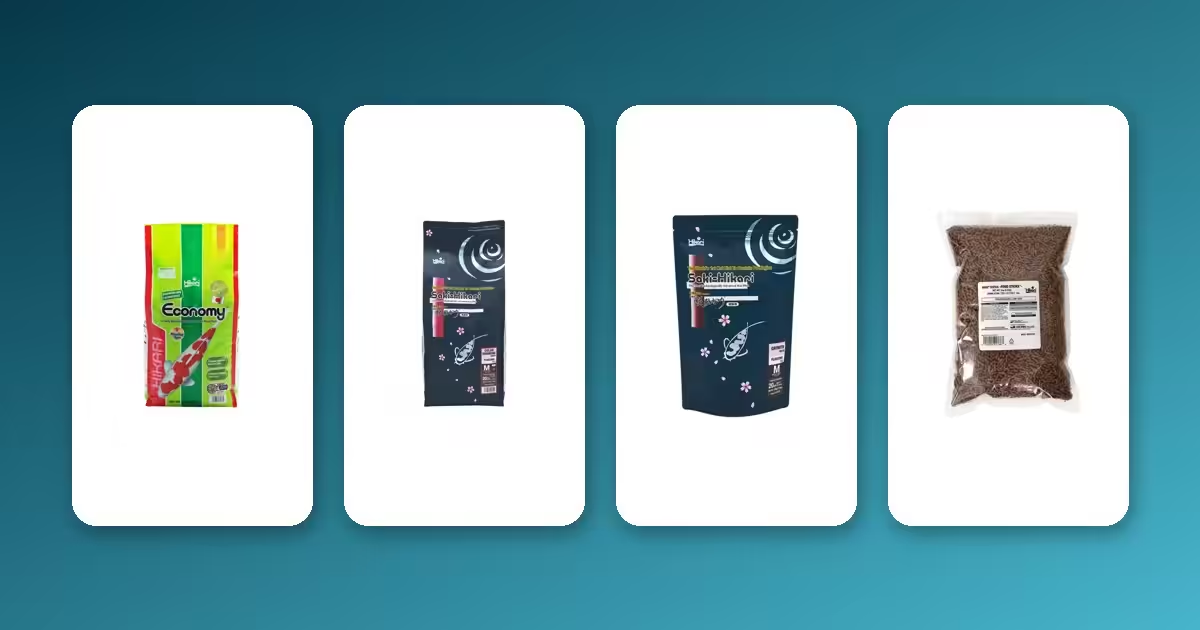
Hikari Economy 4 Kg (Large Pellet) is the 4 kg pack for large fish that eat fast, or for several tanks. There’s a Medium Pellet version for mid-sized fish. Both use Hikari’s standard formulas in a larger pack.
For a colour-focused diet, the biggest pack is Saki-Hikari Colour Enhancing Floating Diet, Medium, 5 Kg. Five kilos is a lot. If that’s too much, the Growth Floating Medium Pellet in 500 g is a smaller step up from a starter pot, and its Growth formula is made for fish that are still growing.
For other brands and formats, browse the freshwater fish food category. Floating pellets and flakes won’t reach bottom feeders. Sinking pellets and wafers do. I feed sinking pellets to bottom feeders, and flakes to fish that feed at the top or middle of the tank.
How much is enough
Feed community fish only what they finish in two to three minutes, once or twice a day. Weigh it for a week. Divide the pack weight by the daily amount to work out how many days it lasts.
Not sure which food suits your fish? Our What Do Fish Eat and Fish Food for Growth guides go through food types by species, while How to Buy Fish Food Online shows how to check freshness before checkout.
On one small tank, a 4 kg pack outlasts its freshness window. Spread it across several tanks, or feed it to one heavily stocked large tank, and it lasts a few months. For example, if a week of weighing comes to 350 g, that’s 50 g a day and a 4 kg pack lasts 80 days.
FAQ
Does a bigger pack mean older stock? Pack size alone doesn’t tell you its age. Check the manufacture or best-before date on any pack. A large pack that sat in a warehouse is a bigger risk than a fast-selling small pot. Our product pages list freshness terms.
Can I freeze fish food to extend its life? Dry pellets and flakes don’t belong in the freezer. Thawing adds moisture, which does more harm than the freshness it saves. Keep it sealed, cool and dry.
Is a bulk pack worth it for one small tank? Rarely, unless you have a second tank or plan to keep the fish for years. Divide the pack first. Pack weight and your feeding rate tell you how long it lasts, and that number should come before you pick the largest size.