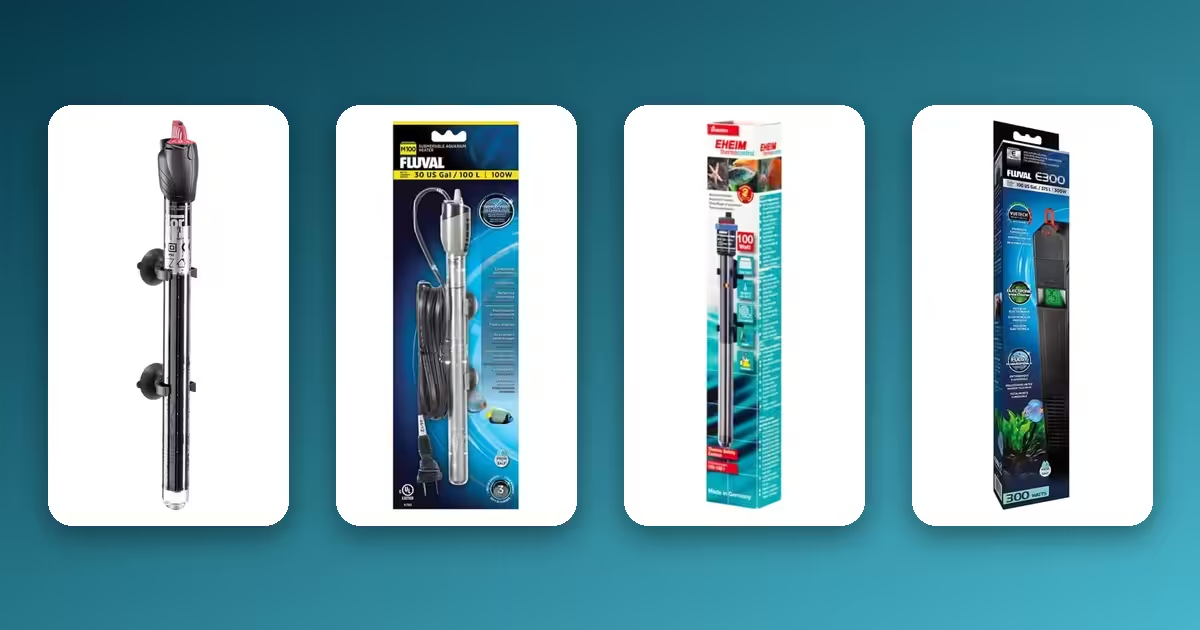
An aquarium heater is a submersible device that keeps tank water inside the narrow temperature range tropical fish need, typically 24°C to 28°C, since almost every popular aquarium fish sold in India (tetras, guppies, mollies, gouramis, bettas, angelfish) comes from warm tropical rivers and lakes. Indian room temperatures swing well outside that range, especially through winter in the north and in air-conditioned rooms year-round, so most tropical setups need one. Wattage should scale with tank size: roughly 25-50 watts for nano tanks under 20 litres, 100 watts for small-to-medium tanks (40-100 litres), and 200 watts (or two smaller heaters split across the tank) for large tanks above 150 litres, adjusted upward for colder rooms or bigger temperature gaps. Undersized heaters run continuously without reaching target temperature; oversized ones simply cycle on and off more, which is easier on the components. The sections below cover exact wattage sizing, installation, and common failure modes.
Why most tropical fish need a heater
Almost every popular aquarium fish sold in India, including tetras, guppies, mollies, gouramis, bettas and angelfish, comes from warm tropical rivers and lakes where water temperature rarely drops below 24°C. Indian room temperatures swing a lot more than that, especially through winter in the north and during air-conditioned summers everywhere else. A stable heater is what keeps your tank inside the narrow band your fish actually evolved for, usually between 24°C and 28°C depending on species.
Temperature swings stress fish even when they don’t kill them outright. Stressed fish eat less, colour up poorly, and become far more susceptible to common diseases like ich and fin rot. If you’re still assembling your first setup, our complete guide to buying, setting up and maintaining your aquarium covers where a heater fits alongside your filter, lighting and cycling schedule.
How much wattage does your tank actually need?
The rule of thumb most Indian hobbyists use is roughly 1 watt per litre for a moderate temperature lift (raising water a few degrees above ambient room temperature), typically 0.75 to 1.25 watts per litre depending on room conditions, with the higher end reserved for colder rooms or bigger temperature gaps. Tanks in a heated or consistently warm room can get away with less; tanks in an unheated room during a Delhi or Kashmir winter need more headroom.
- Nano tanks under 20 litres usually just need a compact 25-50 watt heater. A Fluval M 50 Watt Heater comfortably covers tanks up to around 40-50 litres depending on room temperature.
- Small to medium tanks of 40-100 litres call for a 100 watt unit. The Fluval E Heater 100 Watt or the EHEIM Jager Heater 100 Watt is sized for this range and holds temperature well even with an open-top tank losing some heat to evaporation.
- Large tanks of 150-250+ litres do well with a single 200 watt heater, such as the Fluval E Heater 200 Watt, or you can split the load across two smaller heaters (see below).
- Very large tanks and ponds, from 300 litres up to 2000+ litres, follow the same roughly 1 watt per litre rule: split the total load across several EHEIM Jager Heater 300 Watt units rather than one oversized heater, or move to a pond/sump-rated heating system entirely at the largest sizes. Use the calculator below for an exact heater count at any tank size.
These are starting points, not absolutes. A tank in a cool, draughty room will need more wattage than the same size tank in a warm interior room. When in doubt, size up slightly rather than down: an oversized heater cycles on and off more, which is easier on the components than a heater running at 100% duty cycle just to keep pace. For the heaters in stock at each wattage, read our heater sizing list by tank volume.
Aquarium Heater Wattage Calculator
Enter your tank size and room conditions for a suggested wattage, using the same sizing rule (roughly 1 watt per litre) covered above.
One big heater vs two smaller ones
For any tank above roughly 150 litres, many experienced keepers deliberately split their heating between two smaller heaters rather than relying on one large unit. There are two solid reasons for this:
- Heaters are one of the few pieces of aquarium equipment that can fail in a way that harms fish directly, either failing off (tank slowly cools, usually recoverable) or failing on and getting stuck (tank overheats, which is far more dangerous). Two heaters each doing half the work means one failure is a manageable temperature dip rather than a catastrophic swing, giving the setup real redundancy.
- Placing one heater at each end of a long tank keeps temperature more uniform across the whole footprint instead of creating a warm zone near a single heater, so heat is distributed more evenly.
A practical combination for a 200-litre tank, for example, is two Fluval E Heater 100 Watt units rather than one 200 watt heater: the total wattage is similar, but you gain the redundancy.
Titanium and marine combo units
Standard glass-bodied heaters like the Fluval E and M series work well for the vast majority of freshwater community tanks. Marine reef keepers and anyone housing large, boisterous cichlids or aggressive fish that could knock a heater against the glass sometimes prefer titanium or externally controlled heating for extra durability, since a shattered glass heater in the water is a genuine safety hazard.
At the more advanced end, some marine and reef keepers combine heating with active cooling in a single external unit rather than a submersible heater, which is useful in a room where summer temperatures spike well above the safe range for corals and marine fish. These combo chiller-heater units sit outside the tank and are a different category of equipment from the simple in-tank heaters this guide focuses on, worth knowing about if you eventually move into reef keeping.
Installation: where and how to place your heater
- Never install a heater above the waterline. Fully submersible models like the Fluval E and M series can be mounted horizontally near the substrate or vertically along the back glass, but the heating element itself must always stay underwater, including during water changes.
- Position it near a flow path. Place the heater where filter output or a powerhead moves water across it, which prevents a hot pocket from forming around the element and helps the whole tank equalise to the same temperature rather than just the water immediately next to the glass.
- Wait before switching it on. Let a newly submerged heater sit in the water for 10-15 minutes before powering it on, since a heater turned on while still warm from shipping or a warm room, then plunged into cool water, can crack from the sudden temperature shock.
- Use the built-in thermostat, but verify it with a separate thermometer. Electronic heaters like the Fluval E series have fairly accurate onboard displays, but a cheap separate glass or digital thermometer at the opposite end of the tank confirms the whole tank (not just the spot next to the heater) is at the temperature you expect.
Common heater problems and how to avoid them
- A heater stuck “on” is the most dangerous failure mode. Check tank temperature daily, especially in the first week after installing a new heater, and unplug immediately if the tank feels distinctly warmer than the display suggests.
- A cracked heater tube is usually caused by thermal shock (see the installation note above) or physical impact from decor or an aggressive fish. Never touch a submerged heater with wet hands while it’s plugged in, and never remove it from water while it’s still hot.
- An inaccurate temperature reading usually means calibration has drifted over years of use. If your separate thermometer consistently disagrees with the heater’s display by more than a degree or two, it’s a sign the heater is due for replacement.
- A heater that’s undersized for the room will run continuously and still can’t reach the target temperature. That means it’s too small for the tank-and-room combination, so size up rather than running it flat out indefinitely.
Quick reference
| Tank Size | Suggested Heater |
|---|---|
| Up to 40-50 litres | Fluval M 50 Watt Heater |
| 40-100 litres | Fluval E Heater 100 Watt or EHEIM Jager Heater 100 Watt |
| 150-250+ litres | Fluval E Heater 200 Watt or EHEIM Jager Heater 300 Watt, or two 100 watt units split across the tank |
Getting the wattage and placement right is one of the simplest ways to protect your fish from the single biggest cause of preventable stress in home aquariums. Pair a properly sized heater with the rest of the fundamentals in our complete aquarium setup guide and your tank will hold a steady, healthy temperature all year round.