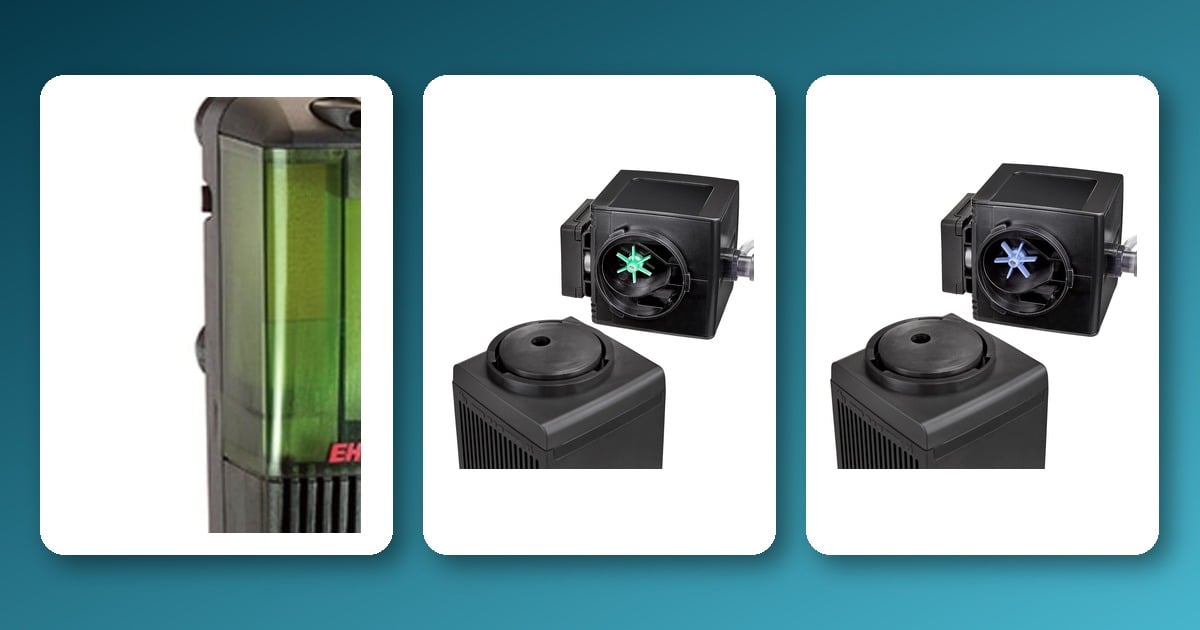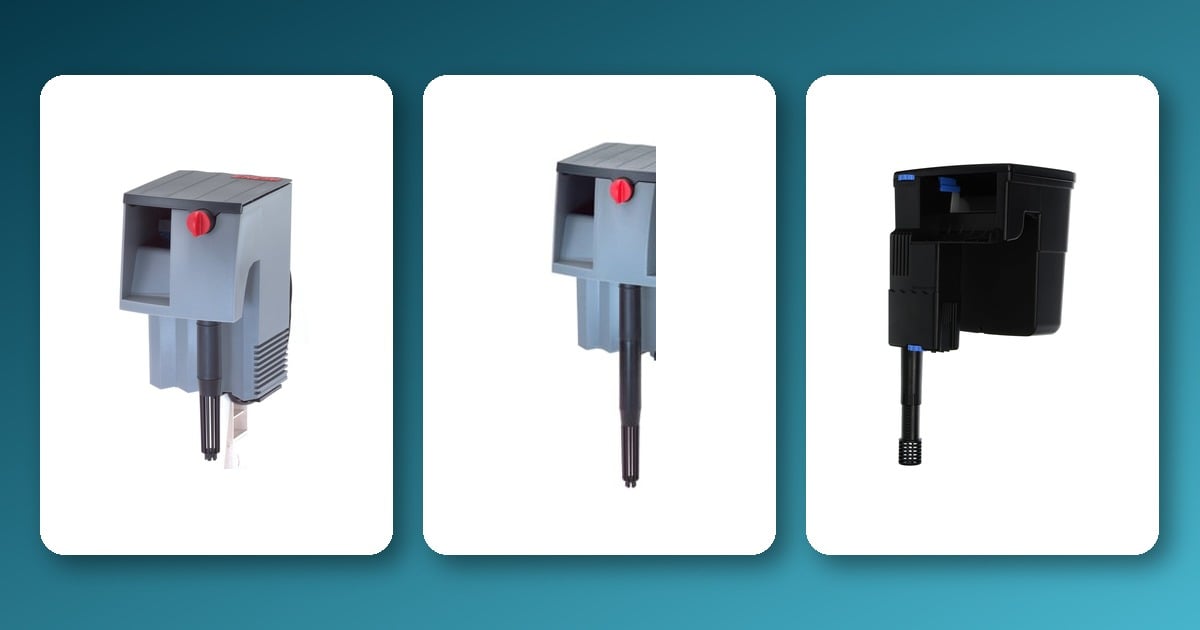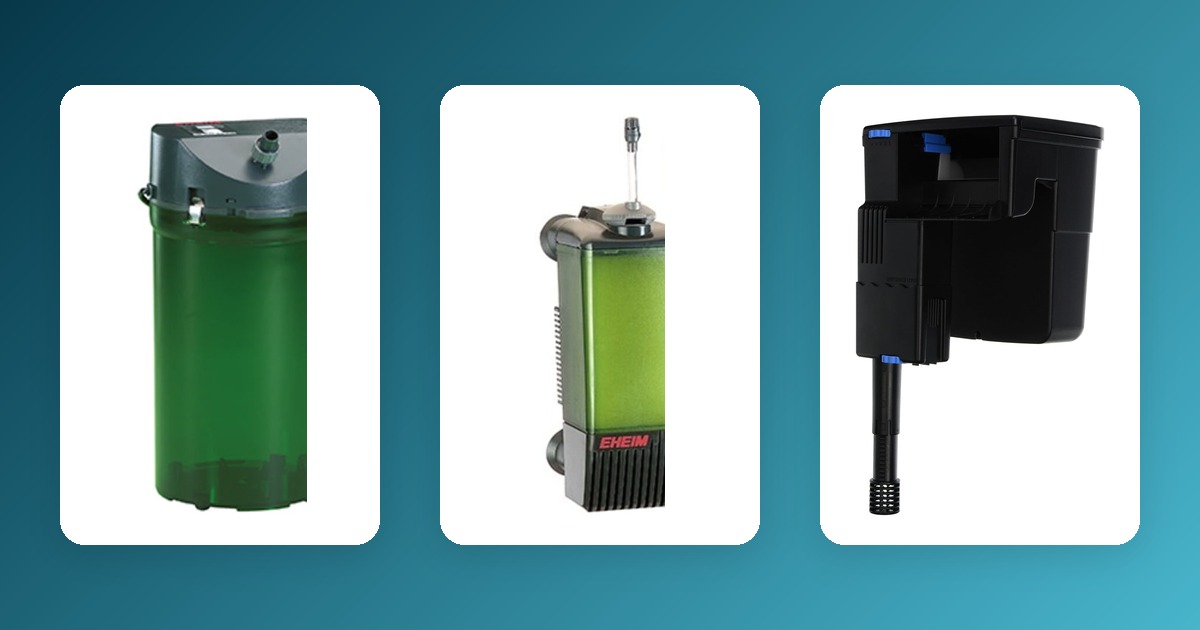
Every filter format, whether canister, hang-on-back, internal, or sump, is rated by how much water it can move per hour, and matching that number to your tank is the single biggest factor in whether a filter actually keeps up with your tank or quietly falls behind it. This guide covers the turnover-rate math that applies across all four formats, with worked examples in litres for the tank sizes most common in Indian setups. If you specifically want canister sizing with a built-in flow-rate calculator, our canister filter buying guide covers that in more depth, and this guide extends the same underlying math to HOB, internal, and sump setups too.
The turnover rate formula
The core calculation is simple:
Minimum flow rate = Tank Volume × Turnover Rate
Turnover rate is expressed as “times per hour”: a turnover rate of 5 on a 100-litre tank means you want a filter rated to move roughly 500 litres per hour (LPH) through the tank. Media, hoses and intake restrictions all reduce a filter’s rated output in real use (a commonly cited rule of thumb is roughly 20% flow loss through a loaded media bed), so most hobbyists size up from the bare minimum:
Recommended flow rate = Minimum × 1.25
Treat both of these as general industry rules of thumb rather than a precise guaranteed figure. Actual flow loss varies by media type, how clogged it is, and hose length, but the 1.25 multiplier is a reasonable, widely used buffer across all filter formats.
Turnover rate by tank type
The right turnover multiplier depends on what’s living in the tank and how it’s set up, not just its volume:
A standard freshwater community tank needs 4-6 times per hour. This covers the great majority of home aquariums, a mixed community of tetras, livebearers, corydoras and similar moderate-bioload fish. Internal filters specifically are commonly sized a bit higher within this spread: 5-8 times per hour is the range often quoted for internal/submersible filters, reflecting their smaller media capacity compared to a canister of the same footprint; see our internal filter buying guide for model-specific worked examples.
A heavily stocked tank, or one with messy fish such as goldfish, cichlids, or large predatory species, needs 6-8 times per hour. These fish produce disproportionately more waste for their size, and goldfish in particular are notorious for outpacing a filter sized to standard community-tank rules.
Planted tanks do fine with moderate flow within the standard 4-6x range, though one caveat matters more than the number itself: avoid excessive surface agitation. A filter return that thrashes the surface drives dissolved CO2 out of solution faster than plants can use it, which works directly against a CO2-injected planted setup regardless of how the turnover math works out.
Reef and marine tanks need 8-10 times per hour through the return pump (canister or sump), plus separate, additional flow from powerheads for in-tank circulation. Reef livestock, corals especially, need much higher total water movement than the return pump alone provides; the return pump’s turnover figure is about filtration and stability, not the circulation flow corals need to thrive.
Worked examples by tank size
These figures use the standard community-tank range (4-6x) as the baseline, then show what changes for a heavily stocked tank. All figures are litres per hour (LPH).
| Tank size | Standard community (4-6x) | Heavily stocked (6-8x) |
|---|---|---|
| 60 litres | 240-360 LPH | 360-480 LPH |
| 100 litres | 400-600 LPH | 600-800 LPH |
| 150 litres | 600-900 LPH | 900-1,200 LPH |
| 200 litres | 800-1,200 LPH | 1,200-1,600 LPH |
| 300+ litres | 1,200-1,800 LPH | 1,800-2,400 LPH |
Apply the recommended 1.25× buffer on top of whichever figure matches your tank and stocking level. A 100-litre community tank at the low end of the range, for instance, works out to roughly 500 LPH minimum, or about 625 LPH recommended once you account for real-world flow loss.
This applies beyond canister filters too
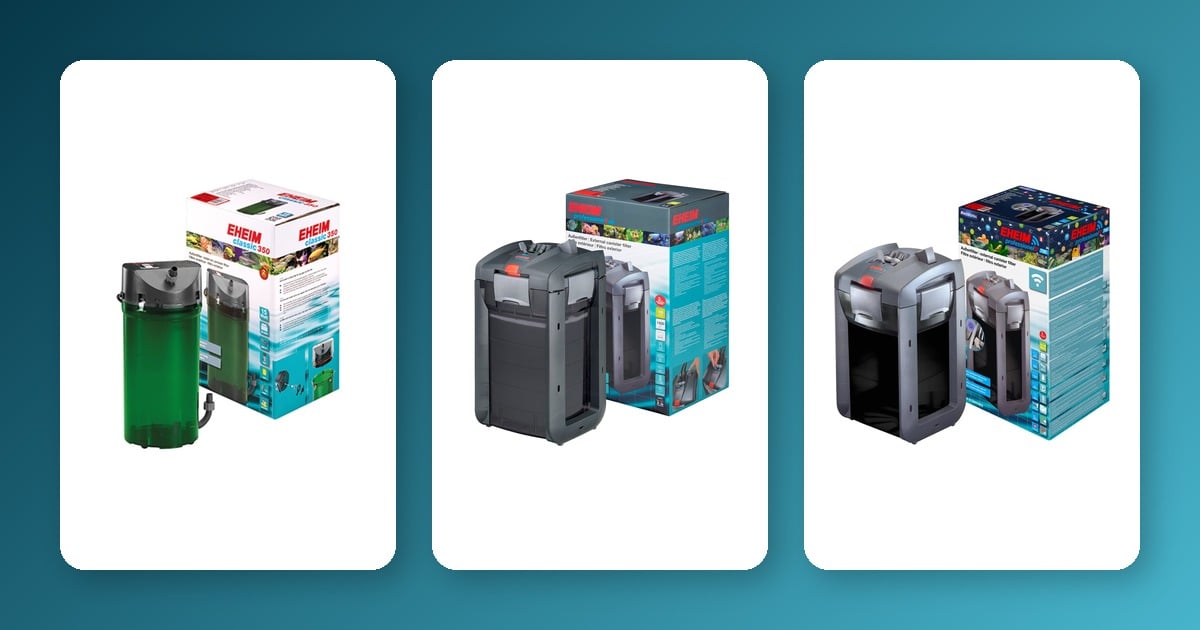
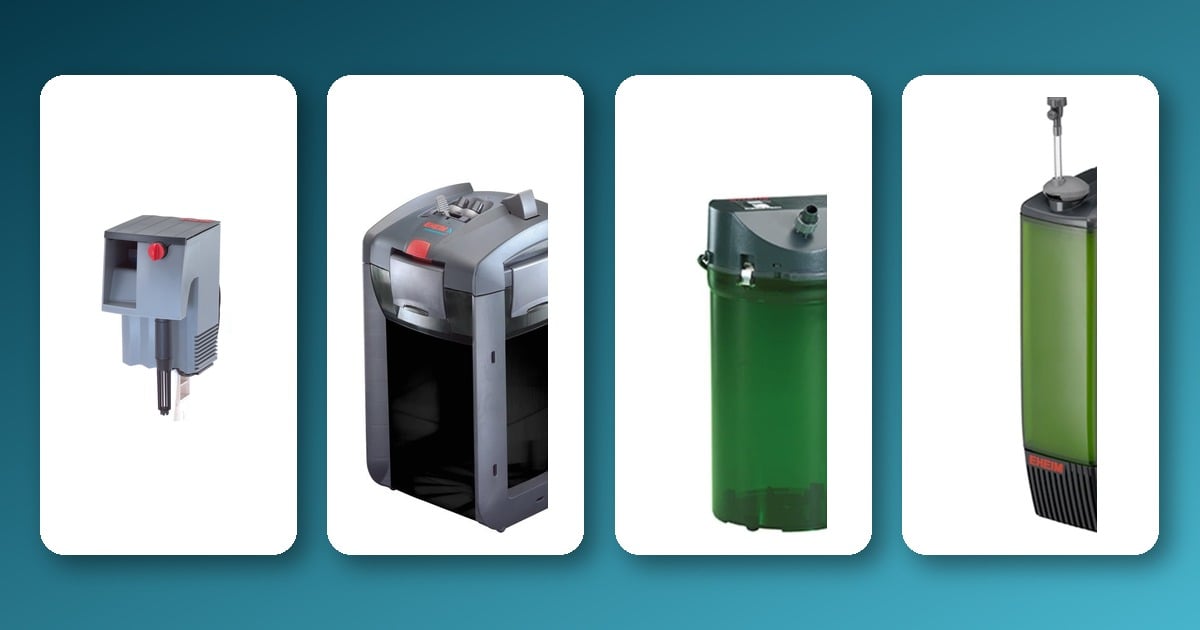
The pillar guide’s own flow-rate calculator is built specifically around canister filters; it’s the right tool once you’ve decided a canister is the format you want. This guide’s whole reason for existing is the step before that: the same turnover-rate math applies just as directly to a hang-on-back, an internal filter, or a sump return pump, and the rated LPH figures above work regardless of which format you’re comparing. A EHEIM Classic Filter 250 rated around 440 LPH, a Seachem Tidal 55 rated at 950 LPH, and an EHEIM Internal Filter Pick Up 200 are three completely different formats, but you size each of them against your tank using the exact same table above.
Converting between GPH and LPH
Filter specifications sometimes list flow rate in gallons per hour (GPH) rather than litres per hour, particularly on international product listings or older manufacturer literature. The conversion is straightforward: 1 GPH is approximately 3.785 LPH, so a filter rated at 100 GPH moves roughly 379 LPH. Going the other direction, divide an LPH figure by roughly 3.785 to get GPH: a filter rated at 600 LPH is close to 158 GPH. It’s worth double-checking which unit a spec sheet is actually using before sizing against the tables above, since mixing up GPH and LPH produces a filter sized nearly four times too small or too large for the intended tank, which is a far more common real-world sizing mistake than getting the turnover multiplier itself wrong.
Accounting for additional equipment
The turnover figures above assume the filter’s full rated flow is available for filtration alone. In practice, anything plumbed inline with the filter’s output, such as a UV sterilizer, an inline heater, or a spray bar with a wide dispersion pattern, adds a small amount of additional restriction on top of what the media itself already costs in flow. None of this changes the sizing approach; it’s simply another reason the recommended 1.25× buffer exists rather than sizing to the bare calculated minimum, and another reason to size toward the higher end of a tank’s range rather than the lower end when running any inline accessory alongside the filter.
Why oversizing beats undersizing
A common mistake is buying a filter rated to the very top of a manufacturer’s stated tank-size range and treating that as the safe choice. It usually isn’t. Manufacturer ranges are typically calculated for lightly stocked tanks under ideal conditions, and by the time real bioload, real media loss, and real maintenance intervals are factored in, a filter at the top of its rated range is often already undersized in practice.
The safer default is to size to the low-to-middle of a filter’s stated tank-size range, especially for anything stocked or planted. Practically, that means treating a filter’s manufacturer-rated “up to 200 litres” as a comfortable choice for a 120-150 litre tank, not a 200-litre one. Oversizing a filter has essentially no real downside beyond the extra purchase cost; modern filters, and especially anything with adjustable flow, can be turned down if flow is too strong for delicate livestock. Undersizing has a real, ongoing cost: a filter that can’t keep up shows up as cloudy water, rising nitrate between water changes, and a bacterial colony that’s permanently working at its ceiling.
Frequently asked questions
Can a filter be too big for a tank? In terms of filtration capacity, essentially no: oversizing is safe. The one real caution is flow strength for delicate or slow-swimming livestock (bettas, shrimp, fry), where an oversized filter needs its flow turned down or baffled rather than left at full rated output.
Does turnover rate matter for a shrimp-only tank? Yes, but the priority order flips. Shrimp tanks are usually lightly stocked, so raw turnover rate matters less than intake safety and gentle flow. A sponge filter or a flow-controlled internal filter sized toward the lower end of the standard range is usually the better fit than maximizing turnover.
How do I know my filter’s real flow rate vs. the rated GPH or LPH? The rated figure on the box is measured with a clean filter and no media installed, which is close to a best-case number. Real in-service flow, with loaded media and some months of use, typically runs meaningfully below that figure, which is exactly why sizing toward the higher end of a tank’s range, and applying the 1.25× buffer, matters more than chasing the manufacturer’s headline number.