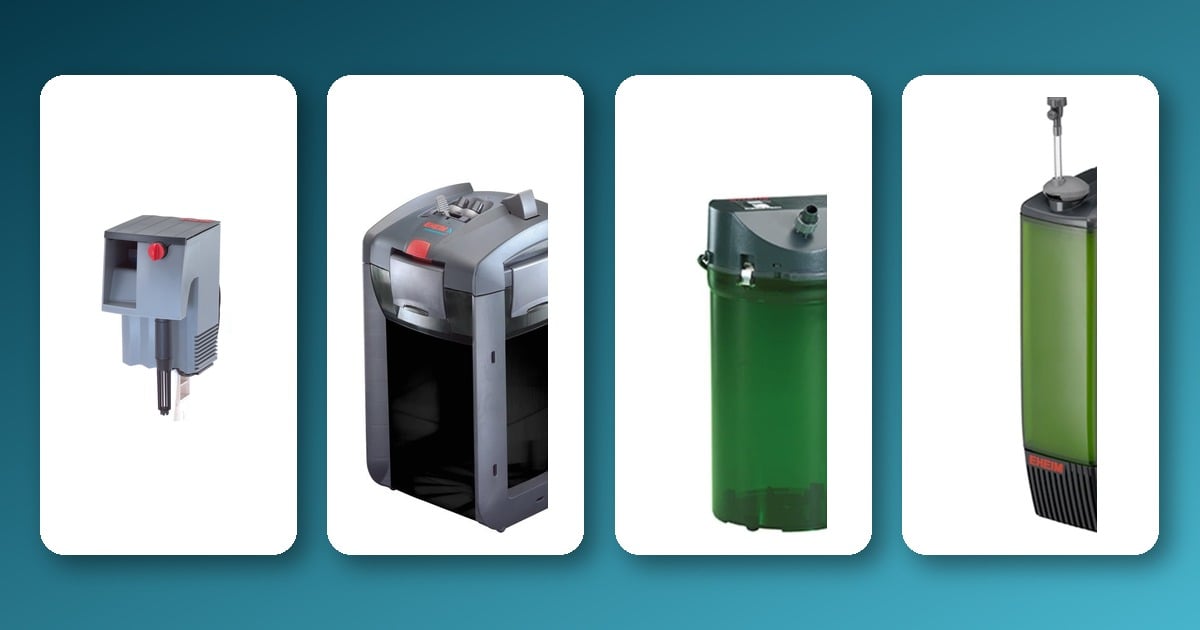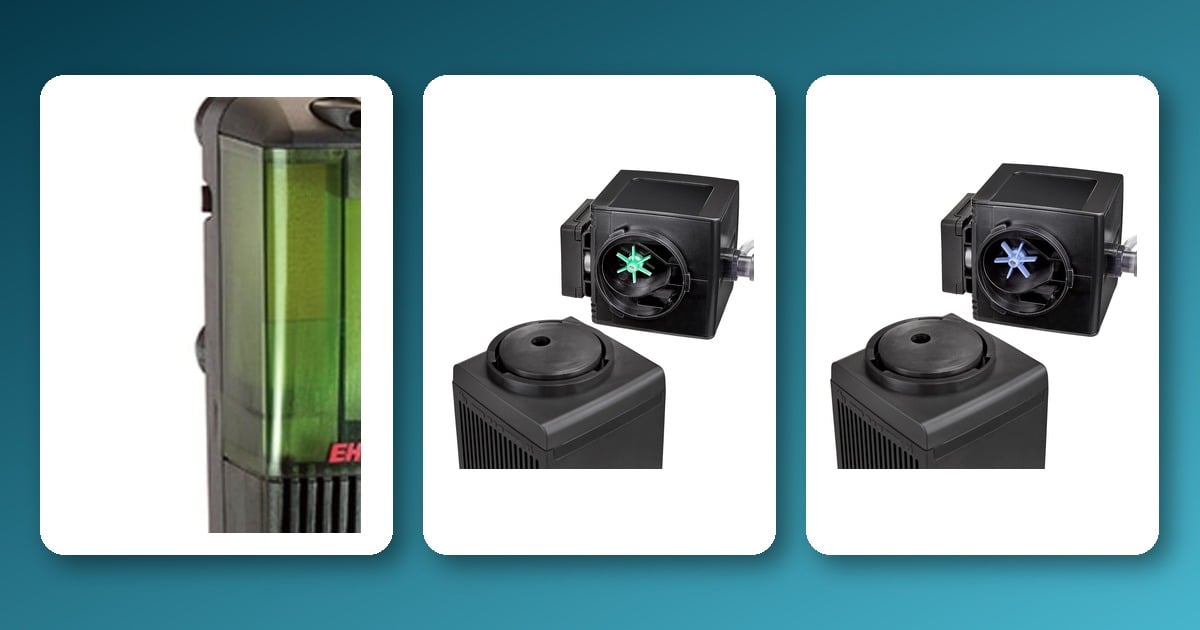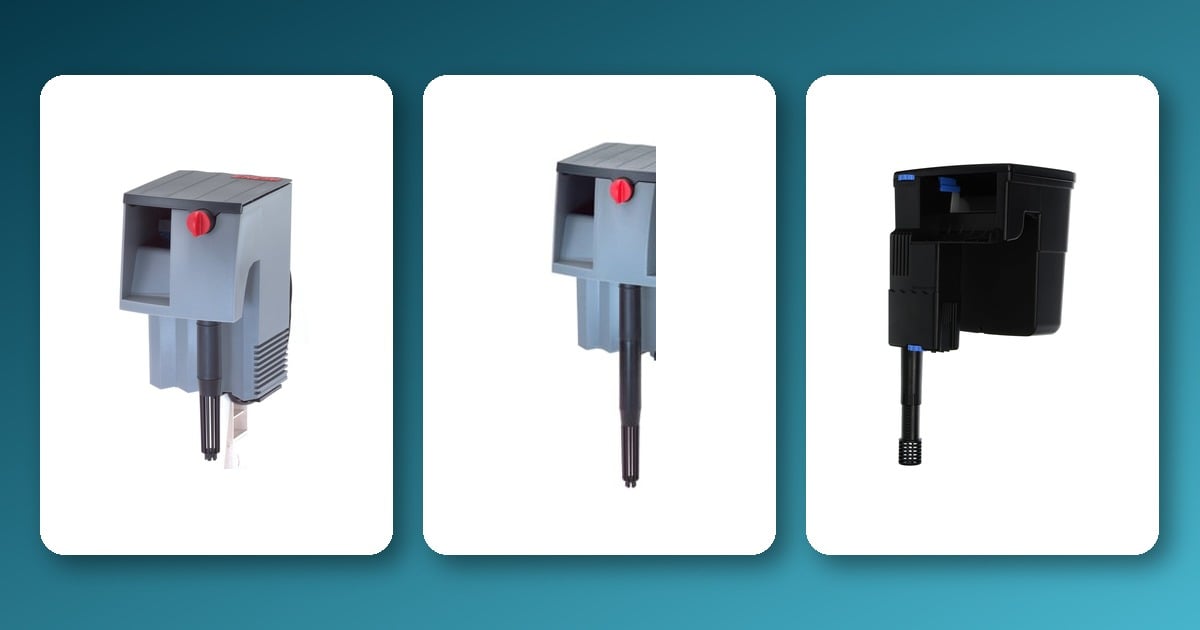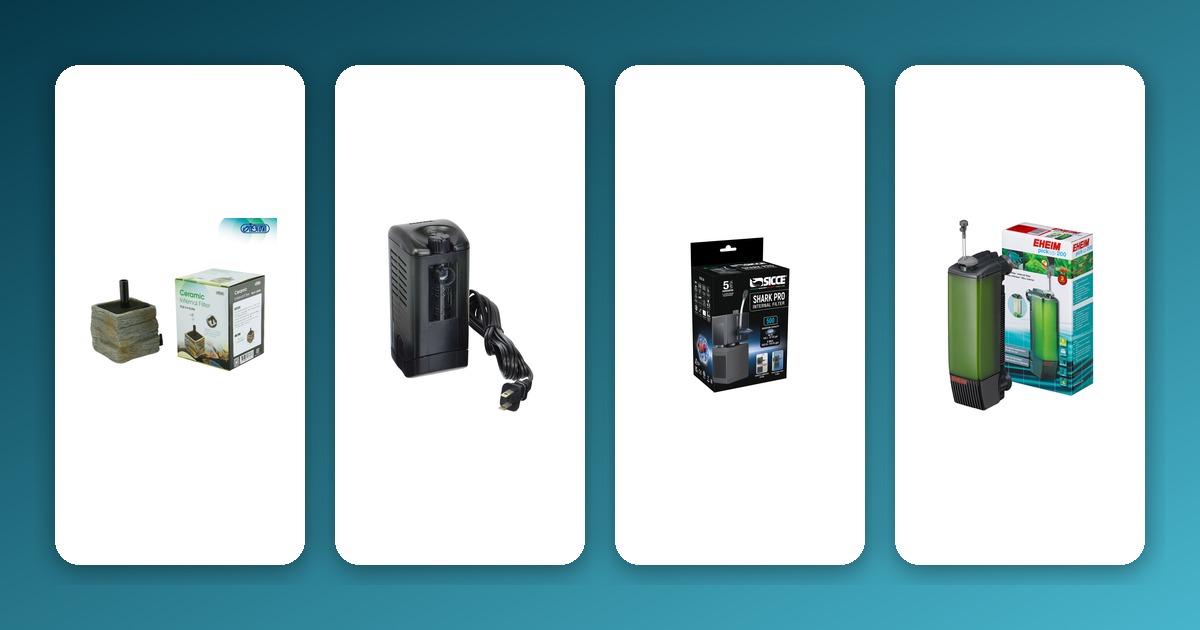
Choosing the right filtration system is one of the most important decisions in setting up a healthy aquarium. It affects water quality, fish health, and how much maintenance you’ll be doing every week. This guide focuses specifically on internal (submersible) filters (units that sit inside the tank) with real specs, prices, and stock status from IndieFur’s current catalog. For a deeper look at how internal filters actually work mechanically, and when to choose one over a canister or hang-on-back filter, see our guide to internal aquarium filters explained. If you’re comparing external canister filters instead, see our canister filter comparison guide; for outdoor pond filtration, see our pond filtration guide. Last updated August 2026.
How internal filtration works
An internal filter performs up to three jobs at once:
- Mechanical filtration uses a foam or sponge stage to trap debris, waste, and uneaten food.
- Biological filtration relies on beneficial bacteria that colonize the media and convert ammonia and nitrite into far less toxic nitrate, as part of the aquarium’s nitrogen cycle.
- Chemical filtration, on some models, uses activated carbon or similar media to remove dissolved impurities and odors, usually as an optional swap-in cartridge rather than a permanent stage.
Internal filters sit fully submerged, which makes them compact and easy to install, but it also means their media chamber is smaller than an equivalent external canister filter, a tradeoff worth knowing before you buy.
Matching flow rate to tank size
The most useful sizing guideline in the hobby is turnover: aim to circulate your total tank volume roughly 5 to 8 times per hour. A filter rated at 500 L/h, for example, suits a tank of roughly 62-100 litres at that turnover rate, not necessarily the largest tank size printed on the box, which is often set by media/bioload capacity rather than turnover.
| Model | Flow Rate | Tank Size for 5-8x Turnover |
|---|---|---|
| Fluval U1 | 250 L/h | ~31-50L |
| Fluval U2 | 400 L/h | ~50-80L |
| Sicce Shark Pro 500 | 500 L/h | ~62-100L |
| Sicce Shark Pro 700 | 700 L/h | ~87-140L |
| Sicce Shark Pro 900 | 900 L/h | ~112-180L |
Manufacturer maximum-tank-size ratings are usually higher than the turnover math above. That’s normal, and reflects filtration capacity rather than a promise of 5-8x circulation at the top of the range. If strong water movement matters for your setup (heavily planted tanks, higher-bioload fish), size toward the lower half of a filter’s rated range.
IndieFur’s internal filters compared: real prices, real stock
Here’s what’s currently available across IndieFur’s internal filter range, by brand and series:
| Model | Price | Flow Rate | Mfr. Tank Rating | Stock |
|---|---|---|---|---|
| ISTA Ceramic Internal Filter | ₹915 | Air-driven (no motor L/h) | Nano/compact (7×7×12cm unit) | In stock |
| Fluval U1 | ₹3,999 | 250 L/h | Up to 55L | In stock |
| Fluval U2 | ₹5,699 | 400 L/h | Up to 110L | In stock |
| Fluval U4 | ₹8,999 | Not clearly published* | 130-240L | In stock |
| Sicce Shark Pro 500 | ₹4,965 | 500 L/h | Not published by Sicce | In stock |
| Sicce Shark Pro 700 | ₹5,330 | 700 L/h | Not published by Sicce | In stock |
| Sicce Shark Pro 900 | ₹6,921 | 900 L/h | Not published by Sicce | In stock |
| Eheim Pick Up 45 | ₹3,339 | Not published | Smallest in the Pick Up series** | In stock |
| Eheim Pick Up 60 | ₹3,425 | Not published | Up to 60L | In stock |
| Eheim Pick Up 160 | ₹3,600 | Not published | Up to 160L | In stock |
| Eheim Pick Up 200 | ₹4,545 | Not published | Up to 200L | In stock |
*Fluval’s own spec sheet for the U4 lists a garbled output figure rather than a clean L/h number. Rather than guess, we’ve left it out. The 130-240L tank-capacity rating is confirmed directly from Fluval’s published specs.
**The Pick Up 45’s current listing description text incorrectly repeats the 160L spec from the Pick Up 160 in the same series. We’ve flagged this to our catalog team. Going by its position as the smallest and least expensive model in a 45/60/160/200 series, treat it as rated for smaller tanks than the 60, not 160.
Every model in the table above is currently in stock. These eleven are the working portion of a 25-listing category (more on the rest in the FAQ below).
Nano and small tanks: the ISTA Ceramic option
The ISTA Ceramic Internal Filter (₹915) is air-pump driven rather than motorized, which means no published L/h flow rate, but at 7×7×12cm it’s small enough for nano and pico tanks where even the Fluval U1’s 250 L/h would be too much current. It’s the cheapest option in the category and a reasonable starting point for a small shrimp or betta tank.
Why biological filtration matters most
Mechanical filtration is the most visible job a filter does, but biological filtration is the one that keeps fish alive long-term. Beneficial bacteria convert ammonia and nitrite (both toxic to fish even at low concentrations) into nitrate, which is far less harmful and removed through regular partial water changes. Without enough space for that bacterial colony to establish, fish can experience stress, poor growth, and higher disease risk, even in an otherwise clean-looking tank. Filters with a larger media chamber generally support a more stable bacterial colony, one reason the Sicce Shark Pro and Fluval U-series (with dedicated media cartridges) tend to hold water parameters more steadily than very compact nano filters.
Maintenance, noise, and running costs
A few practical factors matter more over months of ownership than at the moment of purchase:
- Cleaning frequency: most internal filters need media rinsed every 2-4 weeks. Avoid scrubbing biological media too aggressively, since that’s where your bacterial colony lives.
- Noise: motorized internal filters (Fluval U-series, Sicce Shark Pro/ADV) run quieter than air-driven designs but aren’t silent; placement against a solid tank wall reduces vibration noise.
- Running cost: internal filters are low-wattage compared to canister filters, so electricity cost is rarely a deciding factor, but consumable media cartridges (Fluval’s included Poly/Carbon cartridges, for example) add a small recurring cost.
Common mistakes to avoid
- Buying on price alone, without checking the flow-rate/tank-size match, is a common mistake: an undersized filter won’t keep up with bioload, and an oversized one can create too much current for some fish.
- Ignoring biological filtration capacity in favor of a filter that only advertises strong mechanical cleaning is another.
- Choosing high flow for sensitive species is risky: bettas, shrimp, and some nano fish do poorly in strong current regardless of how well-rated the filter is otherwise.
- Assuming internal always beats external is a mistake too: for larger or heavily stocked tanks, an external canister filter usually has more media capacity than any internal unit; see our canister filter comparison guide if you’re in that range.
Buying guide by tank size
Nano/pico tanks, shrimp, or betta bowls:
The ISTA Ceramic (₹915) or Fluval U1 (₹3,999, ~31-50L at 5-8x turnover) both suit gentle, low-current setups.
Small to medium community tanks:
The Eheim Pick Up 60 or 160 (₹3,425-₹3,600) or Sicce Shark Pro 500 (₹4,965, ~62-100L at 5-8x turnover) fit most standard small-to-medium freshwater tanks.
Larger or higher-bioload tanks:
The Sicce Shark Pro 900 (₹6,921, ~112-180L at 5-8x turnover), Eheim Pick Up 200 (₹4,545, up to 200L), or Fluval U4 (₹8,999, 130-240L) handle bigger tanks or heavier stocking like goldfish or cichlids.
Tanks larger than ~250L, or very heavy bioload:
Consider an external canister filter instead. See our canister filter comparison guide for models with more media capacity than any internal filter offers.
Setting up an outdoor pond instead?
This guide covers indoor aquarium filters. If you’re filtering an outdoor fish pond rather than a tank, pond filters work at a different scale entirely. See our guide to choosing the right filtration system for a healthy fish pond for pond-specific models and sizing.
Frequently asked questions
How often should I clean an internal filter?
Most need media rinsed every 2-4 weeks depending on fish load and tank size. Rinse in removed tank water rather than tap water where possible, to avoid killing off beneficial bacteria with chlorine.
Are internal filters suitable for large aquariums?
They work best for small and medium tanks. For anything above roughly 200-250L, or heavily stocked tanks, an external canister filter generally offers more media capacity. See our canister filter comparison guide.
What size filter should I buy for my aquarium?
Use the 5-8x turnover guideline: divide your filter’s rated L/h by 5-8 to estimate its ideal tank size, rather than relying solely on the manufacturer’s maximum-tank-size figure (see the turnover table above).
How much of IndieFur’s internal filter catalog is currently in stock?
11 of 25 listings (44%) are in stock as of this guide’s last update, all the models featured in the comparison table above. The rest of the range (the Sicce Shark ADV and Shark PRO NANO lines, the full EHEIM Aquaball and Biopower series, the EHEIM Aqua Corner 60, and the ISTA Undergravel Filter) is currently out of stock. Separately, one listing in this category, the Sicce Shark MINI SKIM 350, is actually a surface skimmer rather than a submerged internal filter, and shouldn’t be compared against the models above on flow rate.
What’s the difference between mechanical and biological filtration?
Mechanical filtration removes visible debris and particles. Biological filtration uses beneficial bacteria to break down invisible, toxic ammonia and nitrite into safer nitrate. It’s slower to notice but more important to fish health long-term.
Can a filter improve fish health directly?
Yes. Proper filtration removes waste, supports the bacteria that process toxins, and keeps water parameters stable, all of which reduce stress and disease risk in fish.
About this guide
This guide was compiled and reviewed by the IndieFur content team using live WooCommerce stock and pricing data and each manufacturer’s published product specifications (Fluval, Sicce, EHEIM, ISTA). Stock status and pricing reflect a point-in-time check as of August 2026 and may change. Always confirm current availability before purchase.