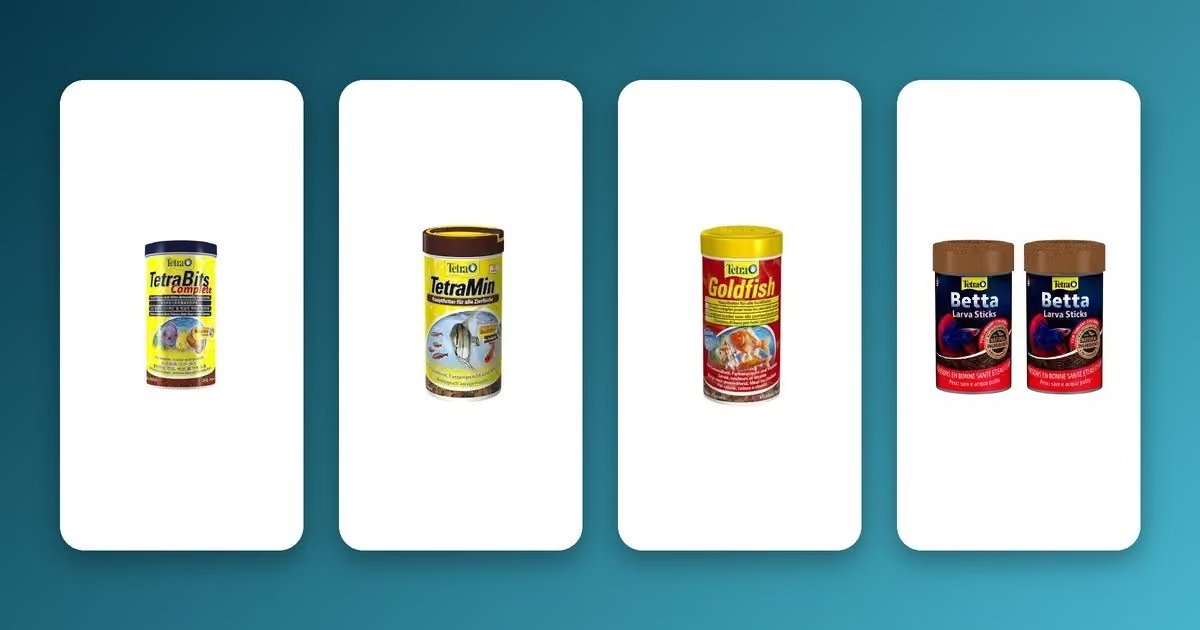
Tetra Bits fish food, also searched as TetraBits and Tetra Bites, comes in a 300 gm pack and a 30 gm pack of four. The other foods here, TetraMin, the Gold goldfish range, Betta Larva Sticks and Guppy Colour Mini Flakes, come with float or sink, protein and fat as Tetra lists them, and the fish each suits.
Which Tetra fish food for which fish
- Cichlid or tropical community tank: Tetra Bits Complete as part of the meal.
- Goldfish: Gold Growth for growth and condition, Gold Colour for colour, Gold Exotic for its wheat germ formula, fed as a mix.
- Betta: Betta Larva Sticks.
- Guppies and livebearers: Guppy Colour Mini Flakes.
Is Tetra Bits genuine?
The first question customers ask about Tetra Bits is whether it is genuine or a duplicate. We buy all our products straight from brand authorised importers, with no middlemen. Authenticity, and the support that runs between us and the importer, count for far more with us than saving a few pennies.
Tetra Bits Complete 300 gm and 30 gm packs
Tetra lists Tetra Bits Complete 300 gm for tropical fish. It also comes as a 30 gm pack of four.
In my cichlid community tank it is part of the meal. Tetra lists cichlids as suited to flakes, pellets, sticks or granules. A TetraBits Complete page on tetra.net lists a Cleaner and Clearer Water formula. Tetra’s formulas differ between regions, so check the analysis printed on the pack in your hand.
TetraMin and Tetra Goldfish: protein and fat side by side
Figures below are Tetra’s own, from its product pages.
| Tetra line | Tetra’s description | Protein | Fat | Listed for |
|---|---|---|---|---|
| TetraMin Flakes | Flakes that float a long time before slowly sinking | 46% | 11% | All freshwater ornamental fish |
| TetraMin Granules | Granules that soften quickly and sink slowly, for mid-water feeders | 50% | 9% | All freshwater ornamental fish |
| Tetra Goldfish flakes | Flakes, long floating, slowly sinking | 42% | 11% | Goldfish |
Tetra’s US TetraMin page says its flakes do not leach colour and will not cloud water when used as directed.
I believe Tetra’s flakes are underrated by hobbyists. The quality is exceptional, and they contain fewer fillers than pellets.
Float or sink: where the food ends up
Fish feed at different heights, and Tetra’s fishkeeper blog ties that to mouth shape. An upturned mouth belongs to a surface feeder, a forward-facing one to a mid-water feeder and a downturned one to a bottom feeder. The RSPCA says middle and bottom dwellers need quickly sinking food or compressed tablets. The Merck Veterinary Manual says a fish that prefers the bottom should not be fed flakes that float on the surface.
Floating flakes suit surface feeders, and Tetra describes TetraMin Granules for mid-water feeders. For bottom feeders Tetra advises fast-sinking tablets or wafers, so the fish above them do not eat the food first.
Reading the label
Under EU feed rules (Regulation 767/2009), the composition on a compound feed label lists the feed materials in descending order by weight, and the analytical constituents include crude protein, crude fat, crude fibre and crude ash. Tetra’s pages give a composition list and an analysis for the foods in the tables and the betta and guppy sections, so the order tells you what each one is mostly made of.
On that reading the lines fall into a few groups. TetraMin Flakes, TetraMin Granules, Tetra Goldfish flakes, Gold Growth and Betta Larva Sticks all begin with fish and derivatives. Guppy Colour Mini Flakes begin with cereals. Gold Colour begins with vegetable derivatives and lists algae, with spirulina at 6%, further down. Gold Exotic begins with vegetable protein extracts and cereals, and Tetra names wheat germ meal at 28.4% among its vegetable derivatives.
Fibre and moisture hardly move. On TetraMin Flakes and Granules, Tetra Goldfish, the three Gold lines, Betta Larva Sticks and Guppy Colour Mini Flakes, Tetra lists crude fibre at 2% and moisture between 6.5% and 8%, so protein and fat are the figures that vary.
Tetra’s own pages do not always agree with each other. Two tetra.net pages for TetraPRO Colour list different analyses, one at 46% protein and the other at 44%. That is why the analysis printed on your pack is the figure to trust.
TetraPRO Colour crisps
Tetra describes TetraPRO Colour as two-coloured multi-crisps with natural colour enhancers, and says the colour concentrate contains carotenoids that support natural colour brilliance. It files the food under tropical fish and names no species. The page does not say whether the crisps float or sink, so watch the first few feeds to see where they end up. The shop lists Tetra Pro Color Crisp in this line.
Goldfish: Gold Growth, Gold Colour and Gold Exotic
No one likes to eat the same meal twice a day for their whole life, so why should the fish? For goldfish I suggest Gold Growth, Gold Colour and Gold Exotic, fed as a mix.
| Tetra Gold line | Tetra’s description | Protein | Fat |
|---|---|---|---|
| Gold Growth | Floating granules for growth and condition | 44% | 10% |
| Gold Colour | Slowly sinking granules with 6% spirulina for colour | 34% | 7% |
| Gold Exotic | Long-floating granules with 28.4% wheat germ meal | 33% | 5.5% |
Gold Colour is the only one of the three that sinks, so check the bottom of the tank for leftovers.
Tetra’s blog and the RSPCA both advise a varied diet. For goldfish the RSPCA suggests chopped vegetables such as peas and spinach, and warns against tropical flakes.
Tetra lists TetraMin for all freshwater ornamental fish, while the RSPCA advises against tropical flakes for goldfish. Tetra also makes a Goldfish flake and the three Gold granules, so for goldfish the Goldfish and Gold lines are the ones Tetra built for them.
Tetra calls goldfish omnivores. The RSPCA gives different schedules: its Australian branch says once a day, with only what is eaten in under two minutes, and its UK branch says two or three times a day, with only what is eaten in a few minutes. Both warn against overfeeding. RSPCA Australia also advises sinking pellets for fancy goldfish with shortened bodies, because gulping air at the surface can cause gas bladder problems. Of the three Gold lines, Tetra describes only Gold Colour as sinking, so owners of round-bodied fancy goldfish should keep that in mind when choosing.
Bettas and guppies
The University of Illinois veterinary school describes the betta as a carnivore that eats insects and larvae, and says to give a balanced pellet or flake daily, as much as it eats in three to five minutes, because bettas can be overfed. Tetra also lists fighting fish as carnivores that need protein-rich food. That window is longer than the two to three minutes in the feeding section below, so watch the fish and take out what is left.
Betta Larva Sticks are listed for bettas and other labyrinth fish. They are worm-shaped floating sticks with natural colour enhancers, at 43% protein and 10% fat.
Guppy Colour Mini Flakes are for guppies, platies, mollies and swordtails, with 41% protein and 15% fat. They float briefly and then sink slowly. Tetra lists them for top feeders, and it lists guppies and swordtails as omnivores that suit mixed flakes.
Across the other foods in this post, Tetra lists protein from 33% (Gold Exotic) to 50% (TetraMin Granules) and fat from 5.5% (Gold Exotic) to 15% (Guppy Colour Mini Flakes).
How much to feed
People overfeed. Most food other than flakes sinks, and uneaten food on the bottom pollutes the water. Several Tetra granules and sticks float, which makes leftovers easier to spot. Feed what the fish finish in two to three minutes at most, in small batches, and remove whatever is left straight away. Tetra’s flake pages say two to three feeds a day, each as much as the fish can eat within three minutes, though its fishkeeper blog elsewhere says once or twice a day. Tetra’s FAQ page says the fish should finish within two minutes or less.
The RSPCA says it is better to underfeed than overfeed, because poor water quality harms fish more than a shortage of food does. The Merck Veterinary Manual says overfeeding leads to health problems as well as a dirty tank.
Pack sizes in the shop
The shop lists Tetra Bits Complete 300 gm, a 93 gm pack of two and a 30 gm pack of four. TetraMin Flakes, TetraMin Granules and Tetra Goldfish are each listed in 250 ml. Betta Larva Sticks come as 28 gm / 85 ml, and Guppy Colour Mini Flakes as 30 gm / 100 ml.
Keeping the food fresh
Keep the food in a cool, dry place. Once the freshness seal is broken, the volatile nutrients break down faster, and a warm, damp spot speeds that up. Tetra suggests buying only enough to last about six months, then opening a new pack, and checking the expiry date when you buy.
The rest of the range is on the Tetra brand page.