Quick answer: there’s no single winner. It depends on what you’re optimizing for. For the lowest total cost on a solenoid-equipped DIY build, Back Water Aquatics comes in about ₹1,950 cheaper (₹10,140 vs. IndieFur’s ₹12,090), and it’s currently the only one of the two selling a ready-made, in-stock pressurized kit (₹14,000) plus the widest diffuser price range (₹690-₹4,600). IndieFur currently has more in-stock solenoid regulator options (six configurations vs. three), a cheaper dual-gauge solenoid regulator than Back Water Aquatics’ premium tier, and the only cartridge-based, no-cylinder alternative for tanks that don’t need a full pressurized system: the Sicce CO₂ Life 2 (₹6,850). Both builds still need a drop checker and CO₂-resistant tubing as small separate purchases. Every figure below is checked live against current stock, not list prices.
Carbon availability is one of the biggest levers on plant growth in a high-tech aquascape, arguably bigger than lighting or fertilizer once the basics are covered. But a CO₂ system is also one of the more confusing purchases in the hobby: a regulator, cylinder, and diffuser have to work together, and pricing individual parts makes it hard to know what a complete setup actually costs. This guide compares real specs, real prices, and real stock availability across IndieFur’s CO₂ catalog and Back Water Aquatics’ CO₂ range, including what a working solenoid-equipped system actually costs to assemble on each side. Last updated August 2026.
A Note on Who Wrote This
This guide is published by IndieFur, an aquarium retailer, comparing our own CO₂ catalog against a competitor, Back Water Aquatics. Every price and spec below is pulled live from our own store and from Back Water Aquatics’ published listings, and we’ve been upfront about which of our own products are currently out of stock, including our complete pressurized CO₂ kits. Where Back Water Aquatics is cheaper or better stocked, we say so.
What makes a good aquarium CO₂ system?
Before comparing retailers, it helps to understand what a complete CO₂ system should contain.
A pressurized aquarium CO₂ setup generally consists of:
- CO₂ cylinder
- Pressure regulator
- Solenoid valve
- Needle valve
- Bubble counter
- CO₂-resistant tubing
- Check valve
- Diffuser or reactor
- Drop checker
The regulator reduces the extremely high pressure inside the cylinder to a controlled working pressure. The needle valve then allows fine adjustment of CO₂ flow. A solenoid can automate the system by switching CO₂ on and off according to a timer.
The diffuser is equally important because it determines how efficiently CO₂ enters the aquarium water.
This is why comparing only the regulator price is not enough. A seemingly inexpensive regulator may become more expensive once you add the cylinder, diffuser, tubing, check valve, and other accessories, which is exactly what we’ve priced out below.
CO₂ regulators compared: real prices, real stock
IndieFur’s in-stock regulators are almost entirely ISTA; two Co2Art dual-stage regulators are currently out of stock. Back Water Aquatics carries a wider spread of brands (Mufan, Fzone, WeekAqua, Oxyturbo, ZRDR, Lifeaqua, Upaqua), though several of those are also out of stock right now. Here’s what’s actually available to buy today on each side:
| Store | Regulator | Price | Gauge | Solenoid |
|---|---|---|---|---|
| IndieFur | ISTA Vertical Pressure Reduced Regulator | ₹3,627-₹3,949 | Single | Not fitted |
| IndieFur | ISTA Single Gauge CO₂ Controller | ₹6,443-₹6,738 | Single | Yes (Taiwan-made) |
| IndieFur | ISTA Twin Gauge CO₂ Controller (Face-Up) | ₹7,628 | Dual | Yes |
| IndieFur | ISTA Twin Gauge CO₂ Controller (Face-Side) | ₹11,155 | Dual | Yes |
| Back Water Aquatics | Mufan Dual Gauge Regulator | ₹3,590 | Dual | Yes (bubble counter included) |
| Back Water Aquatics | WeekAqua Dual Gauge Regulator | ₹3,695 | Dual | Yes |
| Back Water Aquatics | Fzone Single Stage Big Gauge Regulator | ₹7,280 | Single (big) | Not fitted |
| Back Water Aquatics | Oxyturbo CO₂ Regulator Standard | ₹15,000 | Standard | Yes |
Two things stand out. First, Back Water Aquatics’ cheapest in-stock solenoid regulator (₹3,590) undercuts IndieFur’s cheapest in-stock solenoid regulator (₹6,443) by nearly half, and if a budget solenoid setup is the goal, that’s a real price advantage on their side. Second, IndieFur currently has more in-stock solenoid options overall: six configurations across four ISTA models, against three at Back Water Aquatics, and IndieFur’s twin-gauge ISTA Controller (₹7,628-₹11,155) is cheaper than Back Water Aquatics’ premium Oxyturbo (₹15,000) for a comparable dual-gauge, solenoid-equipped unit. Both stores’ higher-end dual-stage regulators (IndieFur’s Co2Art Pro Elite and PRO-SE, Back Water Aquatics’ Fzone Pro Dual Output) are out of stock at time of writing, so neither side currently has a dual-stage option available.
CO₂ diffusers compared
Browse IndieFur’s full CO2 Diffusers range to compare current stock and pricing alongside the breakdown below.
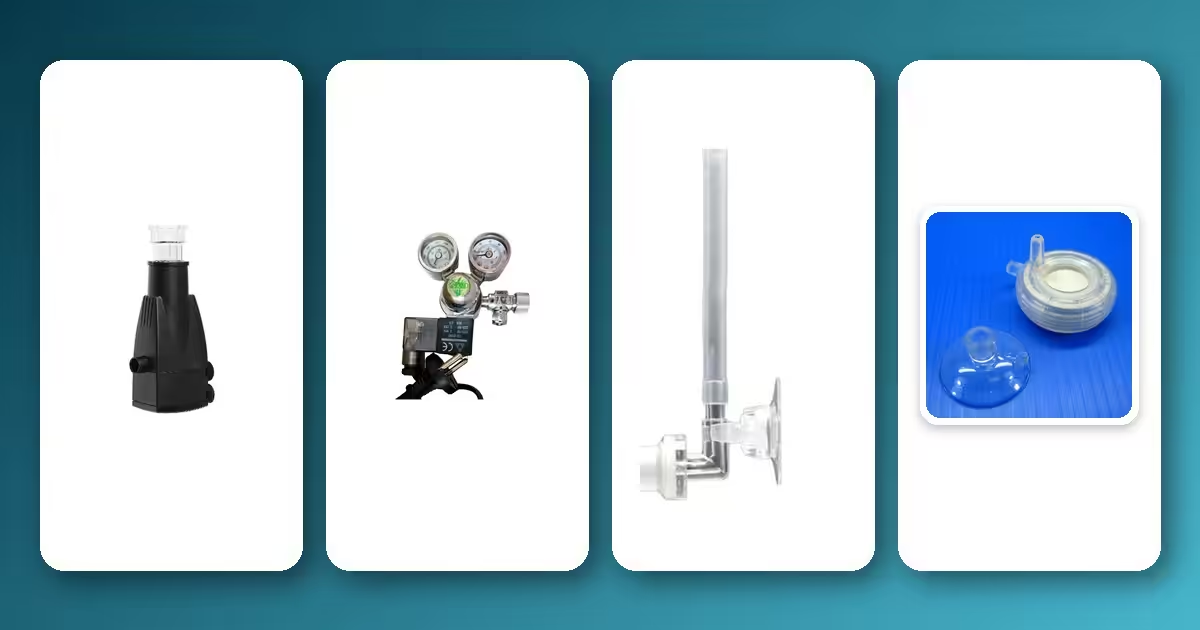
IndieFur’s in-stock diffusers span ₹747-₹2,683 (ISTA and Co2Art stainless steel, plus one Seachem glass diffuser); the rest of the Seachem range and Co2Art’s inline/bazooka diffusers are currently out of stock. Back Water Aquatics’ range runs cheaper at the entry end, with Chihiros Nano diffusers from ₹690 and Aquario Neo from ₹1,750, up to premium Chihiros external diffusers at ₹4,600, a price tier IndieFur doesn’t currently carry.
One practical note: IndieFur’s ISTA 3-in-1 CO₂ Diffuser S (₹747) bundles a bubble counter and check valve into the diffuser itself, which is worth factoring in: it replaces two separate purchases most other diffusers on either site require.
Cylinder size matters more than most beginners think
A CO₂ cylinder is the reservoir that determines how frequently you need refills.
IndieFur currently has two ISTA aluminium cylinders in stock, both 1-litre: a Face-Side version (₹4,900) and a Face-Up version (₹4,999). The 0.5L and 2L variants are out of stock. Back Water Aquatics stocks generic iron cylinders instead, sized in kilograms rather than litres: a 2kg cylinder (₹4,800, 5 in stock) and a 3kg cylinder (₹5,600, 4 in stock).
Worth flagging directly: litres and kilograms aren’t directly comparable specs here. ISTA’s cylinders are sized by physical volume; Back Water Aquatics’ generic cylinders are sized by CO₂ fill weight. Don’t assume a “2kg” cylinder is simply “bigger” than a “1L” one: they’re described using different conventions, and neither site publishes a direct conversion, so treat them as separate systems rather than a straight size comparison.
The correct cylinder size depends on your aquarium and available space. A nano aquarium does not necessarily require a large cylinder, while a heavily planted larger aquarium may benefit from greater CO₂ capacity. However, compatibility is critical: always verify the cylinder valve connection before purchasing a regulator, since a mismatch can create unnecessary installation problems.
What about CO₂ automation?
Automation is one of the most useful features of a pressurized CO₂ system. A solenoid valve can be connected to a timer, allowing CO₂ injection to follow the aquarium’s lighting schedule so you don’t have to manually open and close the system every day.
Both stores offer solenoid-equipped regulators in stock right now: IndieFur’s ISTA Single Gauge and Twin Gauge Controllers (₹6,443-₹11,155) all include a Taiwan-made solenoid with a safety valve, while Back Water Aquatics’ Mufan (₹3,590), WeekAqua (₹3,695), and Oxyturbo (₹15,000) regulators all ship with a solenoid built in.
For a serious planted aquarium, a regulator with a reliable solenoid is generally a more convenient option than a completely manual setup. As the table above shows, Back Water Aquatics currently offers the lower-cost entry point if solenoid automation on a budget is the priority.
Building a complete system: what it actually costs
Pricing a single regulator in isolation doesn’t tell you what a working system costs. Here’s a real, in-stock-only build on each side, covering a solenoid-equipped regulator, a cylinder, and a diffuser:
| Store | Regulator | Cylinder | Diffuser | Total |
|---|---|---|---|---|
| IndieFur | ISTA Single Gauge Controller, ₹6,443 | ISTA 1L Aluminium, ₹4,900 | ISTA 3-in-1 (bubble counter + check valve included), ₹747 | ₹12,090 |
| Back Water Aquatics | Mufan Dual Gauge (bubble counter included), ₹3,590 | Generic Iron 2kg, ₹4,800 | Aquario Neo (S), ₹1,750 | ₹10,140 |
Assembled from in-stock parts, a comparable solenoid-equipped setup currently runs about ₹1,950 cheaper at Back Water Aquatics. Both builds still need CO₂-resistant tubing and a drop checker as separate small purchases (roughly ₹180-₹380 for tubing on either site).
If you’d rather buy one pre-assembled kit instead of building it from parts: Back Water Aquatics sells a ready-made CO₂ Kit 2L (cylinder, Mufan solenoid regulator, UPAQUA diffuser, hose) for ₹14,000, currently in stock. IndieFur does not have an equivalent in-stock pre-assembled pressurized kit at the moment: all eight of our ISTA CO₂ kits are currently out of stock (more on this in the FAQ below).
How much CO₂ does a planted aquarium need?
This is one area where you should avoid blindly copying someone else’s bubble rate. There is no universal “one bubble per second” rule that works for every aquarium. CO₂ requirements depend on:
- Aquarium volume
- Plant mass
- Lighting intensity
- Surface agitation
- Water circulation
- Diffuser efficiency
- Plant species
- Desired growth rate
- Livestock sensitivity
Back Water Aquatics’ own setup guide recommends targeting roughly 30ppm CO₂, checked with a drop checker (green = good, yellow = dangerously high; reduce immediately, as excess CO₂ depletes oxygen and can be fatal to fish and shrimp). It also recommends timing the solenoid to start CO₂ about an hour after lights turn on, and stop it an hour before lights go off.
If you want a starting point rather than a guess, Co2Art (one of the brands IndieFur stocks) publishes these bubble-rate ranges as an initial setting to dial in from, not a fixed target:
| Tank Size (as published, US gallons) | Approx. Litres | Starting Bubble Rate |
|---|---|---|
| 10-20 gal | ~38-76L | 1 bubble every 5 seconds |
| 20-40 gal | ~76-151L | 1 bubble every 2 seconds |
| 40-60 gal | ~151-227L | 1 bubble per second |
Treat this strictly as a starting point. Begin at roughly half the suggested rate, increase gradually over several days, and let your drop checker’s colour, not the bubble count, tell you when you’ve reached a safe, effective level.
CO₂ Bubble Rate Starting-Point Calculator
Enter your tank size for a starting bubble rate based on Co2Art’s published ranges above, then dial in from there using your drop checker, not the bubble count.
What Back Water Aquatics offers that IndieFur doesn't
To be direct about where the competitor genuinely wins on CO₂ equipment right now:
- Their Mufan Dual Gauge (₹3,590) undercuts our cheapest in-stock solenoid regulator by nearly half, the cheaper solenoid-equipped option of the two.
- Their CO₂ Kit 2L (₹14,000) is a single-SKU, pre-assembled cylinder, regulator and diffuser purchase that's ready-made and in stock. We don't currently have an in-stock equivalent.
- On the cheap end, Chihiros Nano diffusers start at ₹690 and Aquario Neo at ₹1,750, both below our cheapest stocked diffuser options in that style.
- At the top end, Chihiros external diffusers running up to ₹4,600 sit above our own diffuser range's ceiling, a gap in that one style rather than in premium diffusers generally.
If any of those four things is specifically what you're shopping for, Back Water Aquatics is the better starting point today.
Where IndieFur has the edge
- IndieFur carries more in-stock solenoid regulator options: six configurations across four ISTA models, versus three at Back Water Aquatics.
- Our ISTA Twin Gauge Controller (₹7,628-₹11,155) is a cheaper mid-tier dual-gauge solenoid regulator, undercutting Back Water Aquatics' premium Oxyturbo (₹15,000) for a comparable dual-gauge, solenoid-equipped unit.
- Our TUV-approved aluminium cylinders are lighter than the generic iron cylinders Back Water Aquatics stocks, which matters if the cylinder needs to sit inside a stand rather than beside it.
- The ISTA 3-in-1 diffuser bundles in accessories too, combining diffuser, bubble counter, and check valve in one part, priced roughly ₹750-₹1,000 depending on size (S/M/L).
Buying guide by aquarium type
For a nano planted aquarium:
Focus on compact equipment, a suitable cylinder, precise flow control, and a diffuser sized for the tank. IndieFur's ISTA Mini Diffuser (₹750) or Back Water Aquatics' Chihiros Nano range (from ₹690) both suit small tanks well.
For a beginner planted aquarium wanting the lowest total cost:
Back Water Aquatics' in-stock DIY build (₹10,140: Mufan regulator, iron cylinder, Aquario Neo diffuser) currently beats IndieFur's equivalent in-stock build (₹12,090) by about ₹1,950.
For a beginner who wants one box, not three separate purchases:
Back Water Aquatics' CO₂ Kit 2L (₹14,000) is the only in-stock, pre-assembled pressurized option between the two stores right now.
For a high-tech aquascape prioritizing precision and automation:
IndieFur's ISTA Twin Gauge Controller (Face-Side, ₹11,155) offers dual-gauge monitoring with a Taiwan-made solenoid at a lower price than Back Water Aquatics' comparable Oxyturbo (₹15,000).
For low-maintenance tanks that don't need a full pressurized system:
IndieFur's Sicce CO₂ Life 2 (₹6,850) is an electric, cartridge-based CO₂ pump: it skips the cylinder, regulator, and gas-supplier refills entirely, relying instead on a carbon cartridge that gets swapped every 2-4 months.
Final verdict: IndieFur or Back Water Aquatics?
Rather than naming one overall winner, here's how the real numbers above sort by what you're actually optimizing for:
- Back Water Aquatics has the lowest total cost for a solenoid-equipped DIY build, at ₹10,140 versus IndieFur's ₹12,090.
- Back Water Aquatics is the only one of the two with an in-stock, ready-made pressurized kit, at ₹14,000.
- IndieFur has the most in-stock solenoid regulator choices: six configurations versus three at Back Water Aquatics.
- IndieFur's ISTA Twin Gauge Controller is the best-value dual-gauge solenoid regulator at the upper-mid tier.
- Back Water Aquatics has the widest diffuser price range, from budget to premium: ₹690-₹4,600, versus IndieFur's ₹747-₹2,683.
- IndieFur's Sicce CO₂ Life 2 is the only cartridge-based, no-cylinder alternative between the two.
Once you know which of those you're actually optimizing for, the choice gets a lot more concrete than a generic "it depends."
Build your planted aquarium CO₂ setup with IndieFur
If you're planning a new planted aquarium or upgrading an existing CO₂ system, explore IndieFur's planted-aquarium collection to compare regulators, diffusers, cylinders, fertilizers, soil, and aquascaping equipment.
Browse the IndieFur Planted Aquarium CO₂ Collection and choose the components that match your aquarium's specific requirements.
A good CO₂ system depends on precision, stability, consistency, and balance more than on how much carbon you add. Get those four things right, and your lighting, fertilizers, and plants can work together to create a healthier, more impressive aquascape.
Frequently asked questions
Is CO₂ necessary for every planted aquarium?
No. Low-tech planted aquariums can grow successfully without pressurized CO₂. Demanding plants and high-light aquascapes benefit significantly more from controlled CO₂ injection.
Can I buy a complete pressurized CO₂ kit from IndieFur right now?
Not currently. All eight of our ISTA pressurized CO₂ kits are out of stock. The only complete, in-stock CO₂ system we carry today is the Sicce CO₂ Life 2, an electric pump using a replaceable carbon cartridge rather than a pressurized cylinder, which suits smaller tanks but isn't a substitute for a cylinder-based system on demanding, heavily planted setups. If a single pre-assembled pressurized kit is what you want, Back Water Aquatics' CO₂ Kit 2L (₹14,000) is currently in stock. Otherwise, our in-stock regulator, cylinder, and diffuser can be combined into a working pressurized system for about ₹12,090 (see the cost table above). Separately: three of our budget diffuser listings currently show as in-stock in our backend but aren't yet live for purchase on the site. We've flagged this to our team to fix.
Is a dual-gauge CO₂ regulator better than a single-gauge one?
A dual-gauge regulator lets you monitor cylinder pressure and working pressure separately, which can make it easier to see when a cylinder is running low. Regulator build quality and solenoid reliability matter more than gauge count alone.
Do I need a solenoid for aquarium CO₂?
A solenoid isn't strictly required, but it's highly useful: connected to a timer, it automates CO₂ delivery around your lighting schedule so you're not manually opening and closing the system every day.
Can I use any CO₂ cylinder with any regulator?
Not necessarily. Cylinder and regulator connections must be compatible, and, as covered above, IndieFur's cylinders are sized in litres while Back Water Aquatics' are sized in kilograms, so always check valve standard and thread compatibility before buying.
Is bubble rate enough to measure CO₂ levels?
No. Bubble size, diffuser efficiency, pressure, and water circulation all vary between tanks, so a fixed bubble count is only ever a starting point (see the table above). Use a drop checker and observe livestock behaviour to confirm the actual level is safe.
Is this comparison biased since IndieFur sells these products?
We're an interested party, so judge the numbers rather than take our word for it: every price and spec above is pulled live from our own listings and from Back Water Aquatics' published pages, and we've named specific things Back Water Aquatics does better (a cheaper solenoid regulator, a ready-made in-stock kit, a wider diffuser price range) rather than only listing our own advantages.
How do I choose the right CO₂ system for my planted tank?
Start with aquarium size, plant density, lighting, filtration, cylinder compatibility, desired automation, and budget. Then select a regulator, diffuser, cylinder, and monitoring equipment that work together as one system. Use the cost comparison and buying guide above as a starting point.
About this guide
This guide was compiled and reviewed by the IndieFur content team using live WooCommerce stock and pricing data, Back Water Aquatics' published product category pages and CO₂ setup guide (backwateraquatics.com), and Co2Art's published bubble-rate guidance (co2art.us). Stock status and pricing reflect a point-in-time check as of August 2026 and may change; always confirm current availability before purchase.