RODI water is tap water pushed through a reverse osmosis membrane and then through deionisation resin until almost nothing is left in it. Reef keepers mix every litre of saltwater with it and top off with it. Most freshwater tanks run fine without it. The full definition sits on the RODI water glossary page.
What the unit does to your tap water
Tap water carries dissolved minerals, salts, silicates, phosphates, nitrate, and the chlorine or chloramine the supplier adds. In many Indian cities the total dissolved solids (TDS) reading runs from a hundred and some ppm to several hundred, and it shifts with the season and the source. A cheap TDS pen gives you your own number in ten seconds. Take it first.
A RODI unit pulls that water through four jobs, in this order.
- Sediment filter. Catches sand, rust and silt so the later stages stay clear.
- Carbon block, one or two. Strips chlorine and organics. Chlorine ruins the thin film on the membrane, so this stage is what keeps the membrane alive. Chloramine needs longer contact time, and a unit on chloraminated supply wants fresh carbon more often.
- RO membrane. Rejects most of the dissolved solids, commonly 95 percent or more. The rejected part goes to drain, and a plain unit sends several litres down the drain for every litre of clean water.
- DI resin. Takes what the membrane lets through and brings the reading to 0 TDS while it is fresh.
Five and six stage units add a second carbon stage, a second DI cartridge or a sterilising lamp.
A weak supply line makes poorer water and wastes more of it, and a small booster pump fixes that.
The reading to aim for
Zero.
For reef I tell customers to aim for 0 TDS out of the RODI.
A reef begins with the water, and the salt mix and the dosing go on top of it. If the water already carries phosphate, silicate and a few hundred ppm of minerals, you start from a mess you cannot subtract. Unexplained algae is the usual sign, and the tap is often behind it. A membrane with no DI stage usually reads between 3 and 20 ppm, depending on the tap and how old the membrane is.
A TDS pen measures conductivity and converts it to ppm. Silicate and some organics barely register on it, which is why the target is a flat 0 and a “low” reading falls short.
Test at the DI outlet. Test it again after the unit has sat idle overnight. Water sitting inside an idle membrane creeps up in TDS, so the first litre after a long pause reads high. Run that litre into a bucket and test the next. A hobby TDS pen is good enough to track a trend. Check it against a second pen now and then, because a drifting meter makes a healthy unit look broken.
When to change the resin
DI resin goes first. It is the last stage, it does the finest work, and when it is spent the reading at the outlet starts to climb. Some resins change colour from the inlet end as they exhaust, and that gives you a visual warning.
I change the DI resin when the meter reads above 1 to 2 after the DI stage.
Spent resin fades. The reading goes 0, then 1, then 2, then keeps rising. The first number above zero is your cue to order the next cartridge, and you swap it before the reading reaches 5.
Carbon and sediment filters usually last about six months. A membrane gives a couple of years on decent tap water. A high TDS supply, or one that carries a lot of silt, shortens all of those. Log the date and the readings each time. When the RO outlet reads higher than it did on day one, the membrane is wearing out.
Setting up and running it
I run a 6 stage RO/DI unit at home.
Flush a new membrane and new cartridges to drain for as long as the maker says before you collect a drop for the tank. Keep the waste water. It cleans floors and waters garden plants. Keep it out of the aquarium.
Store the clean water in a food grade container with a tight lid, away from light. Light and warmth grow algae in stored water, and an open drum collects dust. Use it within a few days. Test every batch, because one reading takes seconds and tells you the unit still works. Collect at a steady pace if you can: rate and pressure both affect rejection, and a line pushed hard on weak pressure gives poorer output.
Reef tanks use it twice
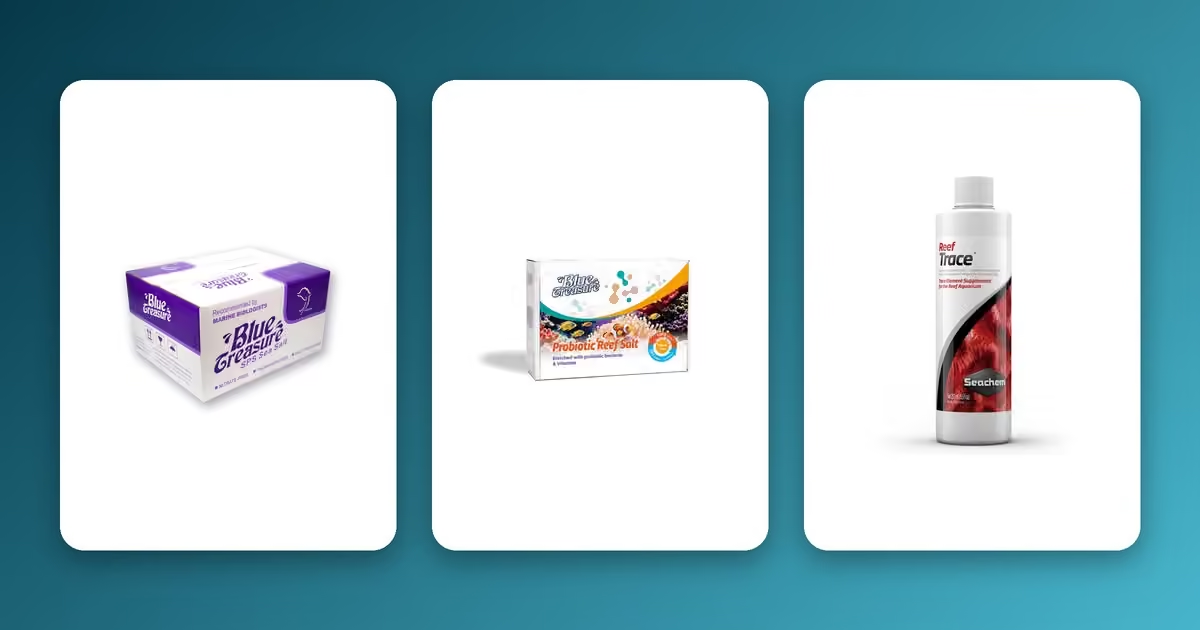
Saltwater tanks use RODI for two jobs. The first is mixing salt. Dissolve the mix in RODI water until you hit your target salinity, commonly 1.025 specific gravity or about 35 ppt. A salt like the Blue Treasure SPS sea salt gives a known mineral balance when it goes into clean water. Mixed into tap water, that balance wanders. Our salinity and specific gravity page explains the readings.
Second, top-off. Water evaporates and the salt stays, so salinity climbs. You replace the lost volume with fresh water, and tap water here adds minerals and phosphate with each top-off. Over months that is a large dose nobody planned. An automatic top-off fed from a covered RODI reservoir holds salinity steady, and the reservoir needs cleaning on a schedule.
Water changes use the same RODI water as the salt mix. The routine is on our water change glossary page.
Freshwater tanks mostly skip it
Most freshwater tanks do not need RODI water. I would use it for shrimp and for soft water.
Most freshwater fish do well on dechlorinated tap. A conditioner handles the chlorine and chloramine, and our freshwater water conditioner guide lines the options up against the problem each one solves.
Shrimp are the big exception, especially soft water species that want low hardness and a set mineral balance. RODI gives you an empty slate, and you add back the mineral supplement made for the species. Very hard tap water can also justify a unit: cut it with RODI and the hardness drops, and a one to one mix roughly halves the tap TDS. A planted tank fighting stubborn algae on phosphate rich tap water is another case where some keepers switch.
Pure water has no hardness and no buffering, and fish and shrimp cannot live in it, so RODI is a starting point for these tanks. Add minerals back until GH and KH hit the target for the species. Our GH page shows how those readings relate to what your animals need.
How much water you need
Work it out before you buy. A reef holding 200 litres that gets a weekly 10 percent water change needs about 20 litres of RODI for the change, plus whatever evaporates between changes, which on an open tank in a warm room can be a couple of litres a day. Add the shrimp tank next to it and the total climbs.
A membrane’s gallons per day figure is measured at about 25 degrees Celsius and 60 psi. Cold water or a weak line gives less, sometimes half. A unit rated at 75 gallons a day, roughly 280 litres, may deliver well under that in a cold flat in winter.
A small unit can fill a storage container overnight.
Choosing a unit
Compare stage count, membrane rating in gallons per day, fittings, and the price of replacement cartridges. Look at what a year of carbon, sediment and DI cartridges costs and whether you can buy them locally. Three features help. A pressure gauge shows when the supply line is too weak. An inline TDS meter, or a handheld one, shows when the resin is fading. A permeate pump cuts the waste water ratio, which matters in a flat where the drain water is a real cost, and some units pair it with an auto shut-off valve so the storage container cannot overflow. Size the membrane for the water you actually use: a small unit for a nano tank, a bigger one or a storage tank with a float valve for a large reef.