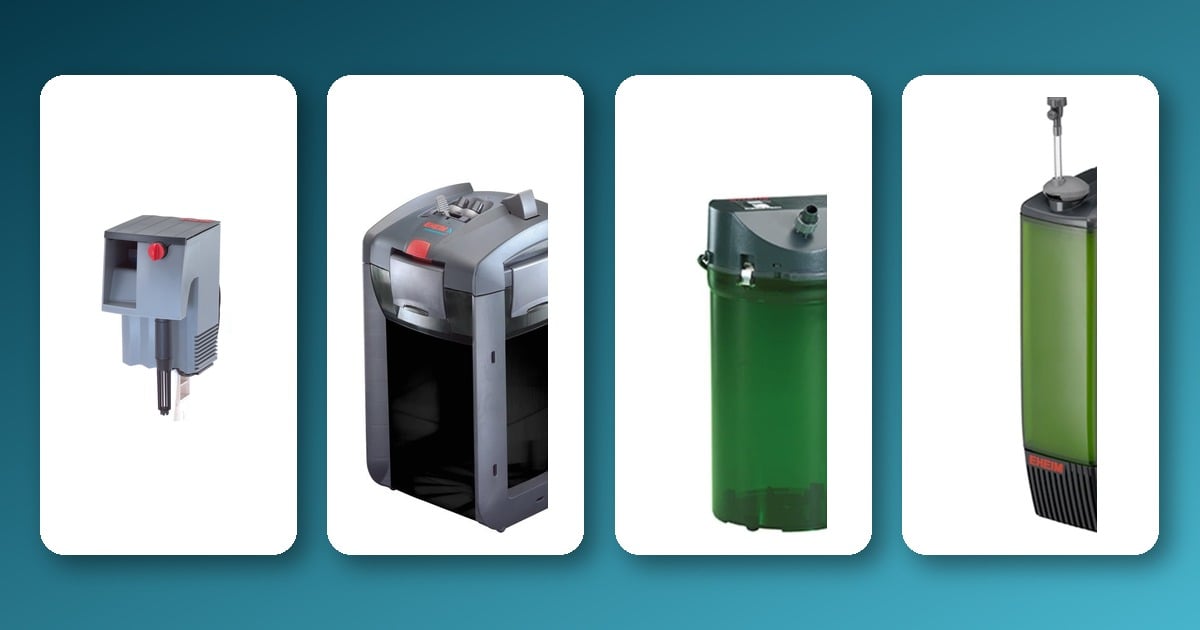
EHEIM’s filter range is not a ladder of good, better and best: it is four families built around different priorities, and the most expensive one is not automatically the right one. Classic is a bare mechanical canister with no conveniences and a reputation for running for decades. professionel 4 adds priming, valves and a sealed pump head. professionel 5e adds electronic flow control and app connectivity. Alongside those sit LiBERTY (hang-on-back) and Pick Up (internal) for tanks too small to justify a canister. This guide explains what each family is actually for, so you buy on fit rather than on position in the catalogue.
How the EHEIM range is organised
The naming is more logical than it first appears. Canister families carry a family name plus a number that indicates rated tank capacity in litres, for example Classic 250, professionel 4 800. Classic models also carry a legacy four-digit code (2211, 2213, 2215, 2217, 2260) that predates the litre naming and still appears on the box, on spare parts and in most forum discussion. Knowing both numbers for your model saves a lot of time when ordering an impeller or a media set.
Across every family, the same engineering choices repeat: ceramic shafts rather than steel, permanently lubricated bearings, and a deliberate underspecification of flow rate relative to competitors at the same price. That last point is the one that confuses buyers most. An EHEIM rated at a given litres-per-hour figure will usually be quieter and lower-flowing than a rival at the same rating, because EHEIM specifies with media loaded rather than with an empty chamber.
Classic: mechanical, serviceable, nearly immortal
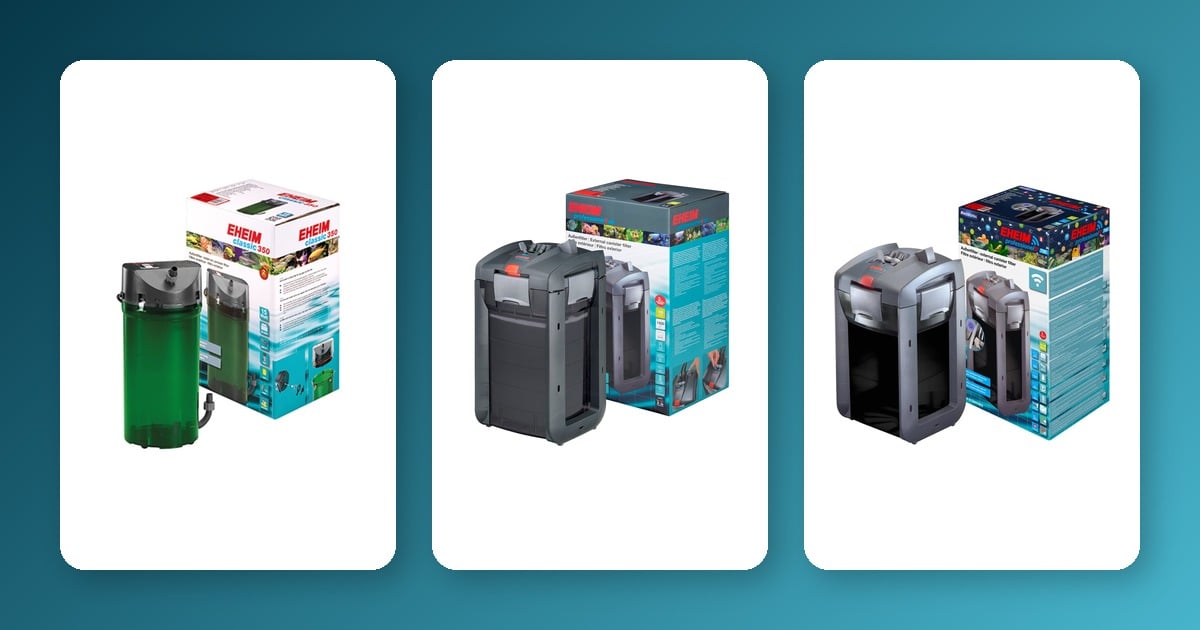
The Classic is a plain cylinder. One media chamber, no baskets, no priming aid, no valve block: you fill the canister with media in layers and you start the siphon by hand. It has been in production essentially unchanged since the 1970s, and the reason is that there is very little in it to fail.
The range runs from the Classic 150 (2211) for small tanks, through the Classic 250 (2213 Plus) and Classic 350 (2215 Plus) which cover most community tanks, up to the Classic 600 (2217 Plus). At the top sits the Classic 1500XL (2260), a genuinely large filter aimed at heavily stocked tanks and small ponds.
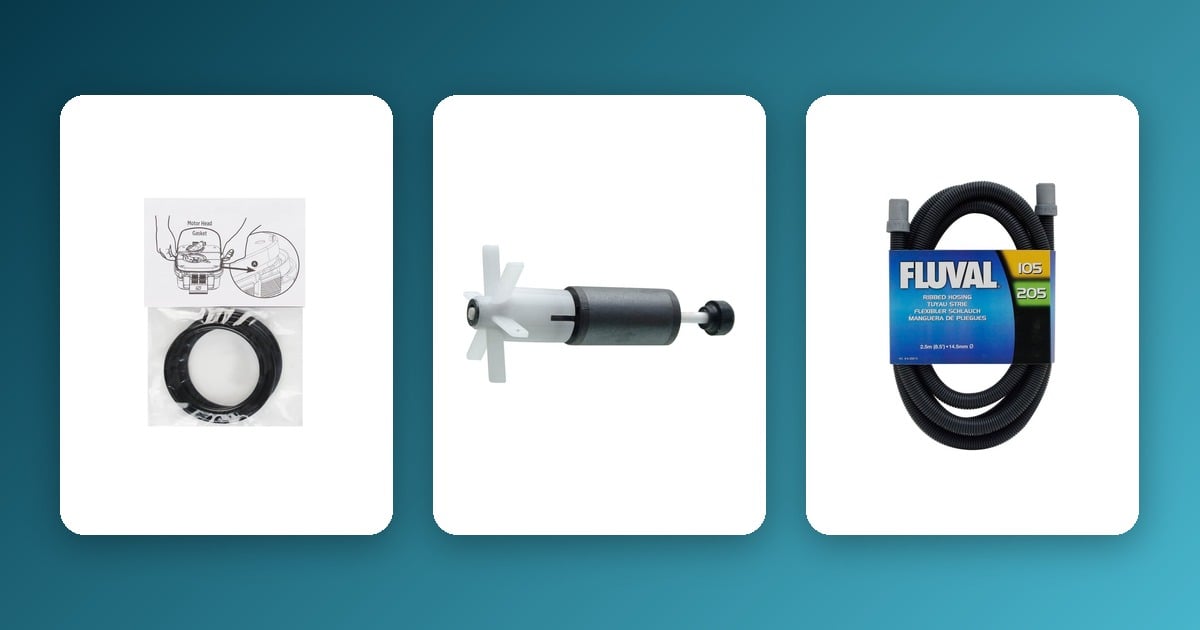
The trade-off is honest. Servicing a Classic means disconnecting hoses, carrying the canister to a sink, unpacking loose media by hand and repacking it, then re-priming by mouth or with a separate starter. It is a twenty-minute job rather than a five-minute one. In exchange you get a filter whose entire spare parts inventory is an impeller, a shaft and a head gasket, all of which stay available for decades. Impellers and shafts for the 2213, 2215 and 2217 are stocked individually rather than only as part of a service kit.
Buy a Classic if you service filters yourself, keep tanks long-term, and would rather have fewer parts than more features.
professionel 4: the convenience tier
The professionel 4 keeps the same pump philosophy and adds the things the Classic deliberately omits: stacked media baskets that lift out individually, an integrated priming pump, and a valve block that lets you disconnect the filter without draining the hoses. The pre-filter basket at the top catches coarse debris, so the biological baskets below stay undisturbed during a routine clean.
That pre-filter is the real argument for the range. On a Classic, cleaning the mechanical layer means unpacking everything above it and disturbing the biological media in the process. On a professionel 4 you lift out one basket, rinse it, and put it back: the colony below never sees daylight. Over a year of servicing, that difference in disturbance shows up in how stable the tank runs.
The professionel 4 800 covers large community and cichlid tanks. The Professionel 4+ 250T integrates a heater into the canister, which removes a piece of equipment from inside the tank and gives more even heat distribution than a glass heater in one corner, worth considering in any aquascape where visible hardware is the problem.
professionel 5e: electronic flow control
The 5e range is the professionel 4 with a controlled pump. Flow rate is adjustable electronically rather than by throttling a valve, the filter self-primes and runs an automatic air-purge cycle on start-up, and it reports status over Wi-Fi to a phone app.
The professionel 5e 700 with Wifi is the model most people mean when they ask about the range. What the electronics genuinely buy you is twofold: flow you can reduce during feeding or medication and restore afterwards without touching a valve, and a warning when flow drops below a threshold, which is an early signal of a clogging pre-filter or a failing impeller, well before the tank shows any symptom.
For a full rundown of what the WiFi tier changes in practice (real-world connectivity friction included), see our EHEIM Professionel 5e & WiFi review.
What they do not buy you is better filtration. The media volume and the biological capacity are the professionel 4’s. If you will not use the flow control or read the alerts, the 4 does the same filtration job. Our canister filter buying guide covers the smart-filter question in more general terms, including where connectivity is worth paying for and where it is not.
Classic vs. professionel: which should you buy?
Answer three questions.
How often will you service it? If the honest answer is “when flow drops noticeably”, buy a professionel: the pre-filter basket makes frequent light servicing quick enough that you will actually do it. If you enjoy the maintenance and do it on schedule, the Classic’s simplicity is an advantage rather than a cost.
How long do you intend to keep it? Over a five-year horizon, both will still be running. Over a twenty-year horizon, the Classic has fewer things that can fail and a spare-parts supply that has already proven itself across decades.
Is the filter behind a cabinet door or in the open? The professionel’s valve block matters enormously if the filter is awkward to reach, because disconnecting it does not mean draining hoses onto the floor. If the canister sits in open space with room to work, the Classic’s lack of a valve block is a minor inconvenience.
The 5e is a separate decision layered on top: buy it only if adjustable flow or remote monitoring solves a problem you actually have.
LiBERTY: when a canister is too much filter
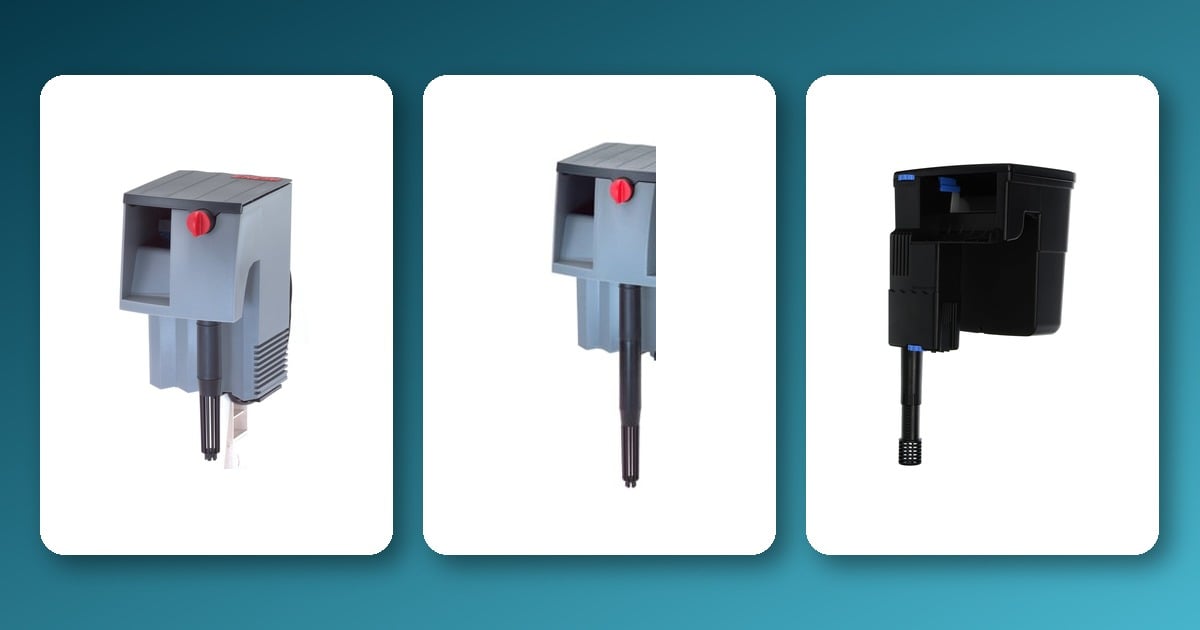
The LiBERTY 75 is EHEIM’s hang-on-back, built around a self-priming cartridge system. It clips to the rim, needs no hoses, and restarts on its own after a power cut. For tanks under roughly 130 litres with moderate stocking, it does the job a small canister would do with far less installation. Our guide to hang-on-back filters covers the format’s strengths and limits in full.
Pick Up: internal filtration for small tanks
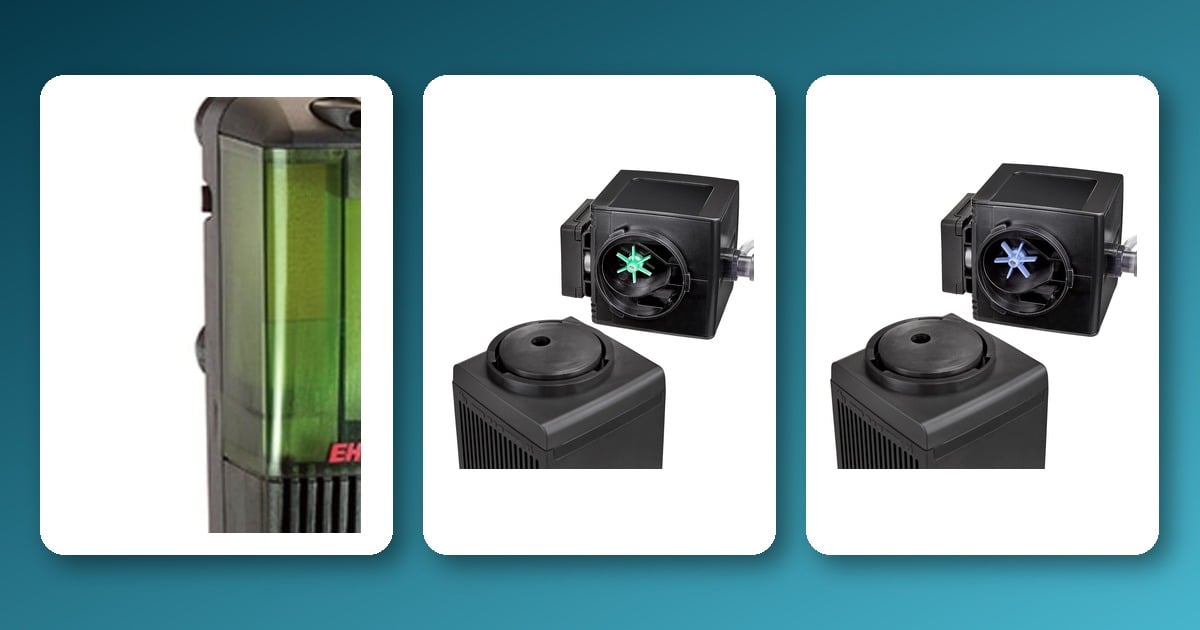
The Pick Up range sits inside the tank on suction cups and covers the sizes below where a canister makes sense: the Pick Up 45 for nano tanks and quarantine, up to the Pick Up 200. The whole unit lifts out for cleaning in one piece, which makes it the practical choice for a hospital or breeding tank you set up and strike down repeatedly. EHEIM also produces the Aquaball and Biopower internal ranges, which use a modular spherical outlet for directional flow.
Sizing across the range
EHEIM publishes a litre rating on every model, and those ratings are conservative: they assume loaded media rather than an empty chamber. Take the rating at face value for a normally stocked freshwater community tank.
Step up one model where any of the following apply: heavy stocking, messy feeders such as cichlids or goldfish, a marine setup, or a tank you know you will add to. Step down where the tank is lightly stocked and heavily planted, or where the inhabitants are poor swimmers: bettas and long-finned fancy varieties struggle in strong return flow, and the fix is a smaller filter rather than a throttled larger one.
Where two models bracket your tank volume, the larger one is nearly always the better buy. An oversized filter runs at a lower proportion of its capacity, goes longer between services and gives you headroom when stocking grows. An undersized one has no answer at all.
Frequently asked questions
What do the four-digit numbers mean? They are EHEIM’s original model codes, still printed on the units and used for spare parts. 2211, 2213, 2215, 2217 and 2260 correspond to the Classic 150, 250, 350, 600 and 1500XL respectively. Quote the four-digit code when ordering impellers, shafts or media sets.
Is the Classic really as durable as people claim? The design has been in continuous production since the 1970s with minimal change, and the wear parts are limited to an impeller, a ceramic shaft and a head gasket. That is the basis of the reputation: not that nothing wears, but that everything that wears is cheap and available.
Can I put professionel media into a Classic? Yes. The media itself is not family-specific; only the basket format is. A Classic takes loose media in layers, so any EHEIM biological or mechanical media can go in: you just pack it yourself rather than dropping in a basket.
Do I need the Wi-Fi model? Only if you will use it. The 5e filters the same as the professionel 4 of equivalent size; the electronics add adjustable flow and status alerts, not filtration capacity.
How often should I clean an EHEIM canister? Rinse the mechanical layer every four to eight weeks in tank water, never under the tap. Leave the biological media alone unless flow has dropped badly, and when you do rinse it, rinse it gently in tank water and never replace all of it at once.