I feed Hikari Carnivore to my monster fish. Each Hikari pack prints a guaranteed analysis: a minimum for protein and fat, a maximum for fibre and moisture. Minimum means the pack promises at least that much, and maximum means no more.
Cichlid pellets
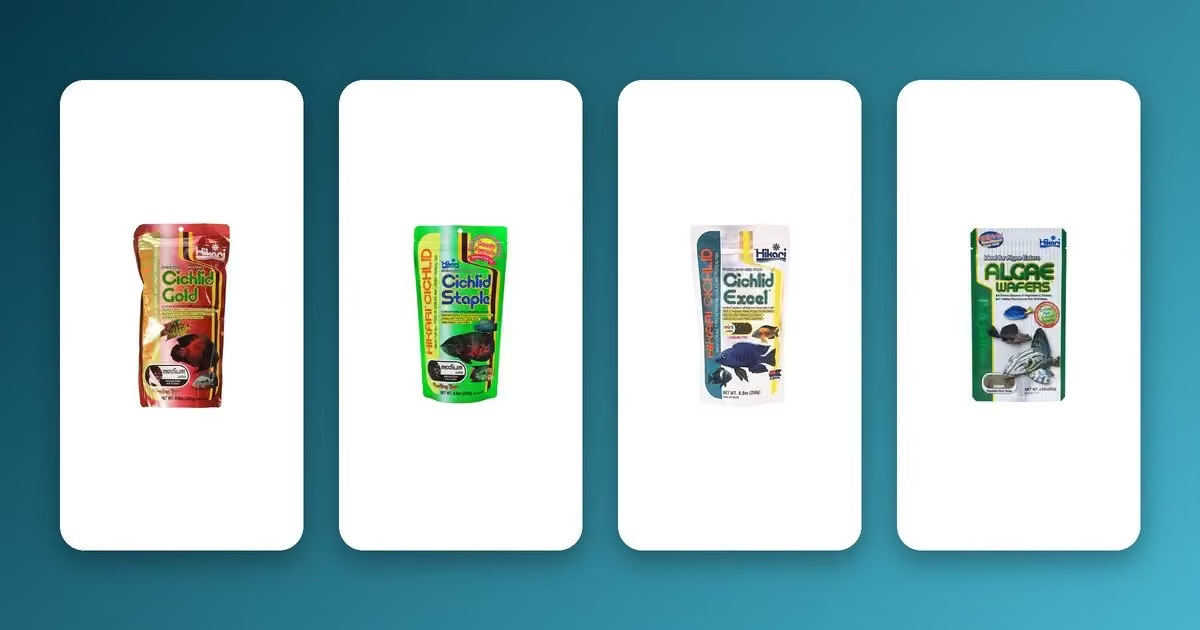
The shop carries four Hikari cichlid pellets, listed here by protein.
| Line | Protein (min) | Fat (min) | Hikari’s stated use |
|---|---|---|---|
| Cichlid Staple | 35% | 3% | Daily maintenance diet for cichlids and other large tropical fish |
| Cichlid Excel | 35% | 4% | Herbivorous cichlids and larger tropical fish |
| Cichlid Gold | 40% | 4% | All cichlids and larger tropical fish needing more protein |
| Cichlid BioGold Plus | 45% | 5% | Carnivorous cichlids and larger tropical fish |
I recommend the premium lines because the protein source is better, and that shows in immunity, growth and overall health. Hikari lists a probiotic, spirulina, seaweed meal, garlic and astaxanthin in BioGold Plus and says the formula gives better colour and growth with less waste. Excel carries wheat germ and spirulina, and Hikari made it for herbivorous cichlids. Hikari describes Staple as the economical everyday diet.
### Pellet sizes
Hikari prints the diameter for each size on its pages.
| Line | Mini | Medium |
|---|---|---|
| Cichlid Gold | 3.2 to 3.7 mm | 4.8 to 5.3 mm |
| Cichlid Staple | 3.0 to 3.4 mm | 5.0 to 5.5 mm |
| Cichlid Excel | 2.5 to 2.8 mm | 4.5 to 4.8 mm |
| Cichlid BioGold Plus | 3.0 to 3.4 mm | 5.0 to 5.5 mm |
Gold and Staple also come in a Baby size of 1.7 to 2.0 mm, at 32% protein and 4% fat, and in a Large size of 7.2 to 8.2 mm.
### Floating or sinking
I recommend floating pellets because they are easy to remove once the fish have fed. Hikari also makes sinking versions. Cichlid Gold Sinking keeps the 40% protein and lifts the fat to 7%, in a 5.0 to 5.5 mm medium pellet, and Hikari lists oscars among its fish. Sinking Cichlid Excel carries 37% protein and 6% fat in a 2.5 to 2.8 mm mini pellet.
Blood parrots
Blood Red Parrot is Hikari’s pellet for the blood parrot cichlid. The floating pellet comes in Mini at 2.5 to 2.8 mm and Medium at 3.5 to 4.0 mm, with 40% protein and 5% fat. Hikari calls it the first probiotic-enhanced parrot diet, says it contains no hormones, and lists chilli pepper, krill, phaffia yeast and marigold meal for colour. Hikari also reports a lab trial in which the colour improved within two weeks and reached its full effect in 67 days at 25 C.
Big carnivores
The large-carnivore diets divide into bottom feeders and surface feeders.
Bottom feeders. Sinking Carnivore pellets are the Hikari Carnivore I mentioned at the top. They are 3.5 to 4.0 mm, rapidly sinking, with 47% protein and 5% fat, and Hikari lists catfish, sharks, bichirs, eels and smaller carnivorous plecos. Massivore Delite is a far larger sinking pellet at about 25 mm, also 47% protein and 5% fat, for big carnivorous bottom feeders such as red-tailed catfish and polypterus. Hikari says the pellet absorbs water to a live-fish texture and puts each one at about 1.8 live goldfish in nutrition, with one feeding a day. Hikari adds that fish coming off live food may resist it at first, and that dropping a pellet so it splashes can help.
Surface feeders. Food Sticks are floating sticks of about 15 mm with 40% protein and 4% fat, written for arowana and other top-feeding carnivores. Hikari says to feed one stick at a time, notes that tossing a stick so it splashes can help a fish accept it, and puts three sticks at roughly one live goldfish in calories. Jumbo Carnistick has the same 40% and 4% in a 19.5 to 20 mm stick, and Hikari names arowana and Lake Malawi peacocks. Hikari sells both as a replacement for live feeders.
Discus, angelfish and dwarf cichlids
Discus Bio-Gold carries 50% protein and 12% fat in a granule of 1.5 to 2.0 mm. Hikari lists discus, angelfish, apistogramma and other dwarf cichlids, and says the granule softens to a sponge texture, holds its shape and does not cloud the water. Hikari asks for smaller feeds more often instead of two large ones, and suggests turning the water flow down while discus eat.
Small fish and bettas
Tropical Micro Pellets float first and then sink slowly, with 43% protein and 7% fat. Hikari lists bettas, tetras, barbs and other small-mouthed fish, and tells owners of bettas under 1.5 inches to feed two or three times a day, in amounts eaten within a few minutes.
Vibra Bites are worm-shaped sticks that Hikari says drift like live worms. Protein is 46% and fat 7%. Hikari lists bettas, guppies, tetras, gouramis, discus and angelfish, and names mealworm, silkworm pupae, krill, wheat germ and garlic among the ingredients.
More small-fish diets are in the small fish and fry food category.
Plecos and algae eaters
Tropical Algae Wafers are sinking discs of about 17 to 18 mm, with 33% protein and 4% fat, made for plecos and other algae eaters. Hikari gives wafers a longer window than its pellets: feed only what the fish eat within two hours. More wafers and sinking diets are in the pleco and bottom feeder category.
Goldfish and pond fish
Goldfish Gold is a floating baby pellet, 1.7 to 2.0 mm, with 32% protein and 4% fat, for goldfish and koi fry, with carotene, astaxanthin and grape seed extract in the recipe. Hikari says the floating form helps avoid overfeeding. Oranda Gold is a floating mini pellet of 2.5 to 2.8 mm with 45% protein and 6% fat. Hikari lists oranda, lionhead, azumanishiki and ranchu, and describes them as fancy goldfish that feed from the surface. The recipe includes spirulina, seaweed meal, garlic, krill and astaxanthin, and Hikari says it supports head growth and colour.
For goldfish, Hikari asks for two to four feeds a day, says smaller and more frequent feeds are better, and gives a temperature rule: cut the amount below 10 C or above 30 C.
On the pond side, Saki-Hikari Growth is the koi growth diet, with 40% protein and 9% fat and a probiotic. The floating medium pellet is 5.0 to 5.5 mm, and Hikari says to feed two to four times a day once the water is above 20 C, adjusting to how active the koi are. Saki-Hikari Colour Enhancing is a floating pellet with 40% protein and 6% fat, with spirulina, astaxanthin and wheat germ in the recipe. Hikari says it works best as the koi’s only daily diet, with the same two to four feeds once the water is above 18 C. Hikari Economy carries 28% protein and 3% fat in a 5.0 to 5.5 mm floating medium pellet, and Hikari says it replaces stick food in mixed ponds, with up to four feeds a day once the water is at 10 C or above. For Growth and Colour Enhancing, Hikari says never to leave uneaten food in the pond. The goldfish and koi food category carries the rest.
Marine fish
The shop carries two Hikari marine pellets, split by fish size. Marine A is a slow-sinking 2.7 to 3.0 mm pellet for marine fish over 10 cm, at 47% protein and 5% fat, with clam extract, seaweed, spirulina, DHA and EPA in the recipe. Marine S is a smaller 1.6 to 1.8 mm pellet for smaller marine fish, at 48% protein and 8% fat, and Hikari says it holds together in the water for grazing fish. For both, Hikari asks for no more than the fish eat in about a minute, two or three times a day, and allows an optional soak in purified water for a few minutes.
The lines at a glance
| Fish | Hikari line listed for it |
|---|---|
| Cichlids, daily feeding | Cichlid Staple or Cichlid Gold |
| Herbivorous cichlids | Cichlid Excel |
| Carnivorous cichlids | Cichlid BioGold Plus |
| Blood parrots | Blood Red Parrot |
| Large carnivorous bottom feeders | Sinking Carnivore, Massivore Delite |
| Arowana and surface-feeding carnivores | Food Sticks, Jumbo Carnistick |
| Discus, angelfish, dwarf cichlids | Discus Bio-Gold |
| Bettas, tetras, guppies, small fish | Tropical Micro Pellets, Vibra Bites |
| Plecos and algae eaters | Tropical Algae Wafers |
| Oranda and lionhead | Oranda Gold |
| Goldfish and koi fry | Goldfish Gold |
| Marine fish over 10 cm | Marine A |
| Smaller marine fish | Marine S |
How much to feed, and how to store it
Remove food that is still uneaten two to three minutes after a feed. Watch how much goes to waste over the next few feeds and cut the quantity to match. Hikari’s own pages set a limit per line, and the limits differ. Sinking Carnivore, Marine A, Marine S and Goldfish Gold say about a minute. The cichlid pellets, Massivore Delite, Food Sticks, Vibra Bites and Oranda Gold say a few minutes. Algae Wafers allow two hours.
Hikari says to keep pellets in a cool place, out of direct sunlight, moisture, high humidity and heat, and to use a pack within 90 days of opening.
For the wider picture across every fish type, read our Freshwater Fish Food Guide and What Do Fish Eat?. If you feed a lot of fish, Buying Fish Food in Bulk covers pack sizes and storage. Every Hikari line in the shop is on the Hikari brand page, and the cichlid range sits in the cichlid food category.