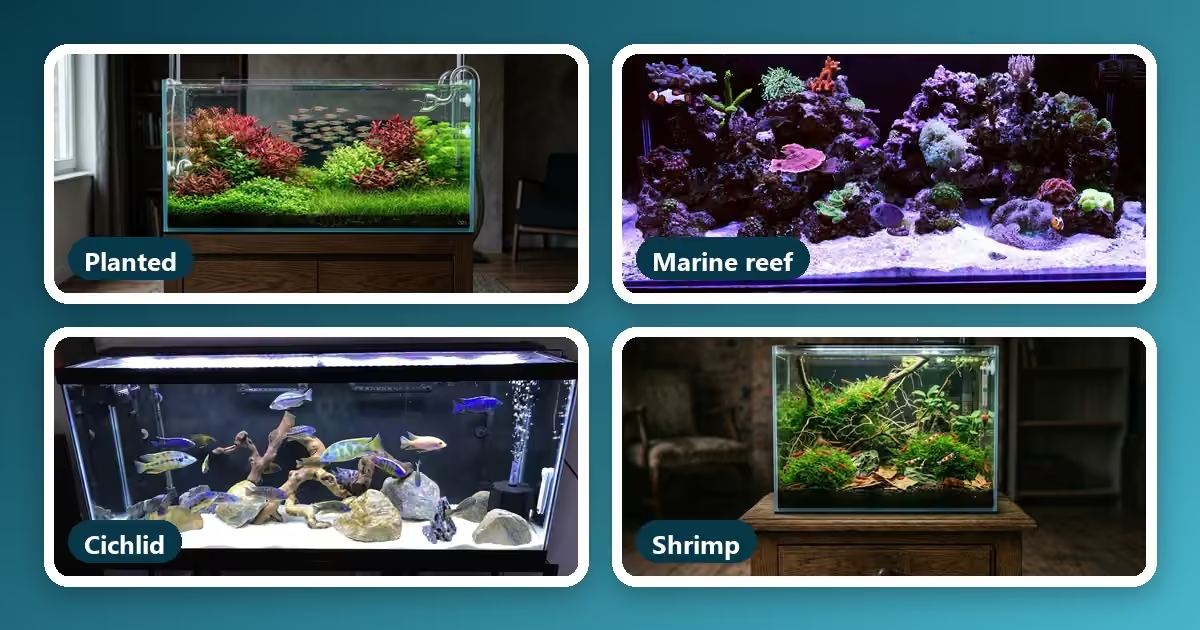
The freshwater food aisle is organized by format (flakes, pellets, wafers, sticks), but the more useful way to choose is by what your fish actually are: surface feeders, bottom feeders, color-focused show fish, or specific species with their own dietary quirks. This guide groups real, currently stocked options by who they’re actually for, rather than by shelf category.
General Community Tanks
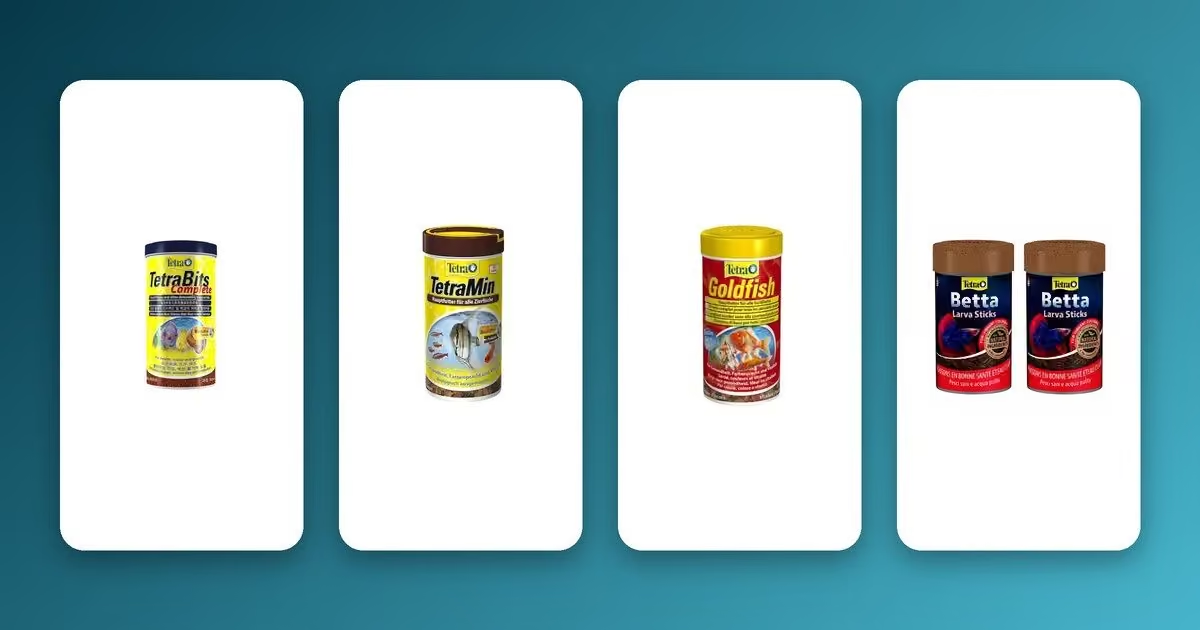
For a mixed community tank, Tetra Bits Complete (also in a larger 93gm pack) and Tetra Min Granules cover the everyday staple diet most community fish thrive on. Hikari Economy is a large-pellet bulk option worth considering if you’re feeding a bigger tank or multiple tanks and want the per-feeding cost down without switching to a lower-quality food. If you buy the big pack, read our guide to buying fish food in bulk before you order, because it covers storage and how long a pack lasts.
Bottom Feeders and Plecos
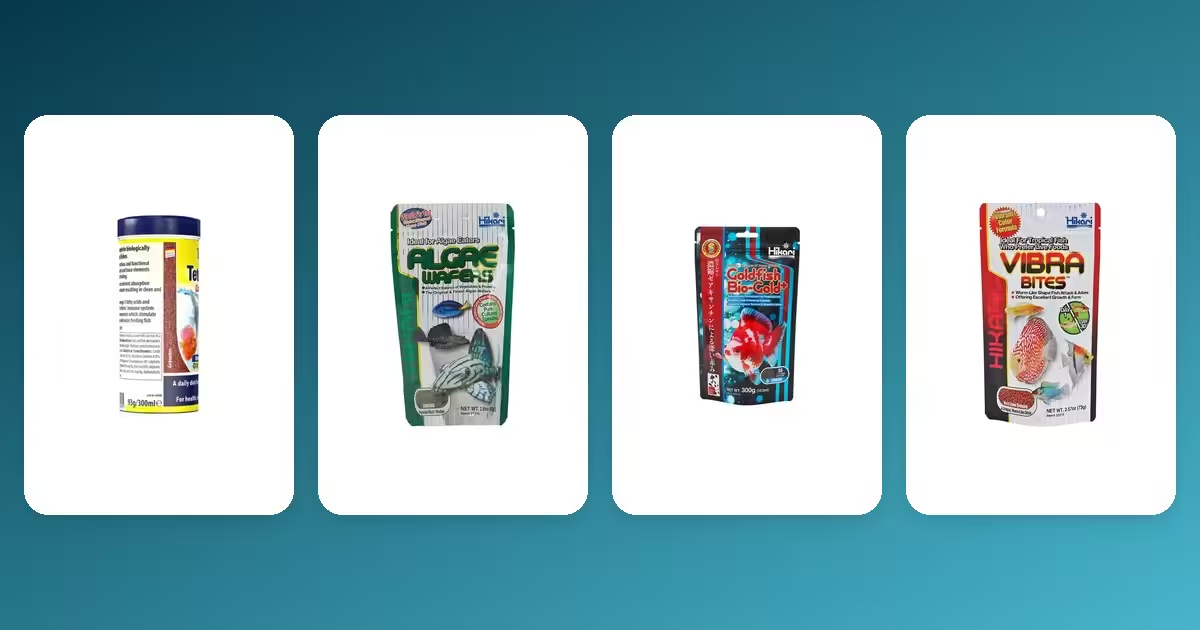
Bottom-dwelling fish need food that actually reaches them before surface feeders finish it off. Tetra Pleco Tablets sink and hold together long enough for plecos and other bottom feeders to graze at their own pace, and Hikari Tropical Algae Wafers add a plant-based option formulated specifically for algae-eating species.
Goldfish and Cold-Water Fish
Goldfish have different nutritional needs from tropical community fish, and dedicated goldfish foods account for that. Hikari Goldfish Bio Gold Plus is available as a small sinking pellet (also in a larger 300gm size) or as a floating pellet, letting you match feeding style to whether your goldfish feed at the surface or throughout the water column. Tetra Goldfish flakes cover the same species with a simpler, everyday flake format.
Floating pellets raise a question for goldfish keepers. The answer is anatomy. Goldfish have a duct linking the swim bladder to the throat, and fish veterinarian Dr. Jessie Sanders of Aquatic Veterinary Services explains that they adjust their buoyancy by how much air they swallow, so a goldfish that gulps floating food at the surface takes in extra air and may float near the top after a meal. Comet, Ranchu, Fantail and Red Moor varieties are more prone to it. A sinking pellet is her advice for a fish that floats after eating, which makes the sinking Bio Gold Plus above the better fit for those fish than the floating one. Where several goldfish compete at feeding time, a mix of sinking and floating pellets spread across the surface eases the scramble. Peas help a floaty fish because they sink.
Quantity is the next question. Sanders suggests starting with three or four pellets of the right size per fish and adjusting from there. For goldfish specifically, she ties frequency to water temperature: one feeding a day between 18 and 24 C (65 to 75 F), a second feeding above 24 C, and a meal every second or third day below 18 C. Soaking goldfish food wastes vitamins. Around 30% protein suits a goldfish diet, nearer 35% for juveniles.
Discus and Cichlids
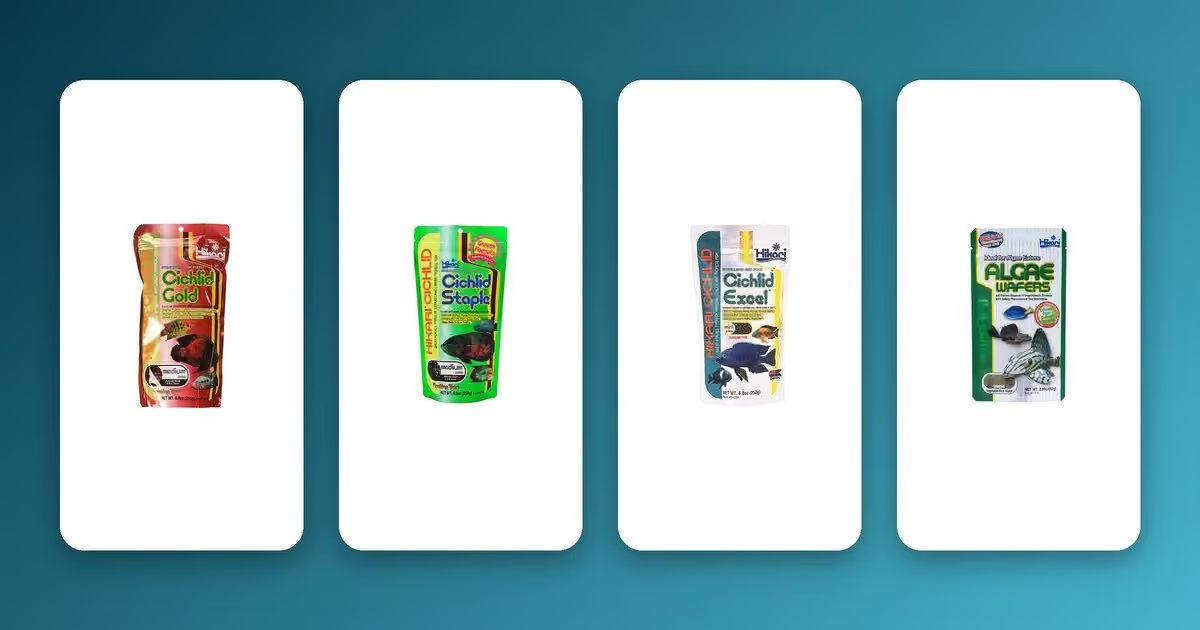
Discus and larger cichlids are among the more demanding feeders in the hobby, and the specialty lines reflect that. The DiscusX Nutriboost range (Sapphire, Gold, Platinum, Prime, and Ruby) is formulated as a full line targeting discus coloration and condition, with each variant tuned toward a slightly different result. Hikari Discus Biogold is another dedicated discus staple worth rotating in. For larger cichlids specifically, Hikari Blood Red Parrot is formulated for parrot cichlids’ coloration and body shape, and Teraa’s Carna Cichlid Food line, available in small (Hara), medium, and large pellet sizes, lets you match pellet size to the mouth size of the cichlid species you’re keeping. The four Hikari cichlid pellets we stock carry 35 to 45% protein. Which Hikari fish food lists them line by line.
Color and Growth Enhancement
For hobbyists chasing show-quality coloration, Saki Hikari Colour Enhancing Floating Diet is formulated specifically to intensify natural pigmentation over time, while Saki Hikari Growth (also in a 2kg bulk size) prioritizes faster, healthy growth for younger or still-developing fish. Hikari Vibra Bites (also in a larger 280gm size) combines a bloodworm-based formula with color-enhancing ingredients in one bite-sized pellet.
Small Fish and Fry
Hikari Jumbo Carnistick suits larger predatory or semi-aggressive fish, while at the other end of the size range, TetraBits Breeding Plus (also in 100ml) is formulated to support fish in breeding condition, and Teraa Micro Pellets give small-mouthed fish and larger fry an appropriately sized pellet before they’re ready for standard-size food.
Mouth size and metabolism decide a lot at this end of the range. In Aqueon’s feeding guide, large predators ignore small flake crumbs, and small fish such as neon tetras cannot fit large pellets in, so food has to match the mouth. Danios and newly hatched fry run at higher metabolic rates. They need feeding more often, especially in warmer water. Herbivores graze through the day in small amounts, and carnivores eat less often. Livebearers are largely herbivorous in the guide’s description, and tetras more carnivorous.
Live and Freeze-Dried Protein
For a protein boost or variety beyond dry staples, Teraa Artemia Paste and Teraa Spirulina Paste offer a wet, high-palatability option many fish take more readily than flakes, especially useful for coaxing a new or stressed fish to start eating. Teraa Freeze Dried Dubia Roaches is a protein-dense treat well-suited to larger, more predatory freshwater species. For insect-based feeding, Teraa’s Superfish line includes grasshopper and cricket pellets, both aimed at fish that benefit from an insect-heavy diet in the wild.
Quick Reference
| Fish type | Product |
|---|---|
| General community tank | Tetra Bits Complete, Tetra Min Granules |
| Bottom feeders / plecos | Tetra Pleco Tablets, Hikari Tropical Algae Wafers |
| Goldfish | Hikari Goldfish Bio Gold Plus, Tetra Goldfish |
| Discus | DiscusX Nutriboost range, Hikari Discus Biogold |
| Cichlids | Hikari Blood Red Parrot, Teraa Carna Cichlid Food |
| Show coloration | Saki Hikari Colour Enhancing Diet, Hikari Vibra Bites |
| Growth / juveniles | Saki Hikari Growth |
| Fry / small mouths | Teraa Micro Pellets |
| Protein variety / picky eaters | Teraa Artemia Paste, Freeze Dried Dubia Roaches |
How much and how often
Start small, and keep it simple. Aqueon’s rule is to feed only what the fish eat in two to three minutes, beginning with a tiny amount and watching how fast it goes. Gone in under two minutes? Add a little. Anything left after five minutes should come out with a siphon or net, because uneaten food clouds the water and can push ammonia and nitrite up. Aqueon says it is best to underfeed in a new aquarium.
For a community tank, some keepers split the daily amount into two meals, and Aqueon favours a morning and an evening feeding because most fish feed around dawn and dusk in nature. Its guide wants the tank light on for at least 30 minutes before the first feeding and left on for 30 minutes after the second. Nocturnal species such as knifefish, catfish and some plecos can have sinking food shortly after the lights go out.
A Practical Feeding Routine
Most tanks do best on one reliable staple (flakes or granules for a community tank, a species-specific pellet for discus or cichlids) fed daily, with a rotating second food (a color enhancer, a protein treat, or an algae wafer for bottom feeders) added two or three times a week for variety and targeted nutrition. Rotating rather than switching outright also makes it easier to spot if a new food doesn’t agree with a particular fish, since the staple diet stays as a stable baseline underneath it. Our guide to buying fish food online shows how to match each food type to your fish and what to check when the parcel arrives.
Food that has lost its vitamins
Water soluble vitamins such as vitamin C start disappearing the moment a container is opened, according to Sanders, and flakes lose them fastest because they have more surface for their mass. Pellets hold on longer. Even food stored properly has lost most of its vitamin C after about six months, she says, and her storage advice is an airtight container kept out of the sun.
Feeding while you are away
Most adult fish are fine without food for a full week, or two weeks at most, says veterinarian Dr. Benjamin Rosenbloom in an article on feeding fish during a holiday published by Chewy. Overfeeding worries him more, since uneaten food builds up waste. Sanders, quoted in the same article, recommends having someone check on the tank even when no feeding is needed, so a problem gets noticed early. For a helper who does feed, the article suggests portioning each day’s food into labelled bags and hiding the rest. Labelling the bags removes the guesswork. Someone unfamiliar with fish may assume they are still hungry and give far too much.