A reptile or turtle setup is really four decisions: the enclosure, the heat, the light, and the fittings
inside. Get those right and most of the rest is detail. This guide goes through each one, then lists the
gear in stock right now. Always check the care sheet for your species first, since temperature, humidity and
UVB needs differ a lot between a tortoise, a gecko and an aquatic turtle.
1. Choose the enclosure
Glass terrariums hold humidity well and suit many tropical species. Screen terrariums
move far more air and suit species that need strong airflow or dry conditions. Height matters as much as
floor area: climbing species such as many geckos need a tall enclosure, while ground dwellers need floor space.
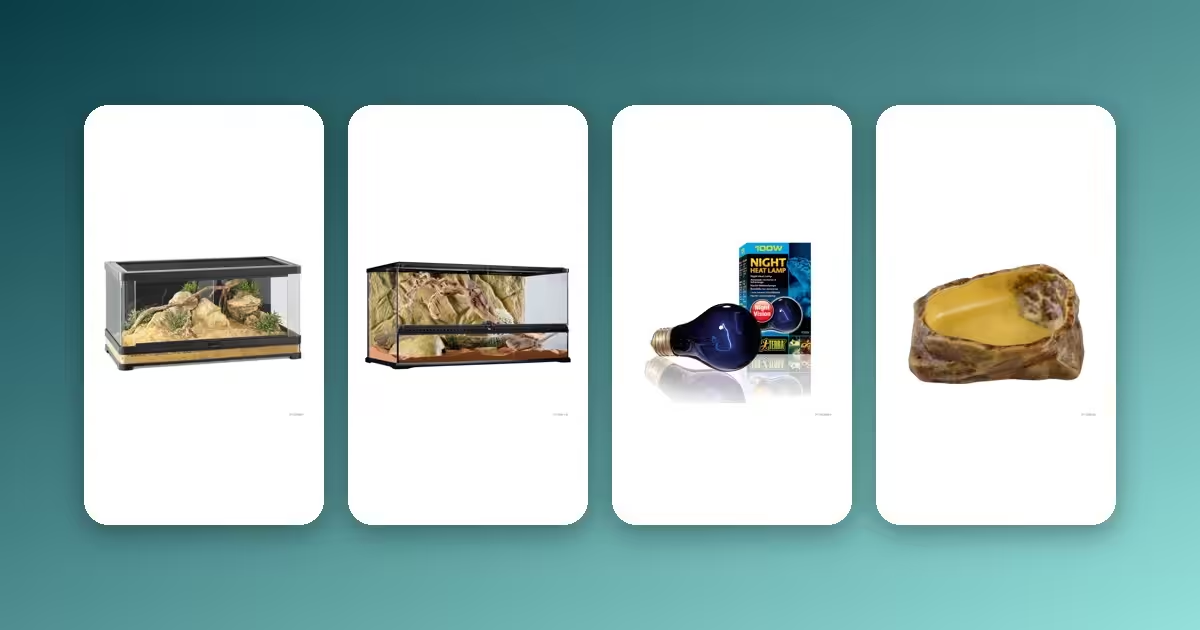
- Exo Terra Vista 90 Panoramic Natural Terrarium
- Exo Terra Vista 120 Panoramic Natural Terrarium
- Exo Terra All Glass Terrarium 90 x 45 x 45 cm
- Exo Terra All Glass Terrarium 90 x 45 x 30 cm
- Exo Terra Screen Terrarium, Medium X-Tall
You can browse every size in our terrarium category.
Sizes in stock
Sizes are length by depth by height. The Vista and All Glass models open at the front, so you can reach the animal without lifting a lid. Check the care sheet for your species before you pick a size, since minimum enclosure sizes vary a lot between a small gecko and a bearded dragon. Taller enclosures suit climbing species, and wider ones suit ground dwellers.
| Enclosure | Size (cm) | Style |
|---|---|---|
| Exo Terra Vista 60 | 61 x 46 x 46 | Glass, adjustable front ventilation |
| Exo Terra Vista 90 | 91 x 46 x 46 | Glass, adjustable front ventilation |
| Exo Terra Vista 120 | 119 x 61 x 46 | Glass, adjustable front ventilation |
| Exo Terra Vista 120XL | 119 x 61 x 61 | Glass, adjustable front ventilation |
| Exo Terra All Glass | 90 x 45 x 30 | Glass, full screen top |
| Exo Terra All Glass | 90 x 45 x 45 | Glass, full screen top |
| Exo Terra All Glass | 90 x 45 x 60 | Glass, full screen top |
| Exo Terra Screen Terrarium Medium X-Tall | 60 x 45 x 90 | Aluminium screen, maximum airflow |
The Vista sizes are listed by Exo Terra in inches (24 x 18 x 18, 36 x 18 x 18, 47 x 24 x 18 and 47 x 24 x 24) and converted here, so the centimetre figures are rounded.
Terrarium, vivarium or aquarium
People use the words loosely. A terrarium or vivarium is an enclosure for land animals, set up with ventilation, a heat source and usually UVB light. An aquarium holds water for fish. A semi-aquatic setup for a turtle combines a water section with a dry basking area. Exo Terra’s glass terrariums have front-opening doors and a full screen top, which lets heat and UVB pass through, so for most reptile keepers a terrarium is a simpler start than converting a fish tank.
For juveniles, quarantine or a temporary home, a small tub such as the
Exo Terra Faunarium is useful.
2. Heat
Reptiles regulate their body temperature from the environment, so the enclosure needs a warm basking area
and a cooler area, letting the animal move between them. Measure both ends with a thermometer instead of
guessing. A daytime basking lamp provides the warm spot. At night, if the room drops below your species’ recommended range, a lamp that gives
heat without visible light avoids disturbing the animal’s day and night cycle.
Daytime basking spot lamps are listed in our reptile lighting category,
though most are out of stock at the moment.
3. Light and UVB
Many reptiles, especially day-active lizards, tortoises and turtles, need UVB light to make vitamin D3 and
absorb calcium. Whether yours does, and how strong the lamp should be, depends on the species and on how far the
lamp sits from the animal. UVB tubes also lose output over time, so plan to replace them on the
manufacturer’s schedule even if the lamp still glows. The Exo Terra UVB range sits in the same
reptile lighting category; check it for what is available
before you order, since restocks come in batches.
How much UVB your species needs
Researchers sort reptiles into four Ferguson zones by how much UVB they get from the sun in the wild, measured as UV Index (UVI). The zone tells you how strong a lamp you need and how far to mount it. The ranges below are the average exposure for each zone, as listed in Exo Terra’s guide to Ferguson zones, which follows the species tables in the open-access UV-Tool paper (Baines et al., 2016, Journal of Zoo and Aquarium Research).
| Zone | Behaviour in the wild | Average UVI | Examples |
|---|---|---|---|
| 1 | Crepuscular or shade dweller | 0 to 0.7 | Crested gecko, leopard gecko, Burmese python, milk snake |
| 2 | Partial sun, occasional basker | 0.7 to 1.0 | Green anole, boa constrictor, ornate box turtle, Australian water dragon |
| 3 | Open or partial sun basker | 1.0 to 2.6 | Frilled lizard, Yemen chameleon, Standing’s day gecko, leopard tortoise |
| 4 | Mid-day sun basker | 2.6 to 3.5 | Chuckwalla, uromastyx, rhinoceros iguana, marginated tortoise |
Lamps differ in output, and the same lamp reads differently at different distances, so a UV Index meter is the only way to confirm what the animal receives. Exo Terra has renamed its UVB range: UVB 2.0 is now sold as Natural Light, UVB 5.0 as UVB100 and UVB 10.0 as UVB150, with a UVB200 above them. Match the lamp to your species’ zone using the maker’s chart for that lamp. Replacement intervals vary by lamp, so follow the pack for your lamp. UVB output falls with use even while the lamp still lights, so do not wait for it to fail.
4. Substrate, hides and dishes
- Substrate: the Exo Terra Coconut Fiber Plantation Soil Brick
expands when soaked and holds humidity for tropical setups. For planted or bioactive enclosures, a
drainage layer such as Exo Terra Bio Drain keeps the soil from
sitting in standing water. - Hides: every reptile needs somewhere to retreat. The
Tortoise Skeleton hiding place and the
Dinosaur Eggs hide and water dish both give cover
and double as decoration. - Water: a shallow, stable dish the animal can reach easily, such as the
Exo Terra Water Dish Medium.
More fittings are in the reptile accessories category.
5. Turtles and tortoises
Aquatic turtles need a dry basking platform in the water, such as the
Exo Terra Turtle Bank Medium, with a basking lamp above it.
For food, Tetra ReptoMin is made for aquatic turtles, and
Tetra Tortoise Complete Food is made for tortoises.
Lighting for turtles
An aquatic turtle needs a dry platform it can climb onto and a heat lamp positioned over the platform, not over the water. Many turtles also need UVB over the same spot, and the UVB lamp needs replacing on its pack’s schedule like any other. Look your species up in the UV-Tool above before choosing a lamp strength. The Exo Terra Turtle Bank Large is the largest Turtle Bank we stock.
Feeding
Tetra Tortoise Complete Food comes in 50 g, 100 g and 1 litre packs, and Tetra ReptoMin for aquatic turtles comes in ReptoMin Energy as well as the 1,000 ml tub linked above. Offer the food your species is meant to eat and follow the pack’s feeding guide.
FAQ
Do all reptiles need UVB?
No. It depends on the species. Many day-active lizards, tortoises and turtles do, while some nocturnal
species can manage without it. Check the care sheet for your animal before you buy a lamp.
Glass or screen terrarium?
Glass keeps humidity in, so it suits many tropical species. Screen gives more airflow, so it suits species
that need strong ventilation or dry conditions.
Can I use a regular household bulb for heat?
A household bulb gives no UVB and is not rated for the temperatures and humidity of a reptile enclosure.
Use a lamp made for reptiles, in a fixture the animal cannot touch.
How do I know the enclosure temperature is right?
Put a thermometer at the basking spot and another at the cool end, and compare the readings with your
species’ care sheet.
Can I use a fish tank as a reptile terrarium?
Only with a ventilated top that lets heat and UVB through. Exo Terra’s glass terrariums have front-opening doors and a full screen top for exactly this reason, and a standard fish tank hood usually does not.
How often should I replace a UVB lamp?
Replacement intervals vary by lamp, so follow the pack for your lamp. Output declines with use even when the lamp still lights.
What is a Ferguson zone?
A four-step scale of how much UVB a species gets in the wild. Zone 1 animals are shade dwellers, and Zone 4 animals are mid-day sun baskers that can use full sun at any time of day.